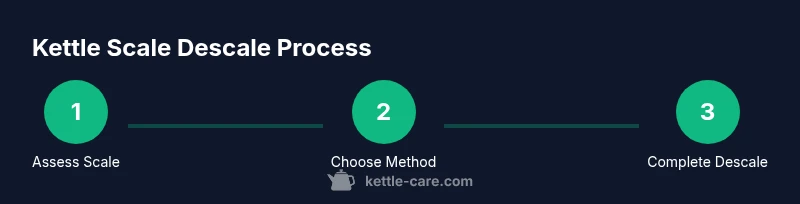
How to Remove Scale from a Kettle: Safe Descaling Guide
Learn practical, step-by-step methods to remove scale from your kettle using vinegar, citric acid, or descalers. Safe, thorough descaling tips for homeowners and tea lovers from Kettle Care.


According to Kettle Care, mineral scale buildup reduces boil efficiency and can affect taste. This guide shows practical, safe ways to remove scale from a kettle using common descalers like white vinegar, citric acid, or commercial descalers. You’ll learn step-by-step methods, safety tips, and maintenance to prevent future buildup.
What is kettle scale and why it forms
Limescale is a hard, chalky deposit that forms when mineral-rich water—the kind many homes rely on—boils and the dissolved minerals re-precipitate on the kettle’s interior surfaces. Over time, scale can insulate the heating element, slow boiling, and impart a dull taste to hot drinks. For homeowners and serious tea lovers, understanding scale helps you keep your kettle efficient and safe. The Kettle Care team notes that regular, gentle descaling reduces energy use and extends the kettle’s life. If you notice white, crusty buildup near the spout or on the heating element, it’s time to descale.
Safety considerations before descaling
Before you begin, unplug the kettle and let it cool. Always use non-abrasive tools to avoid scratching the interior coatings. If your kettle has a visible plastic lining, skip harsh abrasives and avoid soaking the entire exterior. Wear rubber gloves when handling hot solutions, and work in a well-ventilated area to minimize inhaling steam. For anyone with a sensitive nose, start with milder methods such as citric acid and move to vinegar only if needed. The aim is to remove scale without damaging the elements or seals, which protects your kettle and household safety.
Choosing a descaling method: vinegar, citric acid, or commercial descaler
There are three common approaches:
- White vinegar: inexpensive, effective, and widely recommended for mineral buildup. It may leave a mild smell that dissipates after thorough rinsing.
- Citric acid: a food-grade acid that’s milder on the kettle’s interior and tends to leave less odor after rinsing.
- Commercial descalers: designed explicitly for kettles; follow the manufacturer’s directions. Each method has pros and cons related to odor, rinse time, and potential impact on coatings. In general, avoid metal attack and always perform a complete rinse to remove any residual chemical taste.
Preparing your kettle for descaling
Start by emptying the kettle and ensuring it is unplugged. Remove any removable filters if your model has them. Gather your descaling materials and a soft cloth for wiping. Check the water level and ensure you can safely fill to the maximum fill line with the descaling solution. Clear the work area to prevent splashes on surfaces. Kettle Care recommends testing any method on a small, inconspicuous area if your kettle has a unique coating.
Descaling with white vinegar: method overview
White vinegar is a classic descaler. Mix a 1:1 solution of white vinegar and water, fill the kettle to the max line, and bring to a boil. Allow the solution to sit for 15–20 minutes while the acidic mixture loosens mineral deposits. After soaking, discard the solution, rinse thoroughly with fresh water, and repeat with clean water to ensure all vinegar residue is removed. Ventilate while the kettle is heating, and rinse again before boiling new water for drinking. The process is simple, cost-effective, and widely trusted.
Descaling with citric acid: method overview
Citric acid is a milder option that’s appealing for those sensitive to odors. Dissolve 1–2 tablespoons of citric acid per liter of water and fill the kettle. Boil, then switch off and let it sit for 15–20 minutes. Empty, rinse multiple times, and boil fresh water to purge any remaining acid taste. Citric acid is gentle on scale buildup and is a popular choice for regular maintenance because it minimizes odor while remaining effective.
Descaling with commercial descalers: pros and cons
Commercial descalers can be very effective, especially for heavy buildup. They’re formulated to be safe for kettles when used as directed, but some users report stronger odors or taste discrepancies after use. If you choose this route, follow the product instructions precisely, rinse thoroughly, and boil several cycles of clean water to ensure all residues are removed. For frequent descalers, verify compatibility with your kettle’s materials to avoid coating damage.
Rinsing, re-boiling, and testing after descaling
After any descaling method, rinse the kettle thoroughly with fresh water. Boil a full kettle of clean water and discard it to eliminate lingering flavors. If you still detect a taste or odor, repeat the rinsing cycle. Finally, wipe the exterior and re-check that the lid seals properly. Regular re-boiling with fresh water ensures any residual acids or vinegar dissipates, making your teas and hot drinks taste right again. This is a good checkpoint you can perform monthly or quarterly depending on usage and water hardness.
Preventing future scale buildup
To minimize recurring scale, consider using filtered or demineralized water, especially in hard water regions. Regular light cleaning every few weeks can prevent heavy mineral deposits. Descale on a consistent schedule rather than waiting for signs of buildup, which reduces intensive cleaning sessions. Store the kettle empty with the lid open when not in use to prevent moisture from accelerating mineral deposition inside the spout or lid area. Kettle Care emphasizes consistent maintenance as the best defense against scale.
Troubleshooting stubborn scale or off-tastes
If scale refuses to budge after multiple cleanings, reassess your method and water quality. Consider alternating methods (vinegar to citric acid) or consult the kettle’s manual for model-specific warnings about coatings that may be sensitive to acids. Odor or taste lingering after distilling water could indicate interior coating wear or an improperly rinsed kettle. In such cases, contact the manufacturer or a qualified technician for guidance to avoid damage to the heating element or seals.
Maintenance routine and safe storage
Create a simple descaling schedule based on water hardness and kettle usage. A quarterly descale is common in hard-water areas, while monthly descaling may be necessary for frequent boiling or high mineral content. Always ensure the kettle is completely dry before storage to prevent microbial growth. Store in a cool, dry place and avoid stacking with other appliances that press on the lid’s seal. Consistent maintenance extends the kettle’s life and keeps your beverages tasting clean.
How often to descale and cost considerations
Frequency depends on water hardness, usage, and the kettle model. Light descaling every 1–3 months helps prevent severe buildup and reduces cleaning time. Compare costs of vinegar, citric acid, and commercial descalers in terms of per-descalE cost and time. While vinegar is inexpensive, citric acid is a good compromise between cost and odor, and commercial descalers can be more powerful for heavy scale. Based on Kettle Care analysis, routine descaling is a practical, cost-conscious practice for maintaining performance.
Tools & Materials
- Kettle(Empty and unplugged before descaling; check user manual for coating compatibility.)
- White vinegar(Use standard household white vinegar (5% acidity) for descaling.)
- Citric acid powder(Alternative descaler if you prefer a milder approach; 1–2 tablespoons per liter of water.)
- Water(Fresh, cold water for rinsing and for diluting descaling solutions.)
- Measuring cup(Accurate dosing for citric acid or vinegar mixtures.)
- Soft cloth(For wiping the exterior and removing loosened deposits.)
- Non-abrasive sponge(Gentle cleaning without scratching interior surfaces.)
- Bottle brush(Optional: helps rinse spout and interior corners.)
- Rubber gloves(Protect hands from acidic solutions.)
- Commercial descaler (optional)(Follow product instructions if chosen.)
Steps
Estimated time: Total time: 30-45 minutes
- 1
Prepare the kettle and materials
Unplug the kettle and let it cool completely. Gather vinegar, citric acid, or descaler, water, measuring tools, and cleaning cloths. Empty the kettle and inspect the interior for loose deposits.
Tip: Having everything ready prevents interruptions and ensures you don’t leave the kettle exposed to an acid mix for too long. - 2
Choose a descaling method
Decide whether you’ll use vinegar, citric acid, or a commercial descaler. Consider odor, coating safety, and your preference for a milder approach. If you’re unsure, start with citric acid for a gentle clean.
Tip: Citric acid is often preferred for regular maintenance due to lower odor and milder cleaning action. - 3
Mix the descaling solution
For vinegar: mix equal parts white vinegar and water. For citric acid: dissolve 1–2 tablespoons per liter of water. Use a measuring cup to ensure accuracy and avoid over-concentration.
Tip: Always prepare outside the kettle to avoid accidental spills on counters. - 4
Fill the kettle
Pour the descaling solution into the kettle up to the max fill line. Do not exceed the line to prevent overflow during boiling.
Tip: Overfilling can cause dangerous splashes when boiling. - 5
Boil and soak
Turn on the kettle and allow the solution to reach a boil, then switch off and let it sit 15–20 minutes. This soaking loosens mineral deposits.
Tip: Do not leave the solution unattended while it’s heating. - 6
Rinse thoroughly
Discard the used solution and rinse the interior with clean water several times to remove any residue. Swish water around and dump it out.
Tip: Residual acid or vinegar can affect taste if not fully rinsed. - 7
Boil fresh water to flush
Boil a full kettle of clean water and discard it. Repeat this step 1–2 times to ensure all flavors are removed.
Tip: Boiling multiple cycles helps guarantee a neutral taste. - 8
Dry and inspect
Wipe the interior with a dry cloth and let the kettle air-dry with the lid open. Check for remaining scale and repeat if necessary.
Tip: A dry interior reduces the chance of regrowth before next use. - 9
Return to normal use
Once fully rinsed and dry, re-boil and use as normal. If you notice persistent scale, consider scheduling a maintenance descaling every few months.
Tip: Consistency is key to keeping scale at bay over time.
Frequently Asked Questions
What causes scale in kettles and how can I prevent it?
Scale forms from minerals in hard water. Prevention includes using filtered water, regular light cleaning, and descaling on a predictable schedule based on water hardness and usage.
Scale comes from minerals in hard water; use filtered water and descale regularly to prevent buildup.
Is vinegar really safe to use in a kettle?
Yes, vinegar is widely used for descaling kettles. Rinse thoroughly after descaling to remove any residual smell or taste.
Yes, you can use vinegar, just rinse well afterwards.
Can I descale with baking soda or lemon juice?
Baking soda is not recommended for descaling kettles as it can leave residue. Lemon juice is less common; citric acid from lemons is sometimes used but pure lemon juice can be acidic and may affect taste.
Baking soda isn’t ideal for descaling kettles; citric acid products or lemon-based solutions are sometimes used, but avoid strong lemon juice directly.
Will descaling void my kettle’s warranty?
Most manufacturers allow descaling if you follow the instructions and use appropriate solutions. Check your manual for model-specific guidance.
Most kettles can be descaled if you follow the manual; verify guidance for your model.
How long does a typical descale take?
A typical descale takes about 30-45 minutes, including soaking, rinsing, and re-boiling. Heavy scale may take longer.
About 30 to 45 minutes for a full descale, depending on buildup.
Can scale buildup cause health issues?
Scale itself is not a health hazard in small amounts, but it can harbor bacteria if the kettle is not cleaned properly. Regular descaling reduces this risk.
Scale isn’t usually a health risk, but poor cleaning can invite bacteria; descale regularly.
Watch Video
Highlights
- Descale on a regular schedule to maintain efficiency
- Choose a descaling method that matches your sensitivity to odor
- Rinse thoroughly to remove any taste or chemical residues
- Boil fresh water after descaling to neutralize flavors
- Kettle Care recommends gentle maintenance for longevity