How to Descale Kettle: Safe, Fast, and Practical
Learn safe, effective methods to descale kettle, prevent mineral buildup, and maintain fast boiling. Includes vinegar, citric acid, and commercial options with step-by-step instructions.


This guide walks you through descale kettle safely, quickly, and without harming your kettle. You’ll learn when to descale, which descalers work best for electric and stovetop models, and how to avoid common mistakes. Follow our step-by-step process, plus maintenance tips to prevent scale buildup and keep your tea tasting bright and clean.
Why Descale Kettle Matters for Safety and Taste
Mineral buildup inside a kettle, commonly called scale, is more than a cosmetic issue. When you descale kettle regularly, you remove calcium and magnesium deposits that slow heating and affect water flavor. Scale acts as a mini insulator on the heating surface, requiring more energy to reach boiling temperatures and making your tea or coffee taste flat. For homeowners who rely on kettles every day, this is a small maintenance task with noticeable payoff: faster boils, consistent temperatures, and longer appliance life. At Kettle Care, we emphasize that descaling is not merely about cleanliness; it is a safety and performance practice. Left unchecked, scale can contribute to uneven heating, louder operation, and in extreme cases corrosion of thin metal surfaces. By descaling kettle on a regular schedule, you reduce the chance of mineral deposits breaking loose and clogging the spout or valve. This guide focuses on safe, practical methods you can use with common household kettles, whether you own an electric kettle or a traditional stovetop model. With the right approach, you're not just removing scale—you are restoring efficiency, taste, and peace of mind in your daily tea ritual. According to Kettle Care, regular maintenance helps preserve the kettle’s interior finish and performance for years to come.
How Scale Affects Boiling Speed and Flavor
Scale not only clogs but also insulates, dampening heat transfer from the heating element to the water. The result is longer boil times and irregular pockets of hot water that can alter flavor extraction. When you scale-free the interior, water heats more evenly, which helps control the steeping temperature for teas and preserves consistent flavor profiles across cups. Even small amounts of mineral buildup can affect the color and aroma of the water, which in turn impacts taste. The effect compounds over time: more energy used per brew, wear on the thermostat or heating coil, and a higher chance of mineral particles breaking free during vigorous boils. For safety, a clean kettle also reduces the risk of scalding from sudden temperature spikes if mineral layers break loose. In practice, kettles that are descaled regularly tend to perform closer to their original specifications, preserving the user experience you expect from a reliable appliance. This is where a routine descale kettle effort becomes part of your kitchen maintenance plan rather than a one-off cleaning. Kettle Care analysis shows that regular descaling aligns with safer, more efficient boiling routines throughout 2026.
Descalers: Vinegar, Citric Acid, or Commercial Formulas
When choosing how to descale kettle, you have several options. Commercial descalers are designed to be strong enough to remove scale but gentle on kettle interiors—just follow the dilution directions on the label. Vinegar is a popular, inexpensive alternative; it is effective at dissolving mineral deposits and is safe for most kettles when thoroughly rinsed. Citric acid is another common option that preserves the kettle’s interior finish when used correctly. Each method has tradeoffs: vinegar can leave a faint odor if not rinsed well, while commercial descalers may contain additives your manufacturer cautions against for certain coatings. Consider your kettle’s material (stainless steel, glass, or plastic) and coatings, plus your own tolerance for odor and rinsing time. The goal is to reach a scale-free interior without leaving residues that could affect taste or safety. Kettle Care recommends reading your appliance’s user manual and testing a small area if you’re unsure about a specific descaler; our team emphasizes safe handling and thorough rinsing to protect your kettle.
Descale Kettle Methods for Different Kettle Types
Descale kettle methods differ for electric kettles and stovetop kettles. Electric kettles often have sealed interiors and internal heating elements that can be sensitive to harsh concentrations. For these, a mild descaler or a well-diluted solution is safest, followed by multiple thorough rinses. Stovetop kettles, especially those with enamel or nonstick coatings, benefit from gentler approaches and shorter soak times to avoid coating damage. If your kettle has a stainless-steel interior, scale is easier to remove with standard descalers and a soft brush; for glass or quartz interiors, use gentler scrubbing to avoid scratches. In all cases, avoid letting liquid dry on the heating surface, because dried residues can crystallize and be harder to remove. Always check the manufacturer’s recommendations before applying any chemical descaler. After descaling, perform a full rinse with clean water and several boiling cycles with fresh water to eliminate any residual taste. Finally, dry the kettle completely before storing to prevent water spots and corrosion. Descale kettle methods suited to your kettle type reduce wear and help keep your appliance in prime condition.
Step-By-Step Overview
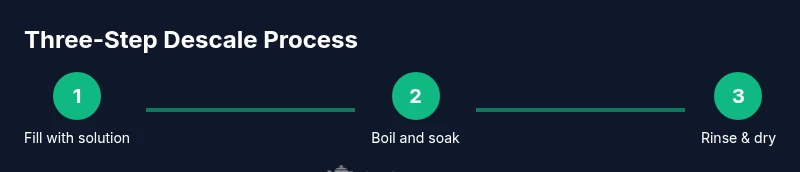
While the detailed, numbered steps appear in the dedicated STEP-BY-STEP section, here is a high-level overview to orient you. Start by turning off the kettle and removing any removable filters or parts that can be cleaned separately. Choose your descaler method, then mix as directed and fill the kettle to cover the affected areas. Bring the solution to a gentle boil, then allow it to soak long enough for the deposits to loosen. Rinse thoroughly with fresh water, repeating cycles if necessary, and dry the interior completely. The goal is a scale-free interior with no lingering odors and a return to normal boiling performance. For best results, schedule descaling every few months, depending on water hardness and how often you use the kettle. Remember, safe handling, proper ventilation, and thorough rinsing protect your kettle and your family.
Safety, Cleanup, and Aftercare
Safety first: handle hot liquid carefully, keep children and pets away, and wear gloves if you’re using stronger descalers. After you finish, ventilate the area to manage any vinegar or chemical fumes and ensure the kettle is completely dry before storage. Clean the exterior with a damp cloth and mild soap if needed. For the interior, a final rinse and several full-boil cycles without opening the kettle will help flush out any remaining residues. Inspect the seals and the lid gasket for wear after a descaling cycle; scale can sometimes affect sealing performance over time. If your kettle shows signs of corrosion or coating damage after several descales, consult the manufacturer’s guidance or a professional service. Following these steps, you’ll maintain a safe, efficient kettle that’s ready for daily use. Keeping a routine helps prevent surprises and keeps daily tea rituals on track.
Common Mistakes and How to Avoid Them
Many home cooks make avoidable errors when descale kettle. Don’t rush the rinse—residues can linger and affect flavor. Avoid using highly acidic products on sensitive coatings unless the manufacturer explicitly allows it. Never boil dry with a descaler solution; this can damage heating elements and coatings. If you smell strong chemical odors after descaling, pause, rinse thoroughly, and repeat with plain water until the odor dissipates. Finally, don’t skip drying the interior; moisture left behind can promote rust in metal kettles and damage to cabinets if spilled elsewhere. By staying mindful of these mistakes, you’ll achieve a scale-free interior while preserving the kettle’s finish and performance. Smart care, regular maintenance, and attention to manufacturer guidelines help you maintain a kettle that boils quickly and tastes right every time.
Long-Term Maintenance for a Scale-Free Kettle
To keep your kettle performing well, adopt a routine maintenance plan. Empty and rinse after each use, especially if you frequently boil water for tea or coffee. Use filtered or softened water if your area has heavy mineral content, and consider descaling on a schedule aligned with your local water hardness. Keep the exterior free from mineral deposits by wiping down regularly. Store the kettle in a dry place to prevent moisture buildup and corrosion. If your household uses a dishwasher, check the manual—most kettles aren’t dishwasher-safe. Finally, record occasional notes on your descaling timing so you can anticipate your next maintenance cycle and avoid a large-scale buildup. With consistent care, your kettle will stay fast, clean, and reliable for years to come.
Tools & Materials
- Descaling solution (commercial descaler or white vinegar)(Follow manufacturer directions if using a commercial descaler; if using vinegar, dilute as advised and ensure thorough rinsing)
- Water(Tap water is fine; use distilled if your water is highly mineralized)
- Measuring cup(For accurate dilution and filling the kettle)
- Soft cloth or sponge(For exterior wipe-down and drying the interior lid area)
- Non-abrasive scrub brush(Helpful for stubborn interior deposits without scratching coatings)
- Protective gloves(Use if handling concentrated solutions)
Steps
Estimated time: 30-45 minutes
- 1
Prepare and gather materials
Turn off the kettle and unplug (for electric models). Remove any detachable filter or lid components that can be cleaned separately. Set up your descaler, measuring cup, cloth, and water for easy access. This reduces spills and ensures you follow the plan without rushing.
Tip: Lay down a towel to catch spills and protect your counters. - 2
Choose and mix your descaler
Select your descaler method (commercial, vinegar, or citric acid) and dilute according to the product directions. If using vinegar, a standard approach is to mix with water as directed and avoid leaving strong residues. Prepare enough solution to cover the affected interior areas.
Tip: Always dilute concentrated descalers to prevent coating damage. - 3
Fill kettle and degas the interior
Pour the prepared solution into the kettle so that the affected heating surfaces are covered. Do not overfill beyond the maximum level. This ensures the solution contacts scale evenly and begins loosening deposits.
Tip: Do not boil with the lid closed tightly—allow venting for steam safety. - 4
Boil solution and soak deposits
Turn the kettle on and bring the solution to a gentle boil if your model supports it. If your kettle has a safety auto-shutoff, step away and watch. Once boiling starts, turn off and let the solution sit for several minutes to loosen deposits.
Tip: Set a timer to avoid overexposure of coatings. - 5
Rinse thoroughly with fresh water
Pour out the descaling solution and rinse the interior with clean water multiple times. Refill with fresh water and bring to a boil to flush out any remaining residues. Repeat as needed until the water runs clear and tastes neutral.
Tip: Open the lid during rinsing to allow complete drainage. - 6
Dry, inspect, and repeat if needed
Dry the interior with a clean cloth and allow the kettle to air-dry completely before storage. Inspect seals and gaskets for wear. If taste or odor remains, repeat the rinsing process or choose a milder descaler and rinse again.
Tip: Proper drying prevents corrosion and odor retention. - 7
Test boil and adjust temperature
Fill with plain water and boil to confirm performance. If the boil time returns to normal and taste is clean, you’re good. If scale is still present, consider another mild descaling cycle with a shorter soak.
Tip: Keep a short log of when you last descaled for future planning. - 8
Post-descale maintenance
Wipe the exterior and store the kettle in a dry location. Review local water hardness and plan descaling every few months to maintain optimal performance. Regular maintenance prevents sudden scale surges and keeps flavor consistent.
Tip: Use a water filtration or softening option if your water is very hard.
Frequently Asked Questions
Is it safe to descale a kettle with vinegar?
Yes, vinegar can be effective, but rinse thoroughly to remove any residual taste or odor. Avoid leaving vinegar residues that could affect future brews, and follow up with several plain-water boils.
Yes, vinegar works, but rinse well and boil plain water several times afterward.
How often should you descale your kettle?
Frequency depends on water hardness and usage. If you notice slower boils or mineral deposits, descaling is a good idea. For very hard water, plan more frequent cycles.
It depends on the water hardness and how often you use it.
Can descaling damage the kettle?
Descaling is safe when you follow manufacturer guidelines and rinse thoroughly. Avoid aggressive scrubbing on coatings and never boil with a concentrated descaler.
Safe if you follow directions and rinse well.
What are common signs of mineral buildup?
Slow boiling speed, cloudy water, and visible white crust near the spout are common signs you need to descale.
Look for slow boils and crusty deposits as signs to descale.
Is descaling necessary for electric kettles?
Yes, electric kettles can accumulate scale on heating elements and walls; descaling helps maintain efficiency and consistent performance.
Yes, electric kettles benefit from regular descaling.
Can I use citric acid as a descaler?
Citric acid is a valid alternative; follow product directions and rinse thoroughly after descaling to remove residues.
Citric acid can work; rinse well afterward.
Highlights
- Descale kettle regularly to maintain efficiency.
- Choose a descaler compatible with your kettle material.
- Rinse thoroughly to remove residues and odors.
- Dry interior completely to prevent corrosion.
- Maintain a simple descaling schedule based on water hardness.