How to Get a Kettle Clean: Safe Cleaning and Descaling
Learn safe, proven methods to get your kettle clean, remove mineral buildup, and restore boiling efficiency. Descale with vinegar or citric acid for electric and stovetop kettles.


Learn safe, proven methods to get your kettle clean, remove mineral buildup, and restore boiling efficiency. This step-by-step guide covers descaling with vinegar or citric acid and tips for electric and stovetop kettles.
What Causes Buildup and Why It Matters
Mineral deposits, primarily calcium and magnesium, cling to the interior of kettles. Over time they form a white crust that slows heating and can affect flavor. According to Kettle Care, the most effective way to maintain efficiency is to descale on a regular schedule, especially in areas with hard water. Before cleaning, unplug the kettle (electric models) and allow it to cool completely to prevent burns. This section explains the science behind limescale and how to recognize when a cleaning is overdue. You’ll notice decreased boiling speed, louder whistling, or a faint metallic taste when deposits accumulate near the heating element or spout. Addressing buildup early keeps energy use low and ensures quick, safe boiling for tea, coffee, and hot water for cooking.
Safe Cleaning Solutions: Choosing Descalers
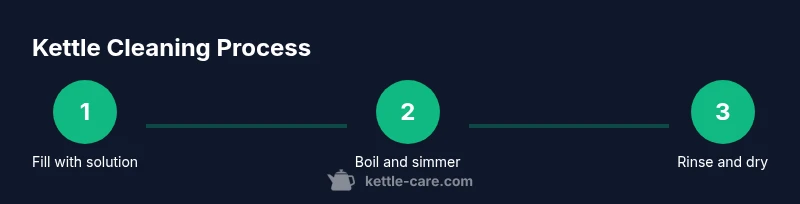
You have several safe options to remove mineral buildup. The vinegar method uses a 1:1 vinegar-to-water solution; bring to a boil, then simmer for 10–15 minutes, and rinse thoroughly. The citric acid method uses 1–2 tablespoons of citric acid per liter of water; dissolve, boil, and rinse. Lemon juice is a milder alternative. Always avoid household bleach or other caustic cleaners, as these can leave harmful residues and damage kettle parts.
Electric Kettles vs Stovetop: Cleaning Nuances
Electric kettles keep the heating element sealed and often have plastic or coated interiors. Do not immerse the base or cord in water. Use a gentle cleaning cycle and thorough rinsing to avoid lingering tastes. Stovetop kettles generally tolerate more aggressive cleaning, but you should still avoid abrasive pads on coated surfaces and rinse until no residue remains. In both cases, always unplug before cleaning and let the kettle cool completely before handling.
Routine Maintenance for Long‑Term Performance
To minimize future buildup, descale on a schedule that matches your water hardness and usage. Use filtered or softened water when possible, and dry the interior after cleaning to prevent new mineral deposits from forming. Wipe the exterior with a damp cloth, then dry. Regular maintenance reduces energy use, preserves flavor, and extends kettle life, making tea and coffee taste better over time.
Troubleshooting Common Issues
If deposits persist after an initial cleaning, consider repeating the descaling step with a longer simmer time or using a second cycle with citric acid. A white film that reappears quickly may indicate a water hardness issue; upgrading to filtered water can help. Persistent odors can be neutralized by a final rinse with clean water and a quick boil with just water to purge any remaining scent.
Tools & Materials
- white vinegar (5-8% acidity)(Use for the classic descaling method)
- citric acid powder(1–2 tablespoons per liter of water)
- water(Tap or filtered)
- lemon juice (optional)(Alternative descaler)
- soft sponge(Gentle scrubbing without scratching)
- non-abrasive scrub brush(Use for stubborn spots)
- microfiber cloth(Dry and polish exterior)
- dish soap (optional)(Mild soap for exterior grime)
- rubber gloves(Protect hands from heat and cleaners)
- measuring spoon(Accurate acid/vinegar measurements)
Steps
Estimated time: 25-40 minutes
- 1
Power down and prep safety
Unplug the kettle (electric models) and let it cool completely; remove the lid and any filters to access the interior. This practice minimizes burn risk and helps you reach deposits.
Tip: Keep hands away from steam and use a dry towel to grip the handle if needed. - 2
Choose your descaling method
Decide between vinegar or citric acid based on availability and odor tolerance. Vinegar is inexpensive and effective but can leave a faint scent; citric acid leaves a milder aroma.
Tip: For hard water, citric acid is often faster and leaves fewer aftertastes. - 3
Prepare cleaning solution and fill
Prepare the cleaning solution according to your chosen method and fill the interior to the max line. Ensure the solution covers interior walls but avoid overfilling if the kettle has a gasket near the lid.
Tip: Use a measuring spoon to keep ratios precise; incorrect ratios can reduce effectiveness. - 4
Heat and wait
Boil the solution, then simmer for 10–15 minutes to allow deposits to break down. Do not leave the solution boiling indefinitely, as excessive heat can affect coatings.
Tip: If you notice strong fumes, turn off the heat and ventilate briefly before continuing. - 5
Rinse thoroughly
Discard the cleaning solution and rinse the interior with clean water several times until you can no longer detect odor or taste residues. If stains persist, repeat the cycle once more with the same method.
Tip: Pay attention to the spout and lid seal; residue can hide in these areas. - 6
Final rinse and test
Boil a full kettle of clean water to flush the interior, then pour out and dry completely. Reassemble any parts and test by boiling fresh water once to confirm purity.
Tip: Wipe the exterior and dry promptly to prevent water spots and streaks.
Frequently Asked Questions
Can I use bleach to clean my kettle?
No. Bleach can damage kettle materials and leave harmful residues. Stick to descalers like vinegar or citric acid for interior cleaning.
Bleach is not recommended for kettles; use vinegar or citric acid instead.
Is it safe to boil vinegar in an electric kettle?
Yes, but rinse thoroughly afterward to remove any lingering smell or taste. Vent steam as needed and ensure complete drying.
Yes, but rinse well after boiling vinegar and dry completely.
How often should I descale a kettle?
Frequency depends on water hardness. Many households descale every 1–3 months, more often in hard-water areas.
How often you descale depends on your water; more often in hard water.
Can I use lemon juice or citric acid instead of vinegar?
Yes. Both lemon juice and citric acid work similarly to vinegar for descaling and may leave milder scents.
Yes, lemon juice or citric acid work well for descaling.
Why does my kettle smell after cleaning?
Residual cleaning solution can linger. Rinse thoroughly with fresh water and boil plain water to purge any odors.
Odors after cleaning are common; rinse and boil fresh water to remove them.
Watch Video
Highlights
- Assess buildup and water hardness before cleaning
- Choose a safe descaling method (vinegar or citric acid)
- Rinse thoroughly until no odor remains
- Dry both interior and exterior after cleaning
- Maintain a regular descaling schedule to prevent future issues