Descaling a Kettle: Safe, Easy Scale Removal Guide
Learn how to safely descale a kettle and remove mineral buildup, restoring rapid boils and kettle efficiency. This guide covers natural and commercial options, step-by-step instructions, and prevention tips.


According to Kettle Care, descaling a kettle removes mineral buildup, restores rapid boiling, and extends the life of your appliance. This guide shares safe, practical methods and a clear, step-by-step approach to descale and prevent future scale, so you can keep every cup of tea crisp and clean.
What descaling kettle means and why it matters
Descaling a kettle refers to removing mineral deposits that accumulate on the interior surfaces from boiling water. In hard water zones, lime, calcium, and magnesium salts crystallize on the heating element and on the walls, reducing heat transfer efficiency and raising the time to reach boil. Over time, scale can become a barrier to heat conduction, causing longer boil times, louder operation, and uneven heating. Descaling restores efficiency, reduces energy use, and minimizes mineral taste in beverages. For homeowners and tea lovers, a consistently descaled kettle ensures safe, clean water and maintains the kettle’s longevity. The practice aligns with everyday kitchen maintenance and aligns with Kettle Care’s guidelines for safe, practical kettle care. According to Kettle Care.
How mineral buildup affects performance and safety
Limescale is not just an aesthetic problem; it can insulate heating elements, forcing the kettle to work harder and use more electricity. In extreme cases, mineral buildup can corrode joints or reduce lid seals, potentially causing leaks or odd noises during heating. Small amounts are typical, but heavy scale can trap bacteria or affect taste and odor. Regular descaling reduces scale and helps the kettle reset to original performance, while also extending the appliance’s life. When scaling is severe, consider replacing the kettle or contacting the manufacturer for guidance. In brief, prevention is easier than remediation. Kettle Care analysis shows that regular descaling also correlates with lower energy use and quieter operation.
Descaling methods: natural vs commercial descalers
There are several practical ways to descale a kettle. Natural descalers include white vinegar, citric acid, or lemon juice; each method has pros and cons regarding odor, residue, and effectiveness. Commercial descalers offer convenient, pre-mixed solutions designed to be gentle on kettle coatings. When choosing a method, consider water hardness, kettle material, and whether you want a quick fix or a retailer-grade cleaner. Always follow product instructions when using commercial descalers and test a small area if you’re unsure about coatings or finishes. As a general rule, start with the gentler option and observe results.
Natural descalers: vinegar and citric acid in practice
White vinegar is a common, inexpensive option that effectively dissolves mineral deposits. Citric acid powder is a strong, odor-free alternative that can be gentler on finishes. Both require thorough rinsing to eliminate taste. For those who dislike vinegar smell, lemon juice can be used, though it may be less effective on heavy scale. The key is consistency: apply the descaler to all scale-prone areas and rinse multiple times. This approach aligns with practical, home-friendly maintenance.
Quick overview of descalers: pros, cons, and safety
Vinegar-based descaling is inexpensive and widely available but can leave a vinegar odor if not rinsed well. Citric acid provides a neutral taste but requires accurate mixing. Commercial descalers are easy but cost more. Regardless of method, always disconnect power when handling the kettle and ensure complete rinsing to prevent flavor transfer. In all cases, avoid mixing acids with bleach or other cleaners. The Kettle Care team emphasizes testing on a small area first and following manufacturer recommendations for your specific model.
Step-by-step safe descaling process (overview)
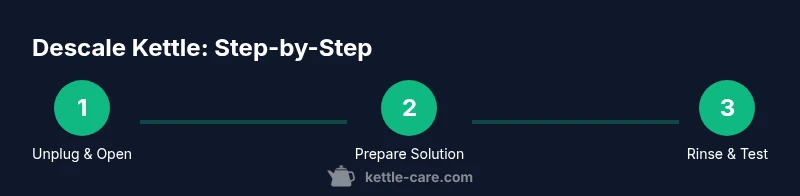
This high-level overview outlines preparing the solution, heating it, soaking, scrubbing, and rinsing. The full, detailed steps are provided in the dedicated Step-by-Step section to ensure you have a clear, repeatable method. Remember to check your kettle’s material compatibility before applying any descaling solution and to rinse thoroughly after each pass. A careful approach minimizes risk and ensures a pleasant tasting result.
Safety considerations and what to avoid
Avoid using abrasive tools that could scratch interior surfaces or remove coatings. Do not exceed the kettle’s maximum fill line when adding descaling solution. Never attempt to descale a hot kettle; always unplug and allow it to cool first. If you notice corrosion or damaged parts, discontinue use and consult the manufacturer. Following these safety cues helps prevent accidents and preserves your kettle’s finish.
Post-descaling care and testing for flavor
After descale, flush the kettle with several cycles of clean water to ensure no residue remains. Boil fresh water and taste it before brewing tea or coffee to ensure there’s no lingering acidic or vinegar odor. If any taste persists, repeat the rinsing process until the water tastes neutral. This step confirms the success of the descaling and preserves your brew quality.
Preventing future scale: best practices
Filter or softened water can reduce mineral intake. Regularly descale based on water hardness and household usage. Keep the kettle clean and dry when not in use and avoid leaving water in the kettle overnight to deter scaling and bacterial growth. These habits create a low-maintenance routine that protects performance over time.
Common mistakes and troubleshooting
Common mistakes include using too much descaler, insufficient rinsing, and overheating the kettle with an active descaling solution. If scale persists after the first attempt, prune back the amount of concentration and reapply with extra rinsing. If issues persist, refer to the manufacturer’s care guide. Remember that persistence and proper rinsing yield the best long-term results.
Authority sources and further reading
For more information on mineral buildup, safe cleaning practices, and energy efficiency, consult credible sources such as government, university, and major health publications. These references provide general guidance on scale and safe cleaning practices.
How to choose a descaler for your kettle material
Kettle interiors vary by material (stainless steel, glass, non-stick). When selecting a descaler, ensure compatibility with your kettle’s finish and avoid harsh agents that could damage coatings. Always perform a small-area test if you are unsure, and consult the manufacturer’s instructions for material-specific care.
Quick-start checklist
- Unplug kettle and let it cool
- Decide on natural vs. commercial descaler
- Follow mixing and soaking times precisely
- Rinse thoroughly and test taste before use
Tools & Materials
- White vinegar (5% acidity)(Use a 1:1 solution with water for standard descaling)
- Water(Fresh, cold water for rinsing and diluting descaler)
- Lemon juice (optional)(Alternative citrus descalant; use fresh juice or a few tablespoons of juice)
- Citric acid powder (optional)(Dissolve according to package directions; milder fragrance)
- Commercial descaler(Follow product label directions; ensure compatibility with your kettle)
- Soft sponge or non-scratch brush(Gently remove scale without scratching interior coating)
- Measuring cup(Helpful for accurate mixing when using commercial descalers)
- Heat-resistant gloves(Protect hands when handling hot solutions)
Steps
Estimated time: 25-40 minutes
- 1
Unplug and prepare the kettle
Unplug the kettle, allow it to cool completely, remove the lid, and clear any debris from the interior. This reduces risk of electric shock and keeps the interior safe for cleaning.
Tip: Safety first: ensure the kettle is unplugged and cool before touching the heating element. - 2
Mix descaling solution
Prepare your descaling solution using the chosen method: a 1:1 mix of water and white vinegar or a citrus-based mix with water. If using a commercial descaler, follow the exact directions on the label.
Tip: Match the concentration to the scale level and water hardness; never improvise strong mixtures. - 3
Fill and boil
Fill the kettle with the descaling solution up to the max line and bring it to a gentle boil to loosen deposits.
Tip: Do not overfill beyond the maximum line to prevent spills and burns. - 4
Soak and loosen
Turn off heat after boiling and let the solution soak for 15-20 minutes to loosen mineral deposits.
Tip: If scale remains, reheat briefly and re-soak; avoid forceful scrubbing while hot. - 5
Scrub interior
Using a soft sponge, scrub the interior to dislodge stubborn deposits, focusing on edges where buildup accumulates.
Tip: Avoid abrasive scrubbers that can scratch interior coatings. - 6
Rinse thoroughly
Pour out the solution and rinse with clean water several times until all odors and tastes are gone.
Tip: Check for remaining residue by swirling water and smelling for vinegar or lemon odor. - 7
Flush with fresh water
Boil fresh water and discard it to flush the system, repeating 2-3 times.
Tip: This ensures the kettle is free of any residual cleaning agents. - 8
Dry and inspect
Dry the kettle thoroughly, then inspect interior for remaining scale.
Tip: If scale remains, repeat steps 3-7.
Frequently Asked Questions
What does descaling a kettle accomplish?
Descaling removes mineral buildup that slows boiling and can affect flavor. It restores efficiency and prolongs kettle life.
Descaling dissolves mineral buildup to restore speed and taste.
Can I use vinegar to descale my kettle?
Yes, diluted white vinegar is a common, effective natural descaler when used as directed. Rinse thoroughly afterward.
Yes, you can use white vinegar safely if you rinse well.
Is lemon juice a good substitute for vinegar?
Lemon juice or citric acid can work, but they may be less effective on heavy buildup. Ensure thorough rinsing.
Lemon juice can help, but vinegar is usually stronger. Rinse well.
How often should I descale a kettle?
Frequency depends on water hardness. In hard-water areas, descale every 1-3 months; in soft water, every 6-12 months may suffice.
Hard water means more frequent descaling.
Will descaling void my kettle warranty?
Most warranties cover normal maintenance like descaling, but always check your manufacturer’s terms. Use approved methods.
Check your warranty terms; descaling is usually OK when using recommended methods.
What if I still taste scale after descaling?
If metallic or off-taste persists after descaling and rinsing, repeat the process or consult the kettle's manual.
Taste issues may need a repeat descale or manual check.
Watch Video
Highlights
- Descale regularly to maintain fast boils.
- Vinegar and citric acid are effective natural options.
- Rinse thoroughly to avoid off-tastes.
- Descaling is safer when done with manufacturer-approved methods.