How to Stop a Kettle Tasting of Plastic
Learn practical, safe methods to eliminate plastic taste from your kettle. This step-by-step guide covers cleaning, descaling, and maintenance to ensure clean, tasty water every time.


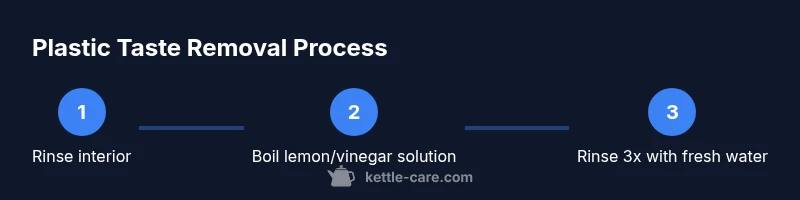
To stop a kettle tasting of plastic, follow a thorough cleaning routine and test with fresh water until the flavor dissipates. Start by rinsing, then boil water with a safe cleaning agent (lemon juice or white vinegar), rinse multiple times, and dry the interior. If the taste persists after several cycles, consider replacement.
Why the plastic taste happens
Plastic taste in kettles usually comes from new devices that include plastic components or from residues left from manufacturing and packaging. Even BPA-free plastics can emit flavors when heated, especially when the kettle is new or when it’s been stored with liquids for a while. In some models, the interior lining or seals may contribute to the taste after repeated heating cycles. Mineral deposits from hard water can also alter the aroma and mouthfeel, making the water seem odd. The goal is to neutralize these odors and remove surface residues without harming the kettle. According to Kettle Care, most plastic flavor issues are resolved after a few focused cleaning boils, provided you use a safe cleaning agent and rinse thoroughly. This section helps you understand why the taste occurs so you can choose the right cleaning approach for your model.
Quick checks before cleaning
Before committing to a cleaning routine, perform a few simple checks to avoid unnecessary work. Inspect the interior for a visible film or residue, then sniff the water after boiling a small amount to confirm the source of the odor. If the taste appears strongest when the kettle is new, you may simply need a few cycles to break in the plastic components. If the taste lingers after repeated boils, consider whether the model uses plastics in contact with heat or if a replacement part is available. Always verify that the kettle is unplugged and cool before handling the interior. These checks help you tailor the cleaning method and prevent unnecessary wear on the appliance.
Safe cleaning methods to remove plastic flavor
There are two widely recommended methods to strip plastic flavor safely: the lemon method and the vinegar method. For the lemon method, fill the kettle with water and add the juice of one lemon or a few lemon slices. Bring to a boil, then simmer for 3–5 minutes, turn off, and let cool. Rinse thoroughly, refill with fresh water, and boil again to ensure any lemon oils are flushed out. For the vinegar method, mix equal parts water and white vinegar, boil for 5–10 minutes, then discard the solution and rinse with fresh water several times. Both methods leverage natural acids to neutralize odors and break down residues without harsh chemicals. Important: never mix cleaners and always rinse completely to remove any taste. After this step, dry the interior completely to prevent new odors from forming.
Descaling and deodorizing beyond lemon
If mineral buildup contributes to the flavor, descaling helps. Create a baking soda solution by dissolving 1–2 tablespoons of baking soda in a liter of water, fill the kettle, and bring to a boil. Let it sit for 15–20 minutes, then scrub gently with a non-abrasive sponge and rinse thoroughly. Alternatively, run a rinse cycle with plain water a few times. Baking soda can neutralize odors and soften any residual taste. Always ensure you rinse until no residue remains and air-dry the kettle. This approach is especially useful in areas with hard water or kettles that have visible mineral films.
When to replace the kettle
If the plastic taste persists after multiple cleaning and descaling cycles, or if the odor returns shortly after each cleaning, it may be a sign that the internal components are compromised. In that case, replacement is a reasonable and safer option. Prolonged exposure to even mild plastic flavors can affect beverage taste and satisfaction. Evaluate the age of the kettle, the materials used, and any changes in performance. The Kettle Care team recommends weighing the cost of ongoing maintenance against the benefits of a newer model with updated, safer materials.
Preventing future plastic taste: routine maintenance
Prevention is easier than repeated cleaning. Regularly flush the kettle with hot water, especially after brewing aromatic beverages like tea or coffee with strong additives. Use filtered or distilled water if your local water has a strong mineral profile. Periodically descale with a vinegar or lemon-based solution to keep interior surfaces clear of deposits. Store the kettle with the lid off or ajar to reduce trapped odors. Finally, follow the manufacturer’s guidance for cleaning and avoid using harsh cleaners that could degrade interior coatings. Consistent maintenance reduces the chance of a plastic taste returning and keeps your water tasting fresh.
Tools & Materials
- White vinegar (5% acetic acid)(Dilute with water 1:1 for cleaning; never use full-strength vinegar; avoid if your kettle’s manual prohibits vinegar.)
- Fresh lemons or lemon juice(Lemons provide a milder aroma; use slices or juice as an alternative to vinegar.)
- Baking soda(Use for deodorizing and descaling; do not leave residue.)
- Soft sponge or microfiber cloth(Non-abrasive for interior cleaning; avoid harsh scrubbers that could scratch coatings.)
- Dish soap (optional; if kettle is dishwasher-safe)(Small amount is usually enough; check manufacturer guidance before use.)
- Clean, cold water(For rinsing between cycles and final rinse to remove any remaining flavors.)
- Drying cloth or air-drying rack(Ensure interior is completely dry before storing to prevent odor formation.)
Steps
Estimated time: 60-90 minutes
- 1
Empty and inspect the kettle
Start with a cold, unplugged kettle. Empty any remaining water and check for visible residues, cracks, or seals that could harbor odors. This initial check helps you decide which cleaning method to use and whether a simple rinse is enough.
Tip: Inspect the interior for a soft film; if present, proceed with a cleaning cycle rather than a rapid rinse. - 2
Rinse interior with warm water
Rinse the interior with warm tap water to loosen any loose particles and odors. Do not use boiling water yet; warming first minimizes splashes and prepares surfaces for cleaning agents.
Tip: Use a gentle swirl to cover all interior surfaces—don’t miss the lid seal area, as odors often cling there. - 3
Prepare cleaning solution
Choose between lemon or vinegar cleaning: add either lemon juice (or lemon slices) or a 1:1 mix of water and white vinegar to the kettle. The acidity helps neutralize odor-causing compounds and loosens residue.
Tip: Label the solution in your mind as a dedicated cleaning cycle to avoid confusing it with drinking water. - 4
Boil the cleaning solution
Bring the solution to a boil and then simmer for 5–10 minutes, depending on the intensity of the taste. This step helps release embedded odors from the plastic components.
Tip: Do not let the solution boil dry; if the kettle boils faster than expected, monitor closely and turn off as needed. - 5
Rinse thoroughly and repeat if needed
Discard the cleaning solution, then rinse the interior several times with fresh water. If the taste persists, repeat the boil with fresh water or switch to the alternative cleaning agent (lemon vs vinegar).
Tip: Aim for at least 3 full fresh-water boils to ensure all residues are flushed out. - 6
Optional deodorize with baking soda
If odors linger, mix 1–2 tablespoons of baking soda in a liter of water, fill the kettle, and bring to a boil for 5 minutes. Let cool, then rinse thoroughly.
Tip: Rinse until the water runs clear to remove any baking soda taste. - 7
Final rinse and dry
Do a final rinse with clean water, then dry the interior completely with a clean cloth or air-dry with the lid open. Refill with plain water and boil to test taste.
Tip: Taste a small amount of the boiled water in a clean cup to assess if the plastic flavor is gone.
Frequently Asked Questions
Why does my kettle taste like plastic even after buying it?
New kettles can have a plastic aroma from manufacturing residues or from plastic components in contact with heat. This usually fades with repeated boils and proper cleaning. If the taste persists, check materials or consider replacement.
New kettles often carry a temporary plastic aroma that improves with cleaning and boiling cycles. If it sticks around, check the kettle’s materials and consider replacement.
Is it safe to boil lemon juice in a plastic kettle?
Boiling lemon juice is generally safe and effective for odor removal, but avoid concentrations or methods not recommended by the manufacturer. Always rinse well afterward to remove any citrus residues.
Yes, lemon juice is usually safe for odor removal, as long as you rinse thoroughly to remove any citrus residues.
How many boil cycles are needed to remove the plastic taste?
There’s no fixed number. Start with 2–3 cycles using safe cleaning agents and thorough rinses; repeat as needed until the taste disappears.
Usually a few cycles are enough, but more may be needed if the odor lingers after cleaning.
Should I replace my kettle if the taste persists after cleaning?
Yes, if repeated cleaning does not remove the taste and the odor returns quickly after each cycle, replacement is prudent to ensure safe and pleasant-tasting water.
If the taste keeps coming back after cleaning, replacing the kettle is a sensible option.
Can mineral deposits cause a plastic taste?
Yes, mineral buildup can contribute to off-tastes. Descaling helps remove deposits and improve flavor.
Mineral buildup can cause off flavors; descaling can help restore taste.
Are there safer materials for kettles to avoid plastic tasting?
Look for kettles with high-quality metals or BPA-free, heat-safe plastics, and verify materials with the manufacturer. Safer designs reduce taste issues over time.
Choose kettles with safer materials and check the manufacturer’s guidance to avoid future plastic taste.
Watch Video
Highlights
- Identify the source of plastic taste before cleaning
- Use safe acids like lemon or vinegar and rinse thoroughly
- Repeat boiling cycles until flavor is gone
- Descale when mineral buildup is present to prevent recurrence
- Replace the kettle if taste persists after multiple cleanings