How to Stop Kettle from Limescale: A Practical Guide
Learn how to stop kettle from limescale with practical prevention, daily maintenance, and safe descaling methods. This guide covers citric acid, vinegar, and commercial descalers, plus expert tips from Kettle Care.


To stop kettle from limescale, start with thorough cleaning, then adopt daily rinse-and-dry and weekly descaling using a safe descaler or natural solutions like vinegar (diluted) or citric acid. Use soft water if possible, and never boil dry. Regular maintenance prevents buildup and extends kettle life.
What causes limescale and why kettles suffer
Limescale forms when minerals in hard water—primarily calcium and magnesium—precipitate out as the water is heated. In kettles, the rapid heating concentrates these minerals on the inner walls and heating elements. Over time, this mineral layer hardens into a crust that reduces heating efficiency, slows boil times, and can affect the taste of hot drinks. According to Kettle Care, limescale is not just a cosmetic issue; it can insulate the element slightly, forcing the kettle to work harder and use more energy. Regular prevention helps keep boil times consistent and prolongs kettle life. Practically, if you live in a hard-water area, you’ll notice scale buildup sooner than in soft-water regions. The good news is that most kettles are designed to resist minor scaling; the challenge is keeping it manageable through routine care.
Preventive habits to reduce buildup
The simplest way to stop kettle from limescale is to reduce the minerals entering the device. Use filtered or softened water if your home's supply permits, and always empty the kettle after use to prevent standing mineral residues from drying on the walls. Keep the exterior clean and check the lid and filter (if present) for mineral deposits. Descale proactively at regular intervals, even if you don’t see obvious scale, because a thin film can still impact performance. For households using hard water, consider a permanent water filter or a small descaler cartridge if your kettle supports them. Finally, avoid boiling very small amounts of water for a single cup; aim for 200-250 ml minimum to ensure even heating and minimize mineral concentration. This habit reduces the risk of crust forming on the bottom.
Daily maintenance routine for safe boiling
Establish a quick daily routine that targets limescale without disrupting your day. After every boil, wipe the interior with a soft microfiber cloth to remove warm water and mineral residue. If your kettle has a removable filter, rinse it under running water weekly and dry it fully before reattaching. Check the scale line against the water level; if it sits low on hard water, consider a more thorough weekly descale schedule. If your model has a visible area where scale tends to cling, gently scrub with a soft brush or sponge. Finally, keep the base and cord dry; moisture around electrical parts is a safety hazard.
Descaling methods: chemical vs natural
There are two broad approaches to descaling: chemical descalers (commercial products) and natural acids (citric acid, vinegar). Commercial descalers are formulated to break mineral bonds quickly and usually require a short soak; they’re convenient and generally safe for most kettles when used as directed. Natural options are gentler on your wallet and the environment but may require longer contact times and more rinsing. The key is to choose a descaler compatible with your kettle’s interior—whether stainless steel, enamel, or plastic—and to follow the manufacturer’s guidelines. Remember, never mix cleaners, avoid bleach, and never use an acidic solution on bare metal components if the end-user manual forbids it. The goal is to lift scale without corroding interior surfaces. Regular descaling using appropriate products reduces energy use and restores boil efficiency.
How to descale with common household products
One practical routine uses citric acid: mix 1-2 tablespoons of citric acid in 1 liter of water, fill the kettle, bring to a boil, then turn off and let soak for 15-20 minutes. Rinse thoroughly with fresh water and repeat if residues remain. If you prefer vinegar, use a 1:1 water-to-vinegar solution, boil, and let sit for 15 minutes; rinse repeatedly to remove odor. For kettles with enamel interiors, citric acid is usually the safer option; for stainless steel, both citric acid and white vinegar are commonly used. After descaling, flush with fresh water several times until you detect no taste or odor. The aim is to remove mineral layers without leaving residues that could affect taste or safety.
What to do after descaling: rinse, dry, and store
After descaling, rinse the kettle thoroughly with clean water several times to remove any chemical residues. Fill and boil a few cycles with fresh water to ensure all traces are gone. Dry the interior completely with a towel, then leave the lid open or ajar to air-dry. Store the kettle in a dry environment to prevent new mineral deposits from forming on damp surfaces. If you notice persistent film after multiple descales, re-check your water quality and consider a longer-term water treatment plan.
Troubleshooting stubborn limescale and when to replace
If scale persists after repeated descales, the mineral layer may have bonded to metal or the interior coating may be worn. In such cases, consult the manufacturer’s guide or contact a service technician. Replacing the kettle is costly but sometimes unavoidable if the heating element or coating is compromised. Before deciding, try a more intensive descale cycle with a commercial product following the label. Do not attempt to disassemble the heating element yourself. Regular maintenance, including the recommended weekly descale, can prevent severe buildup. The goal is to keep your kettle safe, efficient, and ready to brew without taste contamination.
Tools & Materials
- Descaling solution (citric acid or kettle descaler)(Choose according to your kettle interior (metal, enamel, or plastic))
- White vinegar (optional)(5% acidity, use only if safe for your kettle)
- Measuring spoon (tablespoon)(Precise citric acid quantities)
- Soft microfiber cloth(Interior wipe and exterior dusting)
- Non-abrasive scrub brush(For stubborn spots in crevices)
- Rinsing jug or bowl(For soaking and rinsing cycles)
- Safety gloves(Optional but helpful for direct handling)
Steps
Estimated time: 45-60 minutes
- 1
Prepare the kettle and workspace
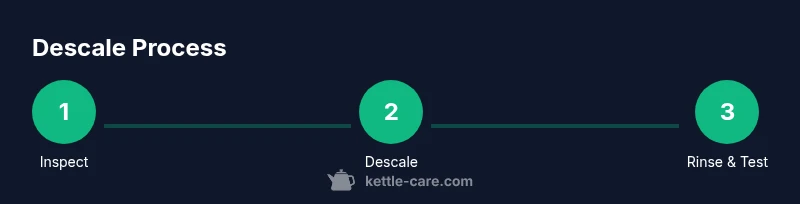
Unplug the kettle and allow it to cool completely. Remove the lid and any removable filter so you can reach every interior surface. Wipe the exterior and place the kettle on a stable, dry surface.
Tip: Safety first: never clean a hot appliance. - 2
Choose your descaling solution
Decide between a commercial descaler or a citric acid solution. Read the label for recommended concentrations and contact times for your specific kettle material.
Tip: Use manufacturer guidance to protect coatings. - 3
Fill with descaling solution
Pour the prepared solution into the kettle up to the max fill line. If you’re using vinegar, mix with water as directed and avoid concentrating fumes.
Tip: Do not exceed the max fill line to prevent overflow. - 4
Boil and soak
Boil the solution, then turn off heat and let it soak for 15–30 minutes. For heavy scale, you may reheat once to improve penetration.
Tip: Keep the lid off during soaking to allow gases to escape. - 5
Scrub and rinse
Gently scrub interior surfaces with a soft brush or cloth to remove loosened scale. Rinse with fresh water several times until no residue remains and smell is gone.
Tip: Flush until you detect no mineral taste or odor. - 6
Final dry and test
Dry the interior with a towel and leave the lid ajar to air-dry. Boil fresh water to test for taste and performance before using normally.
Tip: If there’s any lingering taste, repeat rinses and boil cycles.
Frequently Asked Questions
What causes limescale buildup in kettles?
Limescale is mineral deposits from hard water that precipitate when heated. Over time these minerals cling to interior surfaces and the heating element, forming a crust. Regular descaling helps.
Hard water minerals build up in kettles, forming limescale that can reduce performance.
How often should I descale my kettle?
It depends on water hardness. In hard-water areas, aim for monthly or every 1-2 months; in soft-water regions, every 3-6 months.
Hard water means more frequent descaling.
Can I use vinegar to descale my kettle?
Yes, but rinse thoroughly to remove odor; citric acid is often safer for interior coatings.
Yes, but rinse well after.
Is limescale dangerous?
Limescale is usually not a health hazard, but it can harbor bacteria in crevices and reduces boil efficiency and flavor.
Not typically dangerous, but it can affect taste and efficiency.
What are good alternatives to citric acid?
Commercial descalers or white vinegar are common alternatives; always follow product directions and your kettle’s manual.
Commercial descalers or vinegar can work, follow labels.
Should I replace my kettle if buildup is heavy?
If descaling fails after multiple attempts or the interior coating is seriously worn or damaged, replacement may be the safest option.
Replacement is wise if descaling fails or coating is damaged.
Watch Video
Highlights
- Regular descaling maintains boil efficiency.
- Hard water requires more frequent maintenance.
- Citric acid and commercial descalers are safe options when used correctly.
- Rinse, dry, and test after each descaling.