Tea Maker Kettle: Safe, Efficient Boiling for Home
Learn how to select, use, clean, and descale a tea maker kettle for safer, faster, and more flavorful tea at home. Practical tips, step-by-step maintenance, and troubleshooting for lasting performance.


You will learn how to select, operate, and maintain a tea maker kettle for safe, efficient boiling. This guide covers choosing the right model, proper cleaning, descaling, and safety checks, plus tips to save energy and extend lifespan. You'll get step-by-step instructions and practical warnings to avoid common mistakes. Whether you brew everyday tea or special infusions, mastering your kettle reduces wait times and boosts safety.
Why the tea maker kettle matters for everyday brewing
A tea maker kettle is more than a clock-reset of your kitchen routine; it's a small appliance that impacts flavor, safety, and convenience. When you choose a model labeled as a tea maker kettle, you’re getting a device built for rapid heating, consistent water temperature, and automatic safety features that prevent accidental scalding. According to Kettle Care, the easiest way to start is to think in terms of capacity, speed, and reliability. A well-chosen kettle reduces wait times, minimizes mineral buildup, and helps you reach the precise temperature needed for delicate teas like green, white, or oolong. In daily practice, the right kettle becomes a quiet helper—no noisy whistling, no guesswork about water height, just a predictable boil that preserves aroma and flavor. Homeowners and tea lovers especially appreciate a kettle that integrates with safe operating features, leaving you more time to focus on the steeping step that actually unlocks taste. This section lays the groundwork for understanding why a tea maker kettle is a wise investment for your kitchen setup.
Beyond the basics, you’ll find that model variety matters. Stainless steel bodies resist mineral deposits and look modern on the counter, while glass windows give you a visual cue about water clarity. Gooseneck spouts are beneficial for pour-over tea lovers who want precise control, whereas traditional rounded spouts work well for standard steeping. Regardless of your preferred style, the core benefits remain consistent: faster heating, better control, and built-in safety that protects both hands and countertop surfaces. As you read, map your priorities: capacity (how much you make in a session), finish (how it fits your kitchen aesthetic), and features (auto shut-off, keep-warm, or temperature presets).
Why the tea maker kettle matters for everyday brewing
A tea maker kettle is more than a clock-reset of your kitchen routine; it's a small appliance that impacts flavor, safety, and convenience. When you choose a model labeled as a tea maker kettle, you’re getting a device built for rapid heating, consistent water temperature, and automatic safety features that prevent accidental scalding. When you choose a model labeled as a tea maker kettle, you’re getting a device built for rapid heating, consistent water temperature, and automatic safety features that prevent accidental scalding.
Tools & Materials
- Tea maker kettle (electric or stovetop)(Choose compatible with your preferred tea styles)
- Descaling solution (citric acid or vinegar)(Citric acid is gentler on interiors; vinegar is effective but may leave odor)
- Soft-bristle brush or non-abrasive sponge(For interior walls and lid edges)
- Microfiber cloth(For exterior wipe-downs and drying)
- Measuring cup or graduated container(To measure water for accurate fills)
- Soft towels or drying rack(Optional but helps with drying after cleaning)
- Water (filter if desired)(Filtered water can reduce scale buildup)
- User manual (printed or digital)(Check manufacturer-specific guidance)
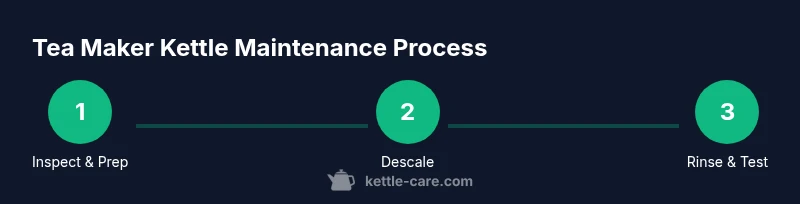
Steps
Estimated time: 60-90 minutes
- 1
Unplug and inspect
Before any maintenance, unplug the kettle and let it cool completely. Wipe the exterior with a damp microfiber cloth and visually inspect for cracks or loose parts. Checking the lid seal and base connection helps prevent leaks during descaling.
Tip: Always ensure the appliance is cool to the touch before handling. - 2
Empty, rinse, and prep
Pour out any remaining water, rinse the interior with clean water, and remove any scale flakes. A quick interior rinse removes loose deposits and makes descaling more effective.
Tip: Use a soft brush to dislodge stubborn deposits without scratching the coating. - 3
Prepare descaling solution
Prepare a descaling solution using citric acid or a compatible product according to the manufacturer’s guidance. If using citric acid, dissolve the powder in hot water to help it circulate evenly through the spout and walls.
Tip: Avoid harsh chemical concentrates and follow the recommended ratio for your kettle. - 4
Descale and soak
Fill the kettle with the descaling solution to cover affected areas. Let it soak for the recommended duration, then gently agitate by tilting the kettle to dislodge scale. For stubborn buildup, reapply solution and soak longer.
Tip: Do not boil the solution if the deposits are very light; a short soak can be sufficient. - 5
Rinse thoroughly
Pour out the descaling solution and rinse the interior with clean water several times. Repeat until there is no sour or sour-like odor, and the water runs clear.
Tip: Run the rinse cycle with fresh water at least three times to ensure no residue remains. - 6
Clean exterior and lid
Wipe the exterior and lid with a damp microfiber cloth. For stubborn marks, use a mild, non-abrasive cleaner and dry immediately to prevent streaks. Check the lid seal for wear and replace if necessary.
Tip: Avoid abrasive pads that can scratch the finish. - 7
Reassemble and test
Reassemble all parts, fill with clean water, and bring to a boil once to clear any residual cleaning agents. Discard this first cycle and then use the kettle normally.
Tip: Test with a small amount of water first to verify boiling time and lid function. - 8
Create a maintenance rhythm
Set a simple maintenance schedule: light rinse after each use, deeper descaling every few weeks or monthly depending on water hardness, and periodic checks of seals and cords.
Tip: Document your routine so you don’t miss critical steps.
Frequently Asked Questions
How often should I descale my tea maker kettle?
Descale based on water hardness and usage. For hard water, a monthly descale is common; for softer water, every few months may suffice. Regular maintenance helps prevent mineral buildup that slows heating and affects flavor.
Descale according to water hardness and use; monthly if water is hard, otherwise a few months is typical.
Can I use vinegar to descale my kettle?
Vinegar is effective for descaling but may leave an odor. If you choose vinegar, thoroughly rinse with fresh water afterward and air dry before reuse.
Yes, vinegar can descale, but rinse well to remove any smell before using the kettle again.
Is it safe to use lemon juice or citric acid as a descaler?
Citric acid is a common, gentle descaler that is safe for most kettles. Lemon juice can work but may leave a tangy flavor; ensure thorough rinsing after descaling.
Citric acid is a standard choice; lemon works but requires thorough rinsing.
My kettle whistles or leaks during use. What should I do?
Whistling can indicate air trapped in the kettle or a loose lid. Leaks may come from a damaged seal or cracked body. Inspect seals, replace worn parts, and avoid overfilling.
If it whistles, check the lid and fill line; leaks mean seals or body damage—inspect and replace as needed.
Can I put my tea maker kettle in the dishwasher?
Most kettles should not be placed in the dishwasher, especially electric models. Hand wash the exterior and avoid exposing electrical components to water.
Don’t dishwash most kettles; hand wash only and keep electrical parts dry.
How long does a typical boil take in a tea maker kettle?
Boil times vary by model and amount of water, but most kettle boils should complete within a few minutes for standard capacities. Use the manufacturer’s guidelines for exact times.
Boiling usually takes a few minutes depending on water amount and model.
Watch Video
Highlights
- Choose a tea maker kettle that fits your daily volume.
- Descale regularly to keep heat transfer efficient.
- Use safe cleaning methods that protect finishes and seals.
- Incorporate a maintenance schedule for longevity.
- Keep safety features engaged for peace of mind.