Kettle Boiler Maintenance: Clean, Descale, and Safe Boiling
A practical, expert guide to cleaning and descaling a kettle boiler for safer, faster boiling, longer life, and better-tasting tea.


Learn how to safely clean, descale, and maintain a kettle boiler for safe, efficient boiling. This quick guide covers when to descale, which descalers to use, and simple daily practices to prevent buildup. You’ll get a clear, step-by-step path and practical tips from Kettle Care to extend your kettle’s life and keep your tea tasting great.
Why maintenance of the kettle boiler matters
According to Kettle Care, regular maintenance of a kettle boiler is essential for safe, fast boiling and long-term reliability. Limescale and mineral buildup can insulate heating elements, slow down your boil, and affect flavor. A well-maintained kettle not only works more efficiently but also reduces energy use and the risk of malfunctions. This section outlines why routine care matters, how buildup happens, and what you can do to minimize it without sacrificing convenience or safety. By understanding the common causes and visible signs, you’ll be better prepared to keep your kettle in peak condition and prolong its lifespan.
Key ideas include preventing mineral deposits, prioritizing exterior cleanliness, and using safe descaling methods that preserve interior coatings. Whether you own a stove-top kettle or an electric model, the underlying principles apply: keep the water clean, descale when needed, and dry thoroughly after use. With regular attention, your kettle boiler will boil more quickly, taste better, and stay safer for years of tea-making and cooking.
Common problems with kettle boilers
Kettle boilers frequently encounter issues that stem from mineral buildup, improper descalers, or poor maintenance routines. Common problems include sluggish heating, cloudy water, odd odors after boiling, and mineral crusts around the spout or lid. Some kettles develop chalky white crusts on the interior walls, which can harbor bacteria if left untreated. Exterior plating may show water spots or dullness from mineral attack, especially on stainless-steel finishes. In electric models, scale can cover heating elements and sensors, reducing efficiency and accuracy. By recognizing these signals early, you can act before performance declines, preserving flavor, speed, and safety. The right descaling approach and regular cleaning are your best defense against these issues.
Descaling options: citric acid vs white vinegar
Descaling is most effective when you choose a mild, food-safe descaler that won’t damage the kettle’s interior lining. Citric acid descaling solutions are popular for their gentle action and neutral aftertaste. White vinegar is a common alternative that can dissolve mineral buildup without harsh chemicals. When using either option, always dilute according to product guidelines, never exceed recommended concentrations, and ensure thorough rinsing to remove all residues and odors. Citric acid is often preferred by cooks for minimal scent, while vinegar can be more economical. The choice depends on your kettle’s material, your tolerance for odor, and your routine. Regardless of which descaler you pick, the goal is complete rinsing and drying to restore function and flavor.
Daily maintenance routines for longevity
A simple daily routine can prevent most buildup and keep your kettle ready for use. After each boil, rinse the interior briefly with clean water and wipe the exterior with a damp cloth. Avoid leaving water in the kettle for extended periods, since stagnant water can promote mineral deposits and odor. If you notice mineral film forming near the lid gasket or around the base, perform a light rinse and wipe more frequently. For households with hard water, consider a monthly descaling schedule and a quick wipe-down after each use to maintain performance without heavy downtime.
Materials compatibility: which kettles to care for
Kettles come in stainless steel, glass, ceramic, and plastic variants. Descaling methods should respect the material: stainless steel typically tolerates citric acid or vinegar but may show water spots if not dried thoroughly; glass interiors are easier to inspect for deposits but must be handled gently to avoid scratches; ceramic kettles usually tolerate milder descalers, and plastic interiors may resist descaling agents differently. Always consult manufacturer guidelines for your specific model before introducing a new descaler. If coatings or warranties are involved, limit descaling to approved methods to avoid voiding coverage.
Safety considerations and warnings
Descaling involves hot liquids and cleaning agents, so safety is essential. Always unplug electric kettles and allow them to cool completely before handling. Never mix descalers with bleach or other harsh chemicals. Use a well-ventilated area if you’re using vinegar, and rinse until you can’t detect any odor. Keep cords away from water, avoid submerging the base or any electrical components, and never use abrasive tools that could scratch interior coatings. If your kettle shows signs of corrosion, cracking, or coating damage, discontinue use and consult the manufacturer.
Tools & Materials
- Citric acid descaling solution(Follow package directions; choose a food-safe descaler)
- White vinegar(Alternative descaler; ensure thorough rinsing to remove odor)
- Soft cloth(Lint-free; use to wipe exterior after descaling)
- Non-abrasive sponge(Avoid scratching interior surfaces)
- Fresh water(For thorough rinsing and final boil)
- Dish soap (mild)(Optional for exterior cleaning)
- Measuring cup(Helpful for accurate dilution if using citric acid)
- Towel or drying cloth(Dry exterior and lid after rinsing)
Steps
Estimated time: Total active time 25–45 minutes plus optional soak time
- 1
Power down and cool
Unplug the kettle and allow it to cool completely before handling. This prevents burns and avoids accidental startup during the cleaning process.
Tip: Always test the exterior for warmth before touching the body. - 2
Empty the kettle
Pour out any remaining water and remove the lid to inspect the interior. Clear any loose deposits with a soft cloth.
Tip: Check the lid seal for gaps that could harbor leaks. - 3
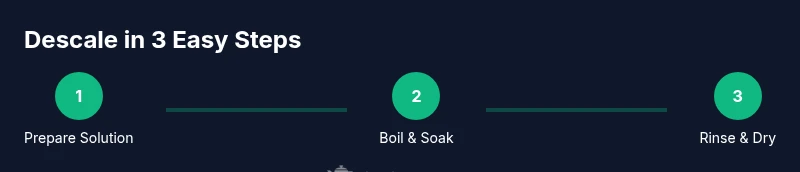
Prepare descaling solution
Dissolve citric acid in hot water according to product directions. If using vinegar, dilute with water as advised and ensure good ventilation.
Tip: Do not mix descalers with bleach or other cleaners. - 4
Fill with solution
Fill the kettle to just below the maximum fill line with the prepared descaling solution. Avoid overfilling.
Tip: Position the kettle on a stable surface to prevent spills. - 5
Boil and soak
Bring the solution to a boil, then turn off heat and let it sit for 10–15 minutes to dissolve mineral buildup.
Tip: Do not leave the kettle unattended during boiling. - 6
Rinse interior thoroughly
Pour out the solution and rinse the interior with fresh water several times. Use a soft cloth to wipe away any residue.
Tip: Rinse until the water runs clear and free of odor. - 7
Boil fresh water to rinse
Fill with clean water and bring to a boil once or twice, discarding after each boil to ensure all descaler traces are removed.
Tip: Discard the first post-descalement boil to ensure purity. - 8
Wipe exterior and dry
Wipe the outside with a damp cloth and dry with a towel. Leave the lid open for a few minutes to air-dry the interior.
Tip: Drying helps prevent water spots and keeps the finish pristine. - 9
Inspect and reassemble
Check seals, lid fit, and the base for any moisture. Reassemble and store in a dry place.
Tip: If any component looks damaged, consult the manufacturer before use.
Frequently Asked Questions
How often should I descale my kettle boiler?
Descale based on water hardness and usage; in hard water areas, do so more often, and in soft water areas less frequently. Watch for slower boils, cloudy water, or mineral buildup as signs to descale.
Descale according to water hardness and usage; look for slower boils or visible buildup to guide you.
Can I use lemon juice to descale?
Lemon juice is a milder option and can work, but citric acid descalers or white vinegar are typically more reliable. Lemon may leave a light citrus scent in the kettle.
Lemon juice can work, but citric acid or vinegar is usually more reliable. It may leave a citrus smell.
Is descaling safe for stainless steel kettles?
Yes, descaling is generally safe for stainless steel when using mild descalers and thorough rinsing. Avoid abrasive tools that could scratch the surface.
Yes, as long as you use mild descalers and rinse well; avoid scratching with rough tools.
Should I descale a gooseneck kettle differently?
Gooseneck kettles require gentle descaling and careful rinsing to preserve the spout and fittings. Follow manufacturer guidelines for any specific coatings.
Descale gently and follow the manufacturer’s guidance for gooseneck models.
What are warning signs that I need to descale now?
Slower heating, cloudy water, or a chalky crust indicate buildup. If you notice odors after boiling, descale and rinse thoroughly.
If you notice slow boils or cloudy water, descale and rinse. Odors mean you should rinse again.
Will descaling void my kettle’s warranty?
Typically not if you follow the manufacturer’s guidelines and use recommended descalers. Check your manual for specific warranty terms.
Usually not, as long as you follow the manual and use approved descalers.
Watch Video
Highlights
- Descale regularly to prevent mineral buildup.
- Choose safe descalers (citric acid or vinegar) and rinse well.
- Rinse until odor-free and dry after each cleaning.
- Inspect for wear or damage and consult manufacturers if unsure.
- Match descaling method to your kettle material for best results.