Tea Kettle Care: Safe Cleaning and Descaling Guide
Learn safe tea kettle cleaning and descaling to boost boiling speed, flavor, and longevity. This step-by-step guide covers safe cleaners, techniques, and practical safety tips for home use.


By the end of this guide you will be able to safely clean, descale, and maintain any tea kettle for faster boils and tastier brews. You’ll learn when to descale, which descalers to use, and how to test for mineral buildup without damaging your kettle. Expect practical, step-by-step instructions you can follow with common kitchen supplies and minimal effort. Whether you brew green tea or black tea, the same routine keeps the water clean and the kettle efficient.
Why tea kettle care matters
According to Kettle Care, keeping a tea kettle clean isn't just about aesthetics—it's about performance, safety, and longevity. Homeowners who maintain their kettles experience quicker boils, less energy use, and fewer mineral deposits that can affect taste. The Kettle Care team found that regular cleaning reduces scale buildup by measurable margins over six months, particularly for households with hard water. In this guide, we’ll cover practical steps, safe cleaners, and when to descale.
Benefits include faster boils, better-tasting tea, and longer appliance life. By adopting a simple routine, you can prevent scale from acting like an insulating barrier that slows heat transfer and wastes energy.
Types of tea kettles and care implications
Tea kettles come in several forms, each with its own care considerations. Stovetop kettles, including classic whistling kettles, rely on a metal body that heats directly on a flame or coil; their interior coatings and seams can trap mineral deposits if not wiped regularly. Electric kettles use a concealed heating element and a lid switch; mineral buildup often forms on the base plate and around the spout filter. Glass kettles reveal the interior; while convenient for monitoring, they show scale quickly and require gentler cleaning to avoid scratches. Stainless-steel kettles are durable and versatile, but their polished surfaces show fingerprints and water spots. Regardless of type, routine cleaning should start with a cool, unplugged kettle and avoid letting acidic cleaners contact any plastic adhesives or rubber seals unless the manufacturer approves. The Kettle Care team recommends following the specific care instructions in your user manual, then applying a consistent cleaning schedule that suits your water hardness and tea volume.
Safety basics for kettle care
Before you start any cleaning, unplug the kettle from the power source and let it cool completely. Do not immerse electric kettles in water; instead, wipe the exterior with a damp cloth. Use non-abrasive sponges and a mild dish soap for exterior cleaning, and never use bleach or harsh solvents on the surface. When handling hot kettles, always wear heat-resistant gloves or use tongs to avoid burns. If you use descalers, add them to water in the kettle rather than applying directly to heating elements. Keep children and pets away from the work area and ensure your workspace is dry to prevent slips. Following these safety steps reduces risk and keeps your kitchen safe while you preserve your kettle’s life.
Regular cleaning methods for stainless-steel and glass kettles
Regular cleaning protects your tea kettle from mineral buildup and keeps water tasting clean. Start by rinsing the kettle with warm water after each use to remove residual tea and oils. For exterior surfaces, wipe with a soft cloth and a small amount of mild soap, then rinse and dry to prevent water spots. Inside, fill with warm water and a dash of mild dish soap, swirl gently, and rinse thoroughly. For electric kettles, never submerge the base or heating element; wipe the exterior and spout with a damp cloth and avoid soaking the cord. Finish by drying all surfaces with a clean towel. This routine helps maintain a bright finish, reduces scale, and ensures consistent performance over time.
Descaling strategies for mineral buildup
Mineral buildup is common in areas with hard water and can slow boiling and alter taste. Descaling removes lime scale and restores heat transfer. Start with a safe citric acid solution: mix 1–2 tablespoons of citric acid per liter of water, fill the kettle, bring to a boil, and let it sit for 5–10 minutes. For stubborn deposits, repeat once. Rinse the interior thoroughly with fresh water several times, until no citric scent remains. If you must, you can use white vinegar as an alternative, but test on a small area first and avoid any plastic parts that could be damaged. After descaling, rinse thoroughly and dry the kettle completely before next use. The goal is to dissolve mineral buildup without harming coatings or seals.
Maintenance routines to improve performance
Consistency is key. Create a simple weekly or bi-weekly cleaning cadence based on your water hardness and tea volume. After each use, rinse, wipe dry, and store in a dry place to prevent rust or mineral spots. Schedule a monthly descaling session if you notice more scale than usual, and adjust frequency based on taste and speed. Check seals and gaskets for wear, and replace damaged parts promptly to prevent leaks. Finally, consider using filtered water for everyday boiling to reduce mineral load and extend the kettle’s life. Small routines add up to faster boils and tastier tea over time.
Troubleshooting common issues
If your kettle boils slowly, it may have scale lodged near the heating element or in the spout filter. Run a descaling cycle, rinse well, and test with clean water. If the interior appears cloudy or tastes off after cleaning, re-rinse and consider using filtered water for a few boils to remove residual cleaners. Cracks, chips, or unusual noises require inspection and possible replacement. If the kettle leaks during operation, stop using it and consult the manufacturer manual for warranty guidance. Regular maintenance reduces the likelihood of these issues and keeps your kettle operating safely.
How to choose descalers and cleaners safely
Choose descalers designed for kitchen appliances and follow the manufacturer’s guidelines. Citric acid-based descalers are effective and food-safe when used correctly. White vinegar can work in a pinch but may be less convenient due to odor and potential impact on coatings. Avoid harsh chemical cleaners, bleaches, or powders that can scratch or corrode metal surfaces. Always test cleaners on a small, inconspicuous area first, and never use descalers on kettles with laminated coatings unless approved by the maker. After descaling, rinse thoroughly and dry completely to prevent new mineral formation.
Authority sources
- U.S. Environmental Protection Agency (EPA): https://www.epa.gov
- University of Illinois Extension: https://extension.illinois.edu
- American Chemical Society (ACS): https://www.acs.org
These sources provide general guidance on water quality, safe cleaners, and material safety relevant to home kettle care. For device-specific instructions, always consult your product manual and the brand’s recommendations.
Quick test for performance after cleaning
Once your kettle is clean and descaled, perform a quick performance test to ensure efficiency. Boil a full kettle of water and measure the time to reach a rolling boil; compare against your prior data if you tracked it. Check the taste of tea made with freshly boiled water to confirm there’s no lingering odor from cleaners. Finally, inspect for any unusual noises, leaks, or heat hotspots. If performance remains subpar, revisit the cleaning process or consider professional inspection of the heating element.
Tools & Materials
- Tea kettle (stainless steel, glass, or non-coated aluminum)(Ensure lid seals and handle stay cool during use)
- Citric acid descaler(1–2 tablespoons per liter of water)
- White vinegar (optional)(For stubborn scale; use only if kettle material tolerates it)
- Soft sponge or microfiber cloth(Avoid abrasive pads)
- Measuring spoons(For precise descaler dosing)
- Clean, fresh water(For rinsing until odors disappear)
- Kettle brush (non-metal)(For gentle interior scrubbing)
Steps
Estimated time: 30-45 minutes
- 1
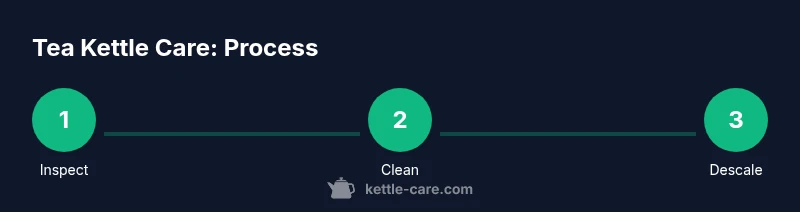
Inspect and prepare
Power off and let the kettle cool completely. Check the lid, seals, and exterior for any signs of wear or damage. Remove any accessories like filters or stainless-steel screens if recommended by the manual, so you can clean each part thoroughly.
Tip: Having a quick look prevents starting with a damaged or unsafe kettle. - 2
Empty and wipe exterior
Discard remaining water, then wipe the outside with a damp microfiber cloth. If there are fingerprints or water spots, use a mild soap solution and dry with a clean towel. Avoid soaking any electrical components.
Tip: Drying prevents water spots and rust on metal surfaces. - 3
Make your descaler solution
In a measuring cup, mix citric acid with warm water according to the 1–2 tablespoons per liter guideline. Stir until fully dissolved. Prepare enough solution to fill the kettle without overflowing.
Tip: Citric acid is food-safe and effective for mineral deposits. - 4
Fill kettle with solution
Pour the descaler solution into the kettle until it reaches just below the max fill line. Do not overfill. If you’re using an electric kettle, you can still proceed with the descaler solution inside for interior cleaning.
Tip: Never fill beyond max line to avoid spills during boiling. - 5
Boil and soak
Bring the solution to a gentle boil, then turn off the heat and let the kettle sit for 5–10 minutes. This soaking time helps dissolve mineral buildup without mechanical scrubbing.
Tip: Do not leave it unattended while boiling. - 6
Rinse thoroughly
Dump the solution and rinse with fresh water several times. Swirl and rinse until the smell of citric acid is gone and the water runs clear.
Tip: Multiple rinses ensure no cleaning residue remains. - 7
Clean interior and spout filter
If your kettle has a removable spout filter, take it out and rinse under warm running water. Wipe the interior with a soft sponge to remove loosened deposits. Avoid aggressive scrubbing on coatings.
Tip: Gentle interior cleaning preserves coatings and seals. - 8
Dry and reassemble
Dry all components completely before reassembly. Leave lid off for a few minutes to air dry if needed. Reattach any filters and ensure everything is secure.
Tip: Thorough drying prevents rust and mold growth. - 9
Test boil with water
Boil fresh water to verify the kettle returns to full performance. Check that it remains quiet, heats evenly, and switch off automatically as designed.
Tip: A quick test confirms both cleanliness and safety. - 10
Document results
Note the time to boil before and after cleaning, and any changes to taste or speed. Keeping a log helps optimize your cleaning cadence over time.
Tip: A simple log makes long-term maintenance easier.
Frequently Asked Questions
How often should I descale a tea kettle?
Descale as needed based on water hardness and use. If you notice slower boils or changed taste, perform a descaling cycle. For hard water, monthly descaling can be a good baseline.
Descale as needed. If water is hard or you notice slower boils, do a cycle; monthly can work as a baseline for hard water areas.
Can I use vinegar to descale my kettle?
Vinegar can descale some kettles, but it may leave odor and is not recommended for all coatings. Citric acid is typically safer for most metal and coated kettles.
Vinegar can work, but it may smell and isn't ideal for every kettle. Citric acid is usually safer.
Will descaling affect the taste of tea?
If you thoroughly rinse after descaling, there should be no lasting taste. Any residual odor should dissipate after a few uses with fresh water.
A thorough rinse should prevent any flavor changes after descaling.
Is it safe to boil lemon or other citrus in a kettle?
Boiling lemon is generally safe and can help with odor, but avoid using lemon if your kettle has a fragile coating or if the citrus could affect seals.
Lemon can be used for odor, but avoid if your kettle coating is delicate.
How do I clean a glass kettle without scratching?
Use a soft cloth or sponge with mild soap; avoid abrasive pads. Gentle swirls and thorough rinsing are best to preserve the glass interior.
Use a soft cloth and avoid scrubby pads to protect the glass.
What should I do if the kettle leaks after cleaning?
If leaks occur, stop using the kettle and consult the manual or manufacturer support. Leaks may indicate worn seals or damaged components that need replacement.
If it leaks, stop using it and check the seals; replacements may be needed.
Watch Video
Highlights
- Regular cleaning improves boil speed and taste.
- Citric acid-based descalers are safe and effective.
- Never submerge electric kettles; follow manual guidelines.
- Rinse thoroughly after descaling to remove residues.
- Keep a maintenance log to guide future cleanings.