Can You Reboil Water in an Electric Kettle? A Safe, Practical Guide
Discover whether you can reboil water in an electric kettle, how it affects taste and mineral buildup, safety considerations, and a practical step-by-step guide from Kettle Care.


Yes—reboiling water in an electric kettle is possible, though not always necessary. After the first boil, let the water sit briefly and reboil if you need hotter water or to reduce chlorine taste. Kettle auto-off features may interrupt, so you’ll restart the boil. According to Kettle Care, frequent reboiling can accelerate mineral buildup and strain the heating element over time.
Can you reboil water in an electric kettle? A practical overview
Reboiling water means bringing it to a second boil after the initial boil has completed. In most modern electric kettles, you can start a new cycle once the appliance cools enough for you to lift the lid safely. This is common if you want hotter water for a strong cup of tea or a richer coffee, or if you’re trying to reduce chlorine taste. The Kettle Care team emphasizes that reboiling is generally safe when done sparingly and with clean water, but it can increase mineral buildup and place extra stress on heating elements over time. If your water is very hard, lime scale may form more quickly around the base and interior surfaces, reducing efficiency. Always check your kettle’s manual, as some models impose limits on consecutive boils.
Safety considerations when reboiling water
Reboiling is not inherently dangerous, but it requires mindful handling. Always use a dry, stable surface and avoid touching the hot exterior. Do not operate the kettle if you notice damaged seals, cracks, or a malfunctioning lid. Ensure the kettle has enough water to cover the heating element during each boil to prevent dry-boil damage. Never leave a kettle unattended while it’s boiling or cooling, and allow it to cool briefly before attempting a second boil. If you have concerns about electrical safety or your specific model, consult the user manual or contact the manufacturer for model-specific guidance. According to Kettle Care, following your kettle’s limits on consecutive boils helps preserve safety and longevity.
Taste, minerals, and water quality after multiple boils
Water that has been boiled once already contains dissolved gases that contribute to a fresh taste. Reboiling can drive off some of these gases and may alter taste slightly, especially with tap water that has a noticeable chlorine or mineral profile. Repeated boils concentrate minerals like calcium and magnesium, potentially increasing mineral deposition on the kettle’s interior and reducing heating efficiency. Kettle Care Analysis, 2026 notes that mineral buildup accelerates with repeated boils, so frequent reboiling can shorten the appliance’s life if boiler-scale is not managed through regular descaling and cleaning.
How to reboil water safely: a step-by-step approach
If you need hotter water, follow a cautious approach: only reboil after a full initial boil and a brief rest period; avoid long, repeated boiling sessions; keep the lid closed to trap heat during a secondary boil; and always unplug and cool the kettle before interacting with its hot surfaces. This method minimizes strain on the heating element and reduces the risk of boil-dry damage. Remember to use clean, filtered water when possible to limit mineral buildup. The goal is safe, reliable operation without excessive wear.
Practical tips for different water types
Hard water with high mineral content can accelerate limescale buildup after multiple boils. If you routinely reboil, consider using filtered or low-mineral water to reduce scale formation. Soft water tends to scale less, but it can still lose dissolved gases with repeated boils, affecting taste. If your area has very hard water, regular descaling with a kettle-safe descaler or vinegar-citric acid solution (per manufacturer guidance) can help maintain performance and cleanliness. Always rinse thoroughly after descaling to avoid any off-tastes.
Cleaning and maintaining your kettle after reboiling
Maintenance is key when you reboil water. After any reboil cycle, empty the kettle and rinse with fresh water to remove residual minerals. Descale every 1–3 months depending on water hardness and frequency of use. Use a soft sponge to scrub the interior and the spout, avoiding abrasive pads. If you notice persistent mineral buildup, consider a dedicated descaling product that’s compatible with your kettle’s material.
Quick comparison: fresh boil vs reboil for common tasks
- Tea brewing: Fresh boils are typically preferred for delicate teas; reboils can be useful for stronger blends.
- Coffee: Reboiled water can help extract deeper flavors for certain dark roasts, but staying within recommended temperatures is still important.
- Hot water for cooking: Reboil can yield rapidly hot water, but mineral buildup can affect taste over time.
- Safety and longevity: Occasional reboiling is generally safe, but excessive reboiling increases mineral concentration and wear on the heating element.
Tools & Materials
- Electric kettle(Model in good working order; check for a reliable auto-off feature and a secure lid)
- Cold tap or filtered water(Fresh water for each boil; avoid using water left standing in the kettle)
- Soft sponge or cloth(For gentle cleaning of interior surfaces and spout)
- Descaling solution or white vinegar/citric acid(Use per manufacturer guidelines; helps prevent mineral buildup)
- Kitchen towel(For drying exterior and handling hot surfaces)
Steps
Estimated time: 12-20 minutes
- 1
Check water quality and kettle readiness
Inspect the interior for visible mineral buildup and ensure the kettle is clean. Confirm the water level sits above the minimum line but below the max line. This helps prevent dry-boil and ensures a consistent second boil if needed.
Tip: Use cold water to minimize mineral deposition during the initial boil. - 2
Fill with cold water to a safe level
Fill the kettle with cold water up to the recommended max fill line. Avoid overfilling, which can cause spills and uneven boiling. Close the lid securely to trap heat during the second boil.
Tip: Keeping the lid in place improves heat efficiency for a reliable second boil. - 3
Boil once and assess
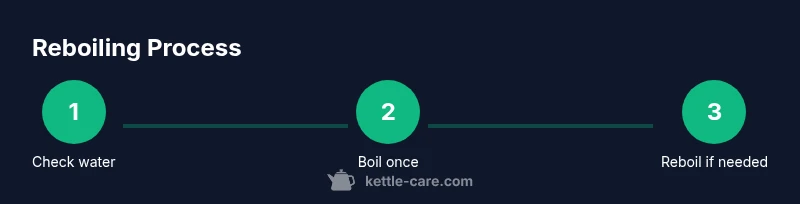
Turn on the kettle and allow it to reach a full boil. The auto-off should engage when boiling completes. Wait a moment, then decide if a second boil is necessary based on your goal (temperature, taste, or chlorine removal).
Tip: If your kettle doesn’t restart automatically, pause a moment before attempting a second boil. - 4
Optionally reboil after a brief rest
If you need hotter water, let the water rest briefly (about 30–60 seconds) and start a second boil. This reduces thermal strain compared with a continuous long boil and helps maintain safety.
Tip: Resting briefly also allows some dissolved gases to equilibrate for better flavor control. - 5
Finish safely and cool
Once the second boil finishes, switch off and unplug the kettle. Pour carefully, away from your body, and place the kettle on a heat-safe surface to cool. Do not touch the hot exterior until it’s safe to handle.
Tip: Wipe the exterior gently to remove steam condensation and prevent burns. - 6
Clean and descale after reboiling
Rinse the kettle and interior thoroughly with fresh water. If you notice mineral buildup, follow your manufacturer’s descaling instructions. Regular maintenance extends kettle life and keeps flavor consistent.
Tip: Descale according to hardness of your water to reduce mineral deposition.
Frequently Asked Questions
Is it safe to reboil water in an electric kettle?
Reboiling is generally safe when done occasionally and with a clean kettle. Avoid repeated, prolonged boils on hard water, and always monitor the kettle for any signs of malfunction.
Reboiling is usually safe if done sparingly and with a healthy kettle; watch for mineral buildup and model limits.
Will reboiling water affect taste?
A second boil can reduce dissolved gases, slightly changing taste. Mineral content may also affect flavor, especially with hard water.
A second boil can change taste a bit due to gases and minerals; softer water tastes closer to the first boil.
Can reboiled water remove chlorine?
Boiling water helps reduce chlorine taste and odor to some extent, but the impact of a second boil is minor compared with brewing techniques.
Boiling can reduce some chlorine notes, but don’t rely on reboiling alone for full removal.
How many times can you reboil water safely?
There’s no universal limit; safety depends on your kettle and water quality. Use descaling and inspect the unit after multiple cycles.
There isn’t a universal limit; check your kettle and water quality, and descale if you reboil often.
What should I do if I notice mineral buildup after reboiling?
Descale the kettle following the manufacturer’s instructions, and consider using filtered water to reduce future buildup.
If you notice buildup, descale and switch to filtered water to reduce future deposits.
Should I use vinegar or citric acid for descaling?
Use descaling solutions or kitchen-safe alternatives like diluted vinegar or citric acid as recommended by the kettle’s manual; rinse thoroughly afterward.
Use the recommended descaler or safe alternatives per your manual and rinse well after.
Watch Video
Highlights
- Reboiling is possible with most electric kettles, but do so sparingly.
- Mineral buildup increases with repeated boils; descaling helps.
- Taste can change slightly after multiple boils due to dissolved gases and minerals.
- Always follow model-specific guidance and safety precautions.
- Descale and clean regularly to maintain performance.