Should You Reboil Kettle Water: A Practical Guide
Explore when reboiling kettle water is safe, how it affects taste and minerals, and how to do it efficiently. Practical tips for tea lovers and home cooks from Kettle Care.


Should you reboil kettle water? Reboiling is generally acceptable for hot drinks, but limit reheating to 1-2 cycles to minimize mineral buildup and taste changes. If water has sat or boiled too long, start fresh with clean water and a well-maintained kettle to preserve safety and flavor.
Should You Reboil Water? A Practical Overview
According to Kettle Care, many households rehear water for convenience, but the decision hinges on taste, safety, and energy considerations. Reboiling is not inherently dangerous, but it can alter flavor and concentrate minerals if done repeatedly. This section sets the stage for understanding when reheating is reasonable and when it’s better to start with fresh water. You’ll learn how taste, mineral content, and kettle maintenance all play a role in your daily boiling routine. For tea lovers and home cooks, the goal is to balance speed with flavor and safety, not to chase speed at the expense of quality.
Key takeaways: reheating is acceptable in moderation, mineral buildup matters, and a well-kept kettle makes a big difference in outcomes.
Impact on Flavor, Aroma, and Minerals
Flavor and aroma are the first clues that reboiling water affects an brew. When water sits in a kettle or is reheated, dissolved gases and minerals can shift, subtly altering taste and bouquet. The more often you reboil, the more minerals like calcium and magnesium may concentrate, potentially making the water taste flatter or slightly metallic. This is especially noticeable with hard tap water. In practice, many people don’t notice a dramatic change after a single extra boil, but taste sensitivity varies. If your goal is a clean cup of tea or coffee, use freshly drawn water and avoid multiple reboils in a row. Regular descaling and kettle cleaning help maintain flavor stability over time.
Secondary considerations include aroma release, which can be affected by dissolved gases; reboiled water may smell less fresh than freshly drawn water, depending on the kettle and water source.
Safety Considerations: What to Watch For
Safety remains paramount when dealing with hot kettles and boiling water. A few practical checks can prevent burns and equipment damage. Inspect the kettle for cracks, loose lids, or mineral buildup that could trap steam. If you notice white mineral deposits or rusty spots, descale or replace parts as needed before continuing. Always handle the kettle with dry hands and use oven mitts or kettle handles to avoid steam scalds. Never attempt to reboil water if your kettle shows signs of malfunction. In addition, avoid leaving a kettle unattended while it’s boiling to minimize the risk of overheating or spills. These precautions keep your kitchen safer and your water tasting better.
When in doubt, err on the side of fresh water and a clean kettle.
Practical Scenarios: When Reboiling Makes Sense
There are legitimate everyday scenarios where a quick reboil is useful. If you’re making a fast cup of tea and prefer very hot water, a brief second boil can save time without dramatically impacting flavor. In homes with limited time in the morning, reheating once may be a reasonable compromise. For large families where many cups are needed in succession, refreshing the water once and using fresh water for subsequent boils can balance energy use with taste. In contrast, if your water tastes off or you notice mineral buildup, it’s better to start with fresh water and clean the kettle to preserve flavor integrity. Always consider your water hardness and the kettle’s condition when deciding.
Taste tests with family members can help determine your personal threshold for reheating.
Energy, Waste, and Environmental Considerations
Boiling water consumes energy, so efficiency matters. Reheating water multiple times increases energy use and, for some households, electricity or gas costs. If you’re watching your energy footprint, limit reheating to one additional boil or opt for a fresh boil instead. Additionally, mineral buildup can impact heating efficiency; descaling keeps the kettle operating at peak performance, reducing energy waste. Finally, using a lid while boiling minimizes evaporation and conserves heat, making each boil more efficient. Combining good kettle maintenance with mindful reboiling can deliver both speed and sustainability in daily routines.
Debunking Myths and Misconceptions
A common belief is that reheating water continually produces toxins or harmful compounds. In reality, reheating water does not create hazardous toxins; the main concerns are taste, aroma, and mineral concentration. Another myth is that distilled water is always better for reboiling; while it reduces mineral buildup, it can taste flat and less satisfying for tea or coffee. The best practice is to use clean, fresh water and a well-maintained kettle, and to reboil only when it makes sense for your flavor and time needs. By focusing on water quality and kettle hygiene, you can safely decide when reheating is appropriate.
Quick Guidelines for Everyday Use
To keep things simple: use fresh water for the majority of boils, reboil only when you need a quick cup and you’ve confirmed the kettle is in good shape, and descaling regularly to maintain performance. Keeping a routine of quick checks—lid closure, mineral buildup, and water taste—helps you decide on-the-spot whether another boil is necessary. With consistent maintenance, you’ll enjoy reliable heat, better flavor, and safer operation across daily tasks.
Tools & Materials
- Kettle(Clean, free of mineral buildup; ensure lid closes securely.)
- Fresh water(Use cold water for each boil; filtered water if your tap tastes unusual.)
- Descaling agent (vinegar or citric acid)(Use only if mineral buildup is visible; follow manufacturer guidance.)
- Soft brush or sponge(For interior cleaning; avoid scratching surfaces.)
- Measuring cup (optional)(Helpful for testing water volume or taste testing.)
Steps
Estimated time: 15-25 minutes
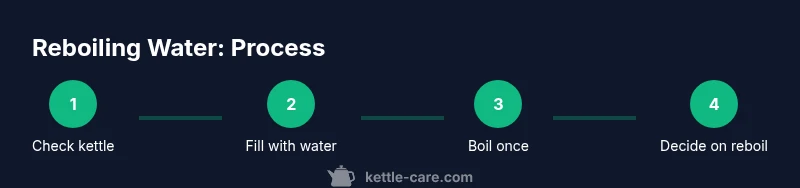
- 1
Check kettle and water quality
Inspect the kettle for cracks, lid integrity, and visible mineral buildup. If you notice rust or damage, don’t proceed until fixed. Also assess water quality; if your water has an off odor or taste, descale or replace water before boiling.
Tip: If you detect a strong mineral odor, perform a quick descaling cycle before proceeding. - 2
Fill with fresh water
Fill the kettle with fresh cold water, avoiding overfilling past the max line. This reduces spill risk and ensures even heating while preserving flavor.
Tip: Use filtered water if your tap water tastes metallic or overly chlorinated. - 3
Bring to a rolling boil
Turn on heat and wait for a full rolling boil. Do not walk away if your kettle is showing vigorous bubbling, as steam and hot surfaces can be hazardous.
Tip: Keep hands and face away from the steam vent; use the handle for safety. - 4
Decide on reboiling vs. fresh water
If you’re preparing a quick cup, assess whether an extra boil is necessary for your preferred temperature. For most beverages, one full boil is sufficient; reboiling should be limited to 1-2 cycles.
Tip: Taste a small sample after the first boil to decide if a second boil improves warmth or flavor for your preference. - 5
Reboil safely if chosen
If you reboil, allow the kettle to return to a full boil for 1-2 minutes, then switch off and remove from heat. Avoid letting water sit at high heat for extended periods.
Tip: Never open the kettle while it’s actively boiling; wait until it’s safe to handle. - 6
Cool, clean, and store
Let the kettle cool, then rinse the interior and exterior with clean water. Dry thoroughly to prevent new mineral deposits and store with the lid loosely closed.
Tip: Descale as needed to maintain efficiency; a light weekly rinse helps prevent buildup.
Frequently Asked Questions
Is it safe to reboil kettle water more than once in a row?
Reboiling once or twice is generally safe and common for convenience. Repeated reheating can concentrate minerals and alter flavor, so limit cycles when possible.
Reboiling once or twice is usually fine, but try to limit it because minerals can build up and flavor can change.
How does reboiling affect tea flavor?
Reboiled water can taste flat due to loss of dissolved gases. For best flavor, start with fresh water and avoid multiple boils in a row.
Reboiled water often tastes flat; using fresh water usually gives you the best tea flavor.
Can reboiling water create toxins?
No toxins are formed by reheating water. The main concerns are flavor, aroma, and mineral concentration, which can be managed with proper kettle hygiene.
No toxins are formed by reheating water, but minerals and flavor can change.
Should I use distilled water for reboiling?
Distilled water has fewer minerals, which can reduce buildup but may taste bland. Use distilled water if mineral buildup is a problem, otherwise tap or filtered water is fine.
Distilled water might taste flat, but it reduces mineral buildup; otherwise, use your usual water.
How often should I descale my kettle if I reboil often?
Descale based on mineral buildup and water hardness. If you notice white deposits, descale sooner rather than later.
Descale when you see mineral buildup; it depends on your water hardness.
Watch Video
Highlights
- Use fresh water for each boil.
- Limit reheating to 1-2 cycles for best flavor.
- Descale regularly to prevent mineral buildup.
- A well-maintained kettle improves safety and efficiency.
- Taste varies; adjust practice based on water quality.