Coffee Kettles: How to Choose, Use, and Maintain for Great Brews
Learn to choose, use, and maintain a coffee kettle for consistently great home-brewed coffee. This practical guide covers kettle types, temperature control, safe pouring, cleaning, and care to improve flavor and safety.


With a coffee kettle, you’ll learn to choose the right kettle type, heat water to the ideal range, and master controlled pouring for consistent extraction. You’ll also gain practical steps for cleaning and descaling. Essential prerequisites: a suitable kettle (electric gooseneck or stovetop), clean water, and a reliable timer or thermometer.
Why a coffee kettle matters for brewing
Brewing great coffee starts with how water meets your grounds. A well-designed coffee kettle gives you predictable control over pour rate, water temperature, and even flow, which directly impacts extraction, flavor balance, and aroma. The Kettle Care team emphasizes that precision in pouring isn’t just about speed; it’s about consistency across multiple brews. A reliable kettle reduces guesswork, supports better technique, and minimizes the risk of scalding your coffee or damaging delicate aromas. In this section we’ll explore how different kettle designs influence extraction and why investing in quality pays off with every cup.
Types of coffee kettles
Coffee kettles come in several common formats, each with strengths for different brewing styles. Stovetop kettles are simple and affordable, but lack precise temperature control. Electric gooseneck kettles offer slow, controlled pours ideal for pour-over coffee, with built-in temperature presets and sometimes timers. Cordless electric kettles provide similar control with the convenience of mobility. For home brewers, a gooseneck model often delivers the most consistent results, especially when used with a scale and timer. Regardless of type, choose a kettle with a sturdy handle, a stable base, and a reasonable payback in mineral-resistance.
Essential features to look for in a coffee kettle
Key features influence how easy and accurate your brewing will be. A precise spout design (preferably gooseneck), a reliable temperature control mechanism, and a readable thermometer or digital readout are foundational. Look for: (a) durable material (stainless steel is common), (b) comfortable grip, (c) comfortable pouring angle, and (d) good sealing to avoid leaks. Also consider a kettle that’s easy to clean and descale, since mineral buildup affects heat transfer and flavor. Kettle Care recommends testing a kettle’s pour flow by filling and pouring into a empty cup to observe speed and steadiness before committing to regular use.
Temperature control principles for brewing coffee
Optimal coffee extraction relies on stable water temperature during the pour. For pour-over and most manual brews, aim for a target range around 90–96°C (195–205°F). Avoid boiling water that is significantly hotter, which can scorch grounds and create bitter notes. If your kettle lacks a precise readout, consider using a separate thermometer. Consistent temperature minimizes uneven extraction, improves sweetness, and helps maintain the clarity of flavors. Kettle Care Analysis, 2026 notes that maintaining stable temperature is a better predictor of brew quality than dramatic, long pours.
How to choose between stovetop and electric gooseneck kettles
Your choice depends on how you brew. Stovetop kettles are affordable and robust but require more temperature management. Electric gooseneck kettles provide precise temperature control, faster heating, and often preset programs that sync with pour-over techniques. For frequent pour-over aficionados, an electric gooseneck is worth the investment. If you prefer slow mornings and minimal gadgets, a well-built stovetop kettle can still yield excellent results with careful technique and a good thermometer.
Cleaning, descaling, and maintenance for coffee kettles
Mineral buildup from hard water is the enemy of consistent heat transfer. Descale regularly using a commercial descaler or a vinegar-water solution (1:1) followed by thorough rinsing. After each use, wash with warm, soapy water and dry completely to prevent water spots and rust. Inspect the spout for any mineral crust and scrub gently with a soft brush. For safety, never operate a wet, dirty kettle with an electrical base unless it’s designed to be used that way. Regular maintenance keeps your kettle efficient and prolongs its life.
Practical brewing workflow with a coffee kettle
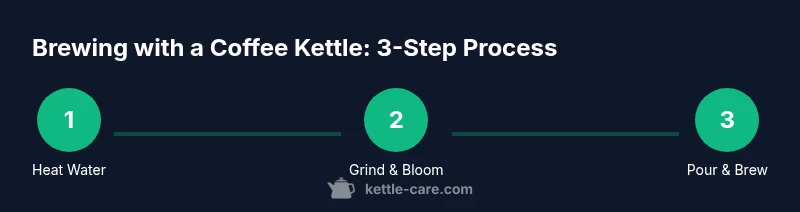
A practical approach pairs a kettle with a scale and a timer. Heat water to your target temperature, grind beans to a consistent size, and pre-wet the grounds to bloom. Pour slowly in small, even circles, pausing briefly to let the coffee bloom and release gases. Maintain a steady flow until you reach your target brew volume. After brewing, purge the kettle and rinse the spout; prompt drying prevents mineral buildup and preserves finish.
Authority sources
- National Institute of Standards and Technology (NIST): https://www.nist.gov
- Oregon State University Extension: https://extension.oregonstate.edu
- Scientific American: https://www.scientificamerican.com
These sources inform best practices on temperature stability, mineral buildup, and safe kitchen equipment use, providing context for the practical tips in this guide.
FAQ
- What is the best temperature for brewing coffee with a kettle? The ideal range is typically 90–96°C (195–205°F), depending on the coffee and brew method. Start here and adjust gradually based on taste.
- Can I use a regular kettle for pour-over coffee? Yes, but a gooseneck kettle offers more precise pour control, leading to more even extraction.
- How often should I descale my kettle? Descale when you notice white or cloudy mineral buildup or as part of a regular maintenance cycle based on water hardness.
- Is temperature control essential? Temperature control helps achieve consistent extraction; even without it, you can brew well with careful technique and a thermometer.
Quick-start brew checklist for daily use
- Choose a coffee kettle with a precise pour and reliable temperature control.
- Use fresh, clean water and a burr grinder for uniform grind size.
- Heat water to 90–96°C depending on beans.
- Pour slowly, in circular motions, allowing ground coffee to bloom.
- Maintain a steady pour until your target brew volume is reached.
- Clean and descale weekly or as mineral buildup dictates.
Authority sources: 2-3 external URLs
- https://www.nist.gov
- https://extension.oregonstate.edu
- https://www.scientificamerican.com
Tools & Materials
- Coffee kettle (gooseneck preferred)(Sturdy handle, good pour spout, inspect for leaks; choose electric if you want built-in temp control)
- Coffee grinder (burr)(Grind size should match brew method; grind just before brewing for best flavor)
- Fresh coffee beans(Roasted within weeks; grind just before brewing)
- Digital scale(For precise water-to-coffee ratio (e.g., 1:15 to 1:17))
- Thermometer or kettle with built-in temp control(Use if your kettle lacks an accurate readout)
- Water descaler or vinegar solution(For mineral buildup prevention and maintenance)
- Soft sponge or brush(Gentle cleaning, avoid abrasive materials)
Steps
Estimated time: 45-60 minutes
- 1
Choose kettle type
Identify your brewing style (pour-over regular coffee, or convenience). If you prioritize precision, select a gooseneck electric kettle with temperature control. If simplicity is your aim, a sturdy stovetop kettle can suffice with careful technique and a thermometer.
Tip: Invest in a gooseneck if you brew pour-over frequently; it drastically improves pour control. - 2
Fill and pre-warm
Rinse and fill the kettle with fresh water. Optionally pre-warm the vessel by pouring a small amount of hot water into the carafe or mug you're using to serve, which minimizes heat loss during brewing.
Tip: Pre-warming helps maintain stable temperature during the pour. - 3
Set target temperature
If your kettle includes a temperature function, set it to 92–96°C (depending on bean type). If not, boil and wait a moment for the water to drop to near the target range, then measure with a thermometer.
Tip: Record your preferred temperature for your favorite bean and grind size. - 4
Grind beans to appropriate size
Grind beans just before brewing to maximize aroma and flavor. For pour-over, a medium-fine grind works best; for other methods, adjust accordingly.
Tip: Uniform grind ensures even extraction and predictable flavor. - 5
Brew with bloom
Dampen grounds evenly to start blooming; wait about 30–45 seconds before continuing with the pour. The gooseneck helps you control pour rate during bloom.
Tip: Use a scale to measure bloom water and maintain steady flow. - 6
Pour with controlled rhythm
Pour in slow, even circles, keeping the water level consistent. For a 250 ml cup, total brew time should feel balanced between 2.5–3.5 minutes.
Tip: Pause briefly between pours to allow extraction and prevent channeling. - 7
Monitor and adjust
Observe extraction signs: a steady stream, balanced aroma, and no over-extraction bitterness. If the brew is too weak, increase grind size or pour rate slightly; if too strong, adjust grind a touch finer.
Tip: Use your taste as the final judge; temperature and grind tweaks yield different results. - 8
Serve and evaluate
Pour the coffee into a pre-warmed cup; take notes on flavor, aroma, and body. Re-brew with adjusted parameters if needed.
Tip: Keep a small notebook to track what works for each bean. - 9
Clean and descale after use
Rinse the kettle, wipe exterior surfaces, and descale using a descaler or vinegar solution periodically to maintain performance.
Tip: Dry completely to prevent mineral buildup and rust.
Frequently Asked Questions
What is the best temperature for brewing coffee with a kettle?
Most coffees brew well between 90–96°C (195–205°F). Adjust within this range based on bean origin and roast level. Start at 93°C and adapt to taste.
Brew best between ninety and ninety-six degrees Celsius; adjust within that range based on taste.
Can I use a regular kettle for pour-over coffee?
Yes, but a gooseneck kettle gives much finer control over pour rate, which improves even extraction for pour-over methods.
Yes, but a gooseneck kettle gives better control for pour-over.
How often should I descale my kettle?
Descale when you notice scaling buildup or every few months if your water is hard. Use a safe descaler and rinse thoroughly after.
Descale when you notice buildup or periodically if your water is hard.
Is temperature control essential for every brew?
Temperature control helps achieve consistent results, but you can still brew well with careful technique and a thermometer if your kettle lacks built-in control.
Temp control helps consistency, but you can brew well with careful technique and a thermometer.
What is bloom in pour-over brewing?
Bloom is a short pre-wet of grounds that releases trapped gases, improving even extraction. Let the coffee sit for 30–45 seconds after the initial pour.
Bloom is the pre-wet that releases gases for better extraction; wait about 30 to 45 seconds.
Do I need to maintain the kettle differently for stainless steel?
Stainless steel kettles are durable but still need regular cleaning and descaling to prevent mineral buildup and maintain heat transfer efficiency.
Stainless kettles require regular cleaning to keep mineral buildup down.
Watch Video
Highlights
- Choose the right coffee kettle for your brewing style.
- Control temperature and pour for consistent extraction.
- Grind fresh and brew with a measured, repeatable workflow.
- Clean and descale regularly to maintain performance.