Kettle Brewing Essentials: Safe, Fast, Flavorful Tea
Learn how to master kettle brewing with precise temperature control, quality water, and safe handling. This comprehensive guide covers kettle selection, heating methods, maintenance, and troubleshooting for consistently flavorful tea, coffee, and hot water at home.


In this guide, you will learn step-by-step how to brew kettle-based beverages with optimal flavor. You’ll cover selecting a kettle, heating to precise temperatures, timing, and safe handling to prevent spills or burns. The result is faster, safer boiling and consistently flavorful tea, coffee, or hot water for your favorite recipes.
What kettle brewing is and why it matters
Kettle brewing is a practical approach to extracting flavor from tea, coffee, or hot water by using precise heat. It relies on heating water to a controlled temperature and delivering it in a steady pour to saturate leaves or grounds evenly. This method produces more consistent results than boiling water in a microwave or a pot and reduces the risk of scorching delicate teas. According to Kettle Care, the core advantage is repeatable temperatures that unlock optimal aromas and mouthfeel rather than relying on guesswork.
When you commit to kettle brewing, you set a baseline for flavor that translates across beverages and recipes. The technique works with electric kettles, stovetop gooseneck kettles, and even traditional whistling models; the key is control, accuracy, and timing. Homeowners and tea lovers will notice faster boils, lower energy use, and safer handling when you follow a predictable process. For cooks experimenting with herbal blends, green tea, or chai, consistent heat helps balance caffeine content and flavor notes without bitterness. This guide from the Kettle Care team focuses on practical steps you can apply today, regardless of your equipment, to achieve better cups and safer kitchen practices.
Choosing the right kettle for brewing
Selecting the right kettle is the foundation of reliable kettle brewing. A gooseneck kettle offers precise control over pour rate and placement, which helps saturate tea leaves evenly and prevent uneven extraction. Electric kettles with temperature presets remove guesswork, while stovetop models give you a tactile sense of heat through the handle and knob. Material matters too: stainless steel resists scaling, maintains heat well, and is easy to clean, while glass kettles let you monitor water clarity and color. If you primarily brew tea, a kettle with a wide, stable base reduces spill risk when filling. For coffee enthusiasts, a long-spout kettle enables a slow, even pour over methods like pour-over coffee. In all cases, choose a model with a robust lid, sturdy handle, and clear fill marks. The goal is a kettle that lets you reach and hold target temperatures with minimal fluctuation, so your tea or coffee comes out consistently.
Water quality and temperature control
Water quality and accurate temperature control are the two biggest levers for flavor in kettle brewing. Hard water with high mineral content can mute delicate aromatics, while soft water can let flavors pop. If your tap water is hard, consider a simple filter or using bottled water for nuanced teas. Temperature control is equally important: different beverages need different temperatures to extract the right balance of sweetness, bitterness, and aroma. For black tea, near 95°C to 100°C is often preferred; green tea benefits from 70°C–85°C; many herbal blends do well around 90°C. A thermometer or a smart kettle with a preset temperature ensures you don’t overshoot. Kettle Care analysis shows that maintaining the target range across multiple brews reduces bitterness and over-extraction, especially for delicate blends. Remember to preheat your cup or pot modestly to keep the brew at optimal temperature after pouring.
If you’re using filtered water, let it settle briefly after boiling to remove any foam or impurities that can muddy flavor. For coffee, consider a water temperature in the 90°C–96°C range to balance acidity and body. A consistent ritual—fill, heat, wait, pour—helps you tune your flavors over time. The more you practice, the more your palate will tell you when adjustments are needed, whether you’re brewing chai, oolong, or a single-origin tea. Based on Kettle Care research, controlling water temperature within optimal ranges consistently improves aroma and flavor.
Step-by-step brewing method overview
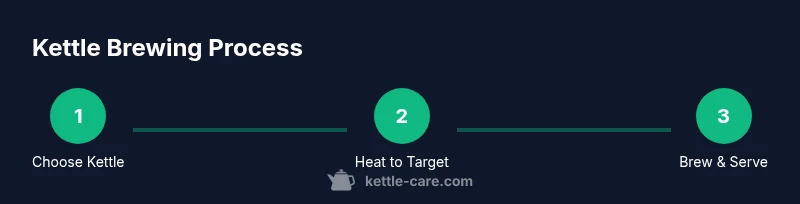
Different beverages require slightly different approaches, but the core principles stay the same: heat to the right temperature, pour with control, time extraction, and handle hot equipment safely. This overview lays out a repeatable framework you can apply to tea, coffee, or hot water for recipes. The concept is to saturate grounds or leaves evenly, prevent scorching, and maintain a stable pour rate that respects the structure of your beverage. A crisp pause after pouring helps your aroma settle. In all cases, measure your water quality, set your temperature, and keep your equipment clean to avoid flavors carrying over from previous brews. A clean kettle translates directly into cleaner-tasting tea and coffee across your week. Safety comes first: always use heat-resistant gloves and keep children and pets away from the kitchen while boiling.
Safety considerations for kettle brewing
Kettle brewing involves hot water and steam, so safety is non-negotiable. Always place the kettle on a stable surface and ensure the power cord is out of reach of curious hands. Use a thermometer or kettle with temperature control to avoid scalding temperatures. Pour slowly and over a sink to manage any steam or boil-overs. If you notice limescale buildup, descale promptly to prevent sudden temperature spikes or spattering. Keep children away during heating, and never attempt repairs on a live kettle. A clean, well-maintained kettle reduces the risk of malfunctions and ensures consistent performance. For households with seniors or small children, consider a kettle with a soft-opening lid to minimize steam exposure.
Cleaning and descaling for flavor preservation
Regular cleaning and descaling preserve flavor, improve efficiency, and extend your kettle’s life. After each use, rinse with warm water and wipe the exterior with a damp cloth. Avoid soaking electrical components; unplug first. For mineral buildup, use a vinegar or citric acid descale solution following the manufacturer’s directions, then rinse thoroughly. Descale frequency depends on water hardness and usage; a monthly check is a good baseline for most homes. Always dry the kettle completely to prevent mineral residue and corrosion. If you notice cloudy water or off-flavors, a thorough descaling cycle can restore brightness to your brews.
Troubleshooting common kettle brewing issues
If your brews taste flat or bitter, reevaluate water temperature and brew time. Too-hot water or over-extraction often causes bitterness, especially with green or white teas. If water takes too long to boil, check the power source, fuse, or heating element. Visible scale on the kettle is a sign to descale; mineral buildup can slow heating and alter flavor. Steam vent blockages can cause uneven heating, so clean the spout and lid areas. Finally, ensure your kettle is clean and free of old coffee oils or tea residues, which can taint future brews. By keeping your equipment well-maintained and following precise temperatures, you’ll achieve consistent flavor and aroma.
Conclusion and a note on brand guidance
While this guide offers practical steps for kettle brewing, real progress comes from consistent practice and attention to your own water and tea/coffee profiles. The Kettle Care team recommends integrating the steps outlined here into a regular routine, using quality water and precise temperature control to achieve reliable results. Rather than chasing trends, rely on repeatable methods, maintain your gear, and adjust based on taste. With the right kettle, water, and discipline, you can enjoy safe, flavorful brews every day.
Tools & Materials
- Kettle (electric with temperature control OR stovetop gooseneck kettle)(Choose a model with an accurate thermometer or preset temps; gooseneck helps precise pours)
- Thermometer(If not built into kettle, use an accurate digital thermometer)
- Timer(Helps track steep times for different beverages)
- Filtered or bottled water(Reduced mineral content can improve flavor; use when your tap water is hard)
- Descaler or white vinegar / citric acid(Use per manufacturer directions; descaling keeps heating efficiency high)
- Soft cloth or sponge(For routine cleaning and wiping the exterior)
- Measuring cup or kettle fill line(Helpful for consistent water volumes)
Steps
Estimated time: 20-40 minutes
- 1
Choose your kettle
Select a kettle appropriate for your beverage type. If you brew tea often, a gooseneck with temperature presets offers the most control. Electric models with clear temperature readouts simplify accuracy. Decide based on pour control, stability, and safety features.
Tip: Pick a model with a wide, stable base to minimize accidental tipping. - 2
Fill with water to the recommended level
Fill using cold water to avoid mineral buildup and to control heat. Do not exceed the maximum fill line, which can cause overflow during rapid boiling. If you’re using a scaled kettle, tap the scale to confirm the correct volume for your brew.
Tip: Use a measuring cup for precision if your kettle lacks fill marks. - 3
Set the target temperature
Choose the target temperature based on the beverage: around 95°C for black tea, 85°C for green tea, and 90–96°C for many standard coffees. If your kettle lacks presets, use a separate thermometer to monitor the water as it heats.
Tip: Avoid chasing a rolling boil for delicate teas; it overshoots flavor balance. - 4
Heat water to the target temperature
Turn on the kettle and monitor closely. For electric kettles, wait until the device signals the target temp. For stovetop kettles, remove from heat just before the final spike to maintain stability.
Tip: Pour the water through a proper filter to minimize mineral residue entering the cup. - 5
Pour and saturate the brew
Pour in a controlled, circular motion to saturate the tea leaves or grounds evenly. If using a gaiwan or teapot, aim to fill gradually and pause to let flavors bloom.
Tip: Use a slow, steady pour with a long-spout kettle for even extraction. - 6
Time the brew
Follow recommended steep times (usually 2–5 minutes depending on tea type). Use a timer to avoid over-extraction that can produce bitterness or astringency.
Tip: Respect infusion times for herbal blends; they often require longer steeping. - 7
Serve and enjoy
Pour into a pre-warmed cup to maintain heat. Taste and adjust next time if needed by tweaking temperature or steep duration.
Tip: Rinse your cup before pouring to preserve aroma. - 8
Clean and descale after use
Rinse thoroughly, wipe dry, and run a descale cycle every few weeks depending on water hardness. Regular maintenance keeps flavor bright and heating efficient.
Tip: Always unplug and cool before cleaning electrical components.
Frequently Asked Questions
What is kettle brewing and why should I use it?
Kettle brewing is a controlled method of heating water to specific temperatures to optimize flavor extraction for tea, coffee, and hot water. Using precise heat and controlled pours yields more consistent results than random boiling methods.
Kettle brewing is a controlled way to heat water for better flavor in tea or coffee, giving you consistent results.
Can any kettle work for kettle brewing?
Most kettles can be used for kettle brewing, but models with gooseneck spouts and accurate temperature control are preferred for consistency and pour precision.
Most kettles work, but gooseneck designs and precise temps help you brew better.
What temperature should I use for tea vs coffee?
Black tea typically benefits from around 95°C, green tea from about 70–85°C, and coffees vary by method but often 90–96°C. Herbal blends can be hotter, but always follow the specific blend guidance.
Tea and coffee need different temps; black tea around 95°C, green tea 70–85°C, coffee 90–96°C.
How often should I descale my kettle?
Descale based on water hardness and usage. In hard-water areas, a monthly descale cycle is reasonable; in softer water, every few months may suffice.
In hard water areas, descale monthly; otherwise, every few months.
Is filtered water necessary for kettle brewing?
Filtered or bottled water can improve flavor by reducing minerals that dull taste. Use filtered water for sensitive brews and high-quality teas.
Filtered water can improve flavor, especially for delicate brews.
What safety precautions should I take?
Always use heat-resistant gloves, keep the area clear of children and pets, and unplug the kettle before cleaning. Handle hot water and steam with care to avoid burns.
Use gloves, keep kids away, unplug before cleaning, and be careful with steam.
Watch Video
Highlights
- Choose the right kettle with temperature control for consistent results
- Prioritize water quality to maximize flavor
- Maintain precise brew times to avoid bitterness
- Descale and clean routinely to preserve performance
- Practice a repeatable routine for reliable kettle brewing