Glass Electric Kettle vs Stainless Steel: A Practical Comparison
Compare glass electric kettle vs stainless steel models across heat, safety, cleaning, and long-term value. Learn which option best fits your tea rituals, kitchen style, and maintenance tolerance with expert guidance from Kettle Care.


Glass electric kettle vs stainless steel boil speed and safety are closely tied to design and materials. Glass kettles let you monitor the boil easily, but stainless steel offers durability and heat retention. This comparison helps you pick based on safety, maintenance, and kitchen style.
Heat Transfer Principles: Glass vs Stainless Steel
When you boil water, the speed and energy efficiency of the process depend on how well the kettle's walls conduct heat and how the water sits against the interior surface. Glass and stainless steel are both effective, but they behave differently under typical kitchen conditions. According to Kettle Care, the glass wall can slightly dampen rapid temperature spikes because the surrounding air and the glass itself absorb heat differently from metal. Tempered glass kettles often have a thinner interior profile, which can translate to a marginally slower boil but clearer visibility of the water level and the color of the boil. Stainless steel, by contrast, has high thermal conductivity and a robust silhouette that can heat water quickly and more evenly, particularly at higher wattages. If your priority is speed, stainless steel tends to edge ahead; if you value transparency and monitoring, glass offers a practical advantage. Both materials benefit from quality seals, reliable auto shut-off, and proper descaling schedules to maintain performance over time.
Visibility, Monitoring, and Aesthetic Considerations
Glass kettles provide an unobstructed view of the boiling water, which is useful for spotting mineral buildup and ensuring safety when you have young children nearby. The aesthetic is modern, letting you pair a glass kettle with a variety of kitchen decors. Stainless steel kettles shine in more traditional or industrial kitchens and tend to maintain a clean, polished look even after months of daily use. However, glass is more prone to showing water spots and residue if it isn't wiped down regularly, while stainless steel can accumulate fingerprints that require routine cleaning. If you frequently make delicate teas or you enjoy watching the rolling boil, glass can enhance the user experience. On the other hand, for high-traffic households or shared kitchens, stainless steel can keep a consistent appearance with less attention to minor marks. Both options support standard controls like variable temperature settings and auto shut-off; choose based on how much you value visibility versus a low-profile exterior.
Safety, Materials, and BPA-Free Considerations
Safety is the primary concern when selecting any electric kettle. Glass walls are heat-resistant but more prone to chipping if knocked over, while stainless steel walls resist denting and are typically more durable in busy kitchens. Look for powder-coated handles, reinforced lids, and secure spouts regardless of material. BPA-free plastic components in lids and seals are essential for both glass and stainless models; verify the manufacturer's specification to ensure compatibility with hot water contact. Some glass kettles include silicone-based seals that can degrade over time; in stainless models, look for stainless-steel lids and gaskets that resist heat cycling. In practice, this means prioritizing kettles with tested safety certifications, reliable auto shut-off, and cool-touch exteriors. By selecting models with robust warranties and clear safety documentation, you reduce the risk of accidents or leaks in everyday use.
Cleaning, Descaling, and Mineral Buildup Management
Mineral buildup is a common issue when you use hard water, regardless of kettle material, but the way you clean differs. Glass kettles can reveal mineral deposits as the water level falls, making the need for regular descaling more visible to the eye. Stainless steel kettles may hide light scale behind the interior walls, which means you need routine descaling to prevent mineral films that compromise taste and heating efficiency. The recommended approach is to descale every 1-3 months depending on usage and water hardness. Use a mild vinegar or citric acid solution, then rinse thoroughly. Always follow the manufacturer's cleaning instructions, and avoid aggressive scrubbing on glass rims or stainless-lid gaskets that could cause damage. Proper descaling preserves boil speed and ensures a clean, consistent taste across beverages.
Durability, Longevity, and How They Age
Durability is a practical lens through which to compare glass and stainless kettles. Glass walls can be surprisingly robust when tempered and used with care, but they remain susceptible to chips or cracks if dropped or slammed onto a countertop. Replacement glass walls can be available, but they typically add to the long-term cost of ownership. Stainless steel kettles benefit from greater impact resistance and dent resistance; the exterior finish can resist scratches and fingerprints with proper cleaning. Over time, both materials will show wear around the lid, handle, and power base, but stainless steel often retains a premium look longer with less visible wear. Warranty terms for both types often reflect this difference, with more generous coverage for metal shells in some brands. Real-world testing suggests durability differences matter most in households with imperfect handling or in workplaces where many hands reach for hot beverages.
Temperature Control, Brewing Flexibility, and Tea Style Compatibility
Temperature control is a core feature for serious tea drinkers and coffee lovers alike. Glass kettles typically house the same control logic as stainless models, but some glass varieties may rely on standard boiling without precise presets. If you enjoy green or white teas that benefit from lower temperatures (around 70-85°C in many cases), look for a kettle with a dedicated temperature setting and stable hold times. Stainless steel kettles frequently offer deeper temperature control, faster heat-up to target temperatures, and more consistent performance across cycles. For most users, a modern high-wattage stainless kettle with adjustable presets will bring water to temperature quickly, while a glass model with a precise hold can be equally useful for ritual brews where seeing the color change helps gauge extraction. Both types can include keep-warm functions, which helps maintain the ideal tea or coffee brewing window.
Ergonomics, Pouring Experience, and Practical Use
The user experience is shaped by the kettle's lid design, handle comfort, and spout geometry. Glass kettles often feature clearer glass walls with ergonomic handles that allow precise pouring, but the additional weight when full can be a factor for some users. Stainless steel designs typically feature metal handles and well-sealed lids that reduce heat transfer to the user, which can be advantageous for safer pours. The pour spout shape, lid hinge, and base connector influence how comfortable the kettle feels in daily use. If you frequently refill while cooking, consider a lightweight glass option with a soft-grip handle. For busy households, a durable stainless model with a good one-hand operation and stable base is appealing. Either material can pair with a reliable cordless base and 360-degree swivel for convenient filling and serving.
Price, Value, and Total Cost of Ownership
Price is an important factor in deciding between glass and stainless kettles, but the total cost of ownership matters more. Glass models can be slightly more expensive to manufacture due to their screens and thicker walls, yet some brands offer competitive pricing with attractive designs. Stainless steel kettles often command a premium for heavy-duty construction but can be more affordable at entry-level price points. When evaluating value, consider not only the sticker price but also energy efficiency, maintenance frequency, and replacement part availability. A kettle with durable seals, robust warranties, and easy descaling routines will typically offer a lower long-term cost, especially if you use hard water. In practice, make a short list of your must-haves—visibility, durability, or simplicity—and compare models within each category rather than chasing a single magical price point.
Real-World Scenarios: Tea Lovers, Families, and Small Kitchens
For tea enthusiasts who want to monitor steeping times and mineral deposits, glass kettles can be a strong match because you can see the color shift and the water clarity. Families with children may prioritize safety features and a robust exterior; stainless steel often best fits this use case due to its durability and easier maintenance. Small kitchens or offices benefit from compact, lightweight designs with clear indicators and fast boil times; both materials can deliver good performance, but glass models may require careful storage to avoid chips. When evaluating, consider how often you will descaling, how frequently the kettle is used, and how much you value aesthetics versus ruggedness. Both options can be excellent for daily use; the right choice depends on your priorities around visibility, durability, and maintenance routine.
Maintenance Roadmap: Quick Routines to Keep Glass and Stainless Kettles Like New
Establish a simple cleaning schedule: wipe the exterior weekly, clean the lid seals monthly, and descale every 1-2 months if your water is hard. For glass kettles, use a microfiber cloth to remove water spots and avoid abrasive scratches; for stainless models, wipe fingerprints with a mild stainless cleaner and dry thoroughly to prevent water marks. Ensure the kettle is unplugged before cleaning and never immerse the entire base in water. If you notice uneven heating or longer boil times, revisit your descaling routine and inspect the power base for wear. By keeping a routine, you preserve performance, extend lifespan, and maintain safe operation across both materials.
Comparison
| Feature | Glass kettle | Stainless steel kettle |
|---|---|---|
| Heat-up speed | Moderate | Fast |
| Thermal conductivity impact | Lower (glass) | Higher (steel) |
| Durability | Fragile if dropped | Highly durable |
| Visibility of contents | Clear view of water and deposits | Opaque interior |
| Cleaning ease | Shows deposits; requires regular wiping | Fewer marks; fingerprints may show |
| Maintenance cost over time | Moderate—depends on glass integrity | Moderate to low—depends on seals and finish |
| Best use case | Tea rituals with visibility preference | Busy kitchens needing durability |
Strengths
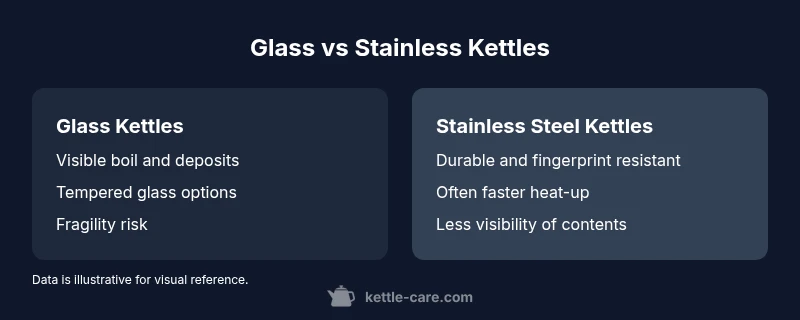
- Glass kettles offer clear visibility of the boil and deposits for easy monitoring
- Stainless steel kettles are durable and resist dents and breakage
- Both materials support reliable safety features and standard controls
What's Bad
- Glass can be fragile and heavier when full, increasing breakage risk
- Glass shows mineral buildup more visibly, demanding regular cleaning
- Stainless steel can show fingerprints and water spots and may feel less 'open' visually
Stainless steel wins on durability; glass wins on visibility
For households prioritizing ruggedness and low maintenance, stainless steel is often the safer default. If you value monitoring the boil and mineral deposits, glass offers a compelling advantage. Your choice should align with your daily rituals and cleaning tolerance.
Frequently Asked Questions
Is glass better for monitoring the boil compared to stainless steel?
Yes. Glass kettles provide a clear view of the water as it heats, making it easier to monitor the boil and spot mineral buildup. Stainless steel kettles are more opaque, so you rely on sounds and indicators rather than visual cues.
Glass kettles let you see the boil; stainless steel relies on indicators.
Are glass kettles safe to use in a busy kitchen?
Glass kettles are generally safe when made from tempered glass and equipped with sturdy lids and cool-touch handles. The key is to choose models with reliable auto shut-off and quality seals to prevent leaks or accidental burns.
Tempered glass with good safety features is safe for busy kitchens.
Does stainless steel heat water faster than glass?
In many designs, stainless steel heats water quickly due to high thermal conductivity, though actual speed depends on wattage and design. Glass models can be speedier with modern high-wattage elements but typically prioritize visibility over pure speed.
Stainless steel often heats quickly; glass can be fast too, depending on the model.
How often should I descale, and does material affect this?
Descaling frequency depends on water hardness and usage, not merely on material. Glass kettles might reveal mineral buildup sooner, but both require regular descaling to maintain performance and taste.
Descale based on water hardness and use; both materials need it regularly.
Which lasts longer: glass or stainless steel kettles?
Stainless steel generally shows greater resistance to dents and breakage, making it the longer-lasting option in busy homes. Glass can last a long time if handled carefully, but it remains more vulnerable to chips and cracks.
Stainless steel typically lasts longer in busy homes; glass lasts with careful handling.
Do glass and stainless kettles contain BPA or other harmful plastics?
Most modern kettles use BPA-free plastics for lids and seals. Always check specifications to confirm that all hot-water-contact components are BPA-free and that the product meets safety certifications.
BPA-free plastics are common, but verify the product specs for safety.
Highlights
- Prioritize visibility if you love watching the boil and mineral buildup.
- Choose durability if your kitchen is busy or children are present.
- Consider maintenance routines and descaling needs for hard water.
- Balance aesthetics with practical use when selecting a model.
- Always verify safety certifications and warranties before buying.