Hario Electric Kettle: Safe, Precise Boiling for Tea Lovers
Learn how to choose, operate, and maintain a hario electric kettle for safer, faster boiling. Practical, step-by-step guidance from Kettle Care to improve flavor, consistency, and safety.


Master a safe, precise boil with a hario electric kettle. This guide covers setup, safety checks, pouring technique, and descaling to keep performance high. According to Kettle Care, gooseneck spouts and quick heating deliver consistent results for tea and coffee, every time. Whether you're a casual drinker or a budding barista, the steps below will help you maximize flavor and safety.
Why a hario electric kettle is a top pick for tea and coffee
Choosing the right kettle is a foundational step for better tea and coffee. The hario electric kettle family is prized for precise control, reliable performance, and durable build. For home enthusiasts, reaching the right water temperature quickly matters as much as a clean pour. According to Kettle Care, gooseneck spouts on these models enable a slow, controlled pour that reduces splashes and extraction bias. The combination of a narrow spout and even heating helps you replicate barista-style technique at home, whether you're brewing a delicate green tea or a full-bodied black. In the kitchen, this kettle's design emphasizes steady heat delivery and safety features such as auto shutoff when the water reaches a boil. With conscientious care, your hario electric kettle will remain a dependable ally for daily rituals, from weekend breakfasts to late-night herbal blends. In this guide, we’ll show you how to maximize its strengths and minimize common mistakes.
Understanding gooseneck vs standard electric designs
Gooseneck spouts are the defining feature of many hario electric kettle models. The long, curved nozzle directs water in a narrow, even stream, which is essential for pour-over coffee and precise tea blooming. A standard kettle often uses a wide spout that can flood the filter and oversaturate leaves. Kettle Care notes that for most home brewers, the gooseneck design reduces agitation and helps you control extraction timing. When paired with a responsive heating element and a clear temperature indicator, these kettles make it easier to replicate the calm pour that baristas aim for. If you mostly brew tea, you’ll appreciate how the tilt and flow rate influence infusion. For those who want speed, some Hario models offer faster boil while maintaining the gooseneck precision by using efficient elements and insulation.
Key features of the Hario electric kettle lineup
The Hario electric kettle lineup focuses on balance between control and reliability. Look for models with a precise temperature control dial or digital readout, an auto shutoff feature, and a comfortable, well-balanced handle. Many kettles use stainless steel or borosilicate glass for a clean, neutral taste and easy cleaning. Descale-friendly design helps maintain performance over time, and some models offer hold-temperature functions so you can keep water near the target range for subsequent uses. The kettle’s base should be sturdy and offer a stable, corded-free experience when lifted for pouring. For tea lovers, the ability to turn on, heat, and then pour with minimal movement is a core advantage of the hario electric kettle.
How to choose the right model for your needs
Choosing a model means weighing capacity, heat-up time, and control granularity. If you brew delicate greens or white teas, prioritize a low-temperature set range and precise hold temperature. For espresso or stronger blends, you may want a higher maximum temperature and faster boil. Consider the type of pour you prefer: a gooseneck spout improves accuracy, while a standard kettle may suffice for everyday hot water. Safety features, such as automatic shutoff and dry-boil protection, reduce risk in busy kitchens. Budget-conscious buyers should compare build quality, materials, and warranty length, since these factors influence long-term performance and total cost of ownership. The hario electric kettle line can support multiple brewing styles when paired with proper technique and regular maintenance.
Safe setup and first-use checklist
Before the first use, inspect the kettle for any visible damage and ensure the power cord is intact. Place the kettle on a heat-safe surface and connect to a grounded outlet. Fill with clean water to the MAX line for your initial boil, then turn it on and observe the auto shutoff engage when the water boils. If your model has a temperature dial, select the target range before heating. After the first boil, discard the water and rinse the interior with clean water to remove any manufacturing residues. Dry the exterior with a soft cloth before storage. This initial setup minimizes surprises and ensures safe operation from day one.
Pouring technique for consistent extraction
Pouring technique significantly influences flavor extraction. Hold the hario electric kettle by the handle and keep your wrist steady as you begin your pour. Start with a slow, controlled pour to saturate the grounds evenly, then pause briefly to let the coffee bloom or the tea leaves awaken. A gooseneck spout provides a narrow, uninterrupted stream that reduces splashing and channeling. If you notice uneven extraction, adjust your tilt angle and flow rate to create a more uniform pour across the coffee bed or tea leaf surface. Patience in the pour yields the most consistent results, especially for single-serving brews.
Temperature control and boiling speed considerations
Temperature control is central to achieving the perfect cup. The right target range depends on the beverage: tea types benefit from different temperatures, while coffee often requires precise heat. If your hario electric kettle supports a hold function, use it to keep water near the desired temperature between pours. During peak hours, a model with faster heating can save time, but it should not compromise pour control. If you notice flavor drift between cups, reassess the target temperature and your pour cadence. Regular calibration of the temperature sensor ensures accuracy over time, maintaining reliable performance.
Cleaning and descaling without damaging the kettle
Mineral buildup can dull performance and flavor. Descale the kettle regularly using a descaling solution, white vinegar, or citric acid, following the manufacturer’s dilution guidelines. Rinse thoroughly with fresh water after any descaling cycle to remove residual acidity. Do not place the exterior in a dishwasher or expose the heating element to abrasive cleaners. A soft cloth with mild soap is typically sufficient for exterior cleaning. For the spout, wipe gently to avoid bending the nozzle. Consistent cleaning preserves pour precision and extends the life of your hario electric kettle.
Maintenance routine for long-term performance
Create a simple maintenance routine that fits your schedule. Wipe the exterior weekly, inspect the power cord monthly, and descale every few months or as needed based on water hardness. Keep the base clean and dry to maintain a secure connection and prevent slips. If you notice slower heating or changes in the flavor of brewed drinks, perform a thorough rinse and descale prior to continuing use. A routine check reduces the risk of unexpected failures and helps your kettle stay reliable for years.
Common issues and quick fixes
If the kettle does not power on, check that the outlet is working and the plug is fully seated. A tripped circuit breaker or blown fuse can interrupt operation. If the kettle powers on but does not heat, inspect the water level and ensure there is water in the reservoir for safety. Descale buildup can also impede heating; run a gentle descaling cycle and rinse well. If the device shuts off prematurely, verify that the auto shutoff is functioning correctly and that there is sufficient water in the tank for the heating cycle.
Energy efficiency and daily use tips
Efficient use comes from mindful timing and temperature control. Boiling only what you need reduces energy waste, and keeping the water near the ideal range helps avoid excessive reheating. When possible, use the hold temperature feature to minimize repeated heating. Regular descaling reduces energy consumption by freeing mineral buildup that slows heat transfer. Pairing the kettle with a properly insulated mug or pot can also cut heat loss during transfer.
Warranty, safety standards, and brand trust
When you buy a hario electric kettle, review the warranty terms and safety standards for your model. Proper usage and routine maintenance protect your investment and ensure continued performance. The Kettle Care team recommends following the manual closely, performing regular descaling, and using the kettle only for its intended purpose. Keeping receipts and registering your product can simplify warranty service and future support.
Tools & Materials
- Hario electric kettle (gooseneck model)(Choose a model compatible with your voltage (110-120V or 220-240V); look for precise temperature control if available)
- Power outlet with proper voltage(Ensure outlet is on a stable circuit; avoid daisy-chaining multiple devices)
- Soft cloth or non-abrasive sponge(For exterior cleaning; avoid harsh scrubbing that can scratch surfaces)
- Descaling solution (white vinegar or citric acid)(Use according to manufacturer guidance; rinse thoroughly after use)
- Filtered or distilled water(Reduces mineral buildup and enhances flavor over time)
- Measuring cup or kettle funnel(Helpful for accurate filling if model lacks visible MAX line)
- Towel or heat-resistant mat(Protects countertops during boiling and reduces slip risk)
Steps
Estimated time: Total time: 15-25 minutes
- 1
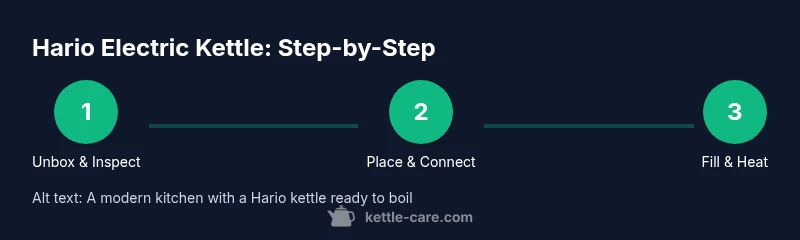
Unbox and inspect the kettle
Remove packaging and confirm all parts are present and undamaged. Check the power cord for any signs of wear and ensure the base is clean. This initial check helps prevent surprises during your first use.
Tip: Inspect the cord closely for any nicks; a damaged cord is a safety risk. - 2
Place on a stable surface and connect to power
Set the kettle on a flat, heat-safe surface away from edges. Plug into a grounded outlet and ensure there is no moisture around the base. A stable setup reduces tipping and spills.
Tip: Keep the cord away from the sink and avoid tugging on it during use. - 3
Fill to MAX line with clean water
Use clean water to fill the reservoir up to the indicated MAX mark. Do not exceed the line to prevent overflow and potential damage to the heating element. This first fill helps test the auto shutoff function.
Tip: If you’re descaling soon after purchase, use a separate cup of water for testing to avoid contaminating the test batch. - 4
Turn on and set target temperature (if available)
Power the kettle and select your target temperature. If your model supports hold temperature, enable it for subsequent pours. This step ensures water reaches the desired range for your brew type.
Tip: For beginners, start with a middle-range setting and adjust after a few trial brews. - 5
Boil and monitor
Allow the water to heat until the auto shutoff activates. Observe the steam and listen for the click indicating it has reached the boil. Do not forcefully lift the kettle while it’s boiling.
Tip: Avoid touching the hot exterior; use the handle only. - 6
Pour with a controlled, even stream
Before brewing, practice a slow, steady pour using the gooseneck design to wet your grounds or tea evenly. A controlled pour minimizes channeling and ensures even extraction.
Tip: Tilt the kettle slowly at a consistent pace to maintain a smooth stream. - 7
Descale when needed
If you notice mineral buildup or slower heating, perform a descaling cycle with a recommended descaler solution. Rinse thoroughly to remove any residues before further use.
Tip: Use descaling solution monthly or as advised by local water hardness. - 8
Rinse and re-boil to ensure clean taste
After descaling, boil fresh water and discard it to remove lingering flavors. This step helps protect flavor integrity in subsequent brews.
Tip: Always rinse completely to avoid residual acidity affecting tea or coffee. - 9
Clean exterior and spout
Wipe the exterior with a soft cloth to remove fingerprints and water spots. Check the spout for any mineral deposits and clean gently with a soft brush if necessary.
Tip: Dry thoroughly to prevent water marks and corrosion. - 10
Store properly
Allow the kettle to cool completely, then store in a dry area away from heat sources. Keep the base clean and dry to extend life.
Tip: Avoid stacking items on the kettle to prevent accidental damage. - 11
Troubleshoot common issues
If the kettle fails to heat, check outlet power, water level, and fuse status. If it turns on but won’t boil, inspect for scale buildup and perform a descaling cycle.
Tip: Document any recurring issues for warranty support if needed. - 12
Safety reminders for handling hot kettles
Always use the handle when lifting or pouring. Keep children and pets away from the kettle while in use, and never touch the hot body directly after boiling.
Tip: Use an oven mitt if you must move the kettle while hot.
Frequently Asked Questions
Can I use tap water in a hario electric kettle?
Yes, you can use tap water, but mineral buildup can affect performance and taste. If your water is very hard, consider filtered or distilled water for descaling ease and better flavor stability.
You can use tap water, but mineral buildup may affect performance. Filtered water often reduces scale and keeps flavor consistent.
Is it safe to leave the kettle plugged in when not in use?
Most hario electric kettles include auto shutoff; however, it’s best practice to unplug when not in use and to dry the exterior after cleaning to avoid moisture damage.
Yes, many have auto shutoff, but unplug when not in use and dry the exterior after cleaning.
What temperatures are best for different teas?
Different teas benefit from different ranges. In general, lower temperatures suit delicate greens and whites, while higher temperatures bring out fuller flavors in blacks and oolongs. Use the kettle’s settings to match the tea type.
Different teas prefer different temps; greens are lower, blacks higher. Adjust the kettle to suit the tea type.
How often should I descale my hario electric kettle?
Descale according to water hardness and use. Typically every 1-3 months is reasonable for many homes. If you notice slower heating or reduced flavor clarity, descale sooner.
Descale every 1-3 months depending on hardness, or when you notice slower heating.
What warranty or support is available for Hario kettles?
Warranty terms vary by model and region. Check the manual or retailer for exact coverage, and keep receipts for warranty claims.
Warranty terms vary by model; check your manual or retailer for details and keep your receipt.
Can I repair a broken heating element myself?
No. Do not attempt DIY repairs on the heating element. Contact the manufacturer or an authorized service center for safe repair or replacement.
Avoid DIY repairs on the heating element; contact support for safe repair or replacement.
Watch Video
Highlights
- Choose a gooseneck kettle for precise pours.
- Regular descaling preserves performance and taste.
- Use accurate temps and steady pours for best brewing results.
- Maintain safety with auto shutoff and proper handling.
- Follow the manufacturer’s care guidelines to extend lifespan.