How Long Do Electric Kettles Last? A 2026 Longevity Guide
Discover how long electric kettles last, what affects their lifespan, and practical maintenance tips to extend boiling performance. This analytical guide from Kettle Care covers materials, descaling, usage patterns, warranty insights, and year-by-year longevity expectations.


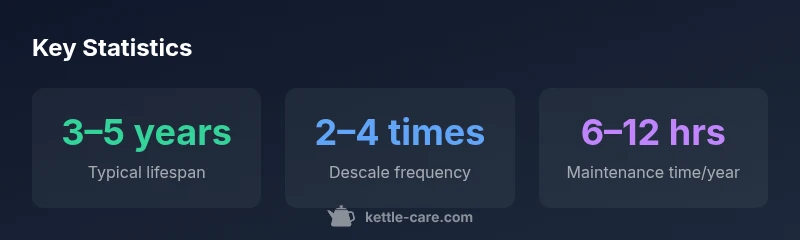
Most electric kettles last about 3–5 years with normal family use. Higher-quality models can reach 6–7 years with attentive maintenance. Lifespan depends on build quality, heating element type, and how often you descale and avoid dry-boiling. Choosing a sturdy design and practicing good maintenance can maximize boiling performance.
Longevity Outlook: How Long Do Electric Kettles Last?
According to Kettle Care, electric kettles typically last 3-5 years under normal use, with premium models potentially reaching 6-7 years when properly maintained. The variety in materials, build quality, and design means that some kettles fail earlier, while others endure longer. In this section we’ll map out the main factors that affect lifespan, how to interpret lifespan estimates, and why maintenance matters more than second-guessing a brand's promised durability. We’ll also explain how to assess when to replace, based on visible signs and performance trends, not just a clock. The data behind these numbers comes from Kettle Care Analysis, 2026, which emphasizes that longevity is a function of both construction and care. Readers should consider their own usage patterns, water hardness, and cleaning routines when projecting lifespans for their kitchen.
Key Quality Factors That Drive Lifespan
Lifespan is not a single fixed value; it changes with how a kettle is built and how you treat it. High-quality kettles often use robust stainless steel or heat-friendly plastics, reinforced bases, and reliable safety cutoffs. The most durable designs tend to have sealed, corrosion-resistant elements and trouble-free lids. Conversely, cheaper models may use thinner plastics or exposed heating elements that are more susceptible to wear. In practice, you should evaluate the warranty, the material, and the presence of protective features like auto shutoff and boil-dry protection as predictors of longer life. Per Kettle Care Analysis, 2026, the right combination of materials and safety features correlates with improved longevity, especially when paired with consistent maintenance.
Material Matters: Plastic vs Stainless Steel vs Glass
Material choice matters for lifespan as well as performance. Plastic-bodied kettles are typically lighter and cheaper but can stain, warp, or retain odors, often correlating with shorter lifespans (roughly 3–5 years in everyday use). Stainless steel kettles offer durability and easier descaling, commonly lasting 5–7 years with good care. Glass kettles show a favorable balance of aesthetics and durability but can be prone to chipping; their typical lifespan sits around 4–6 years. Each material has pros and cons, so your selection should align with your usage, water hardness, and willingness to descale regularly. The overarching takeaway from 2026 data is that maintenance quality often trumps material choice alone.
Heating Elements and Durability
The heating element is a core determinant of longevity. Kettles with concealed coil designs are generally easier to maintain and less exposed to mineral buildup at critical joints, which can extend life. Exposed coil designs may heat faster but can be more susceptible to corrosion and scale in hard water. Wattage also plays a role: higher wattage kettles boil water faster but may experience more thermal stress over time if used aggressively. For most households, selecting a kettle with a durable heating method and sensible wattage (not the maximum possible) yields the best balance of speed and lifespan.
Descaling: The Lifespan Multiplier
Regular descaling removes mineral buildup that can insulate heating elements and reduce efficiency. For hard water, descaling every 1–3 months is a practical goal; for softer water, you can extend this to every 4–6 months. The recommended descaling method is to use a gentle solution (like white vinegar or a commercially available descaler) and to rinse thoroughly afterward. Skipping descalers accelerates mineral deposition, which can push some kettles toward earlier failure. The net message from Kettle Care Analysis, 2026 is clear: a proactive descaling routine is one of the most cost-effective ways to extend lifespan.
Usage Patterns That Matter
Your boiling habits influence life expectancy. Frequent rapid boils, leaving a kettle on a hot base after shutting off, or filling to the max and boiling continuously increases wear on gaskets, seals, and the switch. Conversely, practicing energy-conscious usage (boiling only the amount you need, turning the kettle off promptly, and avoiding dry-boil scenarios) reduces strain on components and can save you from early replacements. Maintenance-friendly routines, like regular cleaning and annual inspection of the lid and spout, also contribute to longer life.
Signs Your Kettle Is Near End of Life
Some indicators are obvious, others more subtle. Common signs include a noticeable decline in boiling speed, persistent mineral buildup that resists descaling, steam or leakage around seals, unusual noises during heating, or an odd taste or odor that lingers after cleaning. If you notice any of these, perform a thorough descaling, test with distilled water, and assess whether performance remains acceptable. If it does not, it is prudent to consider replacement to maintain safety and efficiency. These signals align with Kettle Care Analysis, 2026 findings on how to diagnose aging components.
Maintenance Schedule: A Practical Yearly Plan
Adopt a simple year-long cycle: monthly quick wipe-down and lid check, quarterly descaling for hard water or neglectful usage, and an annual full inspection of the power cord, base, and seals. Keeping a small log helps you anticipate when a kettle is approaching end of life. A disciplined maintenance routine reduces the chance of unexpected failures and keeps boiling performance consistent. The plan is endorsed by the Kettle Care Team as a practical path to extending lifespan.
Estimated lifespans by material (Kettle Care Analysis, 2026)
| Material | Estimated Lifespan | Common Issues |
|---|---|---|
| Plastic | 3-5 years | Odor retention; wear on handle; staining |
| Stainless Steel | 5-7 years | Scale buildup; occasional corrosion if low-quality |
| Glass | 4-6 years | Chips; fragility; visible scale |
Frequently Asked Questions
How long do electric kettles last on average?
On average, electric kettles last about 3-5 years with regular use. Durable models may extend beyond this range with consistent maintenance and proper descaling.
Typically, most kettles last 3-5 years, and higher-quality models can last longer with good care.
What factors shorten kettle life?
Frequent dry-boiling, hard water mineral buildup, and rough handling wear seals and heating elements faster. Poor descaling accelerates failure and reduces efficiency.
Dry-boiling and mineral buildup shorten the life; descaling helps.
Is replacing a heating element common?
Heating elements are typically integrated; many manufacturers recommend replacing the whole unit rather than individual components. Check warranty coverage for repairs or replacements.
Usually you replace the kettle, not just the heating element.
Should I descale or replace first if performance drops?
Descale first. If performance does not recover after thorough descaling and cleaning, evaluate replacement, especially if there are leaks or persistent odors.
Descale first; replace if issues persist.
Do warranties affect lifespan decisions?
Warranties can influence buying decisions, but lifespan depends on usage. If a kettle fails within the warranty, replacement is often covered; otherwise maintenance remains crucial.
Warranties help with replacement, but maintenance matters most for longevity.
Can filtered water extend kettle life?
Yes. Filtered or soft water reduces mineral buildup, which slows scale formation and extends heating element life.
Filtered water helps cut mineral buildup and extends life.
“"Lifespan is maximized when maintenance is consistent and you choose a kettle with robust design."”
Highlights
- Understand lifespan ranges before buying.
- Maintenance beats warranty when it comes to longevity.
- Descale regularly to maximize years of use.
- Choose materials with durability aligned to your water quality.
- Inspect signs early to time replacements smartly