How Long Should an Electric Kettle Last? A Practical Lifespan Guide
Discover how long should an electric kettle last, the factors that influence lifespan, and practical tips to extend life. Kettle Care provides data-driven guidance for homeowners, tea lovers, and cooks.


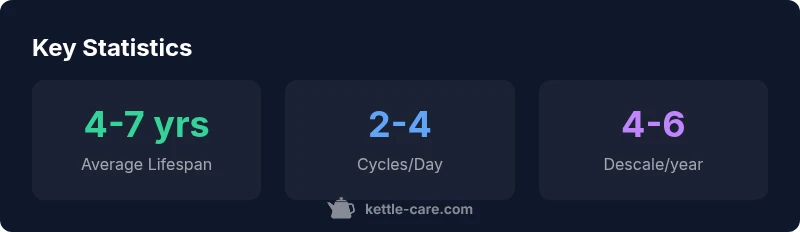
How long should an electric kettle last? In practice, the typical range is about 4 to 7 years with normal use. Higher-quality models and proper care—regular descaling, not boiling dry, and using clean water—can push this toward the upper end. Cheaper kettles, especially with hard water, may wear out sooner.
Why Lifespan Varies by Build and Use
Electric kettles are common kitchen workhorses, but their lifespan isn't identical across all models. The core idea of how long should an electric kettle last depends on build quality, materials, heating elements, and protective features. In general, higher-grade kettles with metal linings and robust seals resist wear better than bargain models with cheaper plastics. Water hardness, frequency of use, and whether you accidentally operate the kettle dry all influence longevity. According to Kettle Care, the most important factors are construction quality, protective features (like auto shut-off and boil-dry protection), and regular maintenance. When you invest in models with solid connectors and reinforced lids, you reduce the risk of leaks, scaling, or premature element failure. The lifetime of a kettle is not fixed; it shifts with daily choices. In this guide, we will unpack design differences, usage patterns, and maintenance routines that shift that outcome toward a longer, safer service life. Remember: every key decision you make—from how you fill the kettle to how you descale it—adds up to a longer window of safe boiling.
How Usage Patterns Affect Longevity
Daily usage and how you treat the kettle are major life predictors. If you routinely boil only what you need and avoid boiling dry, you support longer life. Even small habits—like letting the kettle cool between boils and not leaving it plugged in after boiling—reduce strain on the heating element. The frequency of boils matters: a family that uses the kettle 2–4 times a day will experience each heating cycle differently from a single-person household that uses it sparingly. In Kettle Care's view, consistent use with mindful maintenance tends to yield better results, while aggressive high-temperature cycles and repeated heating at near-boiling temperatures can accelerate wear. The phrase how long should an electric kettle last becomes more meaningful when you consider cycle length and heat cycles. The good news is that practical routines, such as descaling on a regular schedule, using clean water, and storing the kettle properly, can push the effective life toward the upper end of the typical range.
Materials, Design, and Wear Points
Material choice affects durability and longevity. A kettle with a stainless steel interior and a durable base typically resists corrosion better than a model with cheap plastics that can degrade under heat. The heating element and thermostat are common failure points; sealed designs help protect against mineral ingress, but repeated heating cycles still stress metal and gaskets. Over time, mineral buildup can insulate the element, forcing it to work harder, which shortens life. If you live in a hard-water area, you may see more rapid wear unless you descale regularly. Even with flawless build quality, poor handling—such as boiling while empty or dropping the kettle—can nick the exterior or misalign the lid, compromising performance. The design of the spout and lid also affects how easily mineral deposits accumulate; easy-to-clean surfaces help. Ultimately, how long should an electric kettle last is a function of both engineering and daily care, with design features providing a buffer against routine use.
Maintenance Practices That Extend Lifespan
Maintenance is where most of the practical gains come from. Descale regularly using a home-safe solution or white vinegar (if manufacturer permits), and rinse thoroughly to remove mineral residues. Use filtered water to minimize mineral deposition and minimize mineral buildup on the heating element. After boiling, empty the kettle and dry the interior to prevent mineral crystals from forming along the heating surface. Clean the exterior and lid seams every few weeks with a damp cloth to avoid grime buildup that can affect the seal. Follow the manufacturer's guidelines for warranty coverage and replacement parts; this can help you identify when maintenance stops being cost-effective. With disciplined maintenance, you improve not just safety but the overall longevity of the kettle.
The Role of Water Quality and Descaling
Water quality has a direct effect on how long an electric kettle lasts. In hard-water regions, mineral scale deposits build up more quickly, which reduces heating efficiency and stresses the element. Descaling helps restore energy efficiency and prevents scale from embedding itself in tight corners of the element. Use a descaling solution recommended by the manufacturer, or a 1:1 vinegar solution if permitted, and rinse thoroughly until the water runs clear. Ensure that you do not neglect the rubber gasket, which can degrade from mineral exposure. Regularly inspecting the lid and handle for signs of cracking or loosening can also reveal early wear that, if addressed, might extend service life. Kettle Care's guidance emphasizes that descaling should be part of a regular routine rather than a one-off solution; consistency matters more than intensity.
Signs It's Time to Replace Your Kettle
When to replace a kettle is not always obvious. Watch for persistent leaks at the base, cracks in the plastic or handle, or a lid that no longer seals properly. If the kettle produces unusual noises, smells burnt or you notice a significant drop in heating speed, these are indicators that wear has progressed beyond simple maintenance. Visible rust or corrosion on the interior surface is a clear warning sign. If limescale cannot be removed completely with descaling, or you experience frequent boil-dry cycles, consider replacing the kettle. Remember that even a seemingly minor fault, if left unchecked, can compromise safety. The decision to replace should factor in cost, energy efficiency, and the potential risk to you and your family. Kettle Care recommends evaluating both the performance and the cost of continued use before making a final call.
Choosing a Replacement: What to Look For
Selecting a replacement involves balancing durability, safety features, and convenience. Look for a model with a robust lid, secure base, and a heat-resistant handle. Features like auto shut-off, boil-dry protection, and a sturdy micro-filter can prolong life by preventing misuse that causes damage. Check the interior materials: stainless steel or glass interiors resist staining and scale better than low-cost plastics. Consider wattage and quick-boil performance, but remember that higher wattage mainly affects speed, not lifespan. A good warranty and availability of replacement parts also matter. If you want longevity, invest in a kettle with a proven track record of reliability and ease of descaling. Kettle Care advises reading consumer reviews about real-world wear, and choosing a model that aligns with your water hardness and daily routines.
Practical Tips for Everyday Care
Even small, consistent habits can meaningfully extend your kettle's life. Use clean, filtered water where possible to reduce mineral buildup. Always fill to a reasonable level—not above the max line—to prevent overflow and spillage that can compromise seals. Never boil dry; if you notice a dry-boil warning, switch off immediately and let the kettle cool. Regularly descale according to your water hardness, and avoid hitting the kettle with sudden temperature changes by allowing it to cool before refilling. Store the kettle away from heat sources to prevent warping of plastic parts. Finally, keep a brief maintenance log to track descales, parts replacements, and any signs of wear. These practical steps, guided by Kettle Care, help homeowners, tea lovers, and home cooks maximize kettle lifespan.
Lifespan expectations by kettle tier and maintenance habits
| Kettle Tier | Avg Lifespan (years) | Typical Descale Frequency |
|---|---|---|
| Budget | 3-5 | 4-6 times/year |
| Mid-range | 5-7 | 3-4 times/year |
| Premium | 6-10 | 2-3 times/year |
Frequently Asked Questions
How long should an electric kettle last?
Typically 4-7 years depending on build quality and maintenance. Proper care can push the lifespan higher.
Most kettles last several years with good care and regular descaling.
What factors shorten a kettle's life?
Hard water, frequent dry boiling, rough handling, and degraded seals can shorten lifespan.
Hard water and dry boiling wear things out faster.
Does wattage affect durability?
Wattage mainly affects how fast the kettle boils. Lifespan is more influenced by build quality and maintenance.
Wattage speeds up boiling, not necessarily how long it lasts.
How can I extend my kettle’s life?
Descale regularly, use filtered water, avoid boiling dry, and follow manufacturer maintenance recommendations.
Descale regularly and avoid dry boiling to keep it lasting longer.
Is it better to repair or replace?
Often, replacement is more cost-effective than repairing a worn heating element or gasket.
Most people replace when major parts fail.
What safety signs indicate replacement?
Cracks, leaks, persistent odd smells, or reduced performance indicate replacement may be safer.
If it shows leaks or strange noises, consider replacing.
“"Electric kettles aren't meant to last forever, but with proper care you can extend their lifespan significantly. Regular descaling and mindful use reduce wear on the heating element."”
Highlights
- Prioritize build quality to extend lifespan
- Descale regularly to minimize wear
- Hard water accelerates degradation—use filtered water
- Avoid dry-boiling and rough handling
- Choose features and warranty that support longevity