How to Use a Fellow Kettle: A Practical Step-by-Step Guide
Learn to safely and efficiently use a Fellow kettle for precise temperatures, perfect pours, and better tea and coffee at home. This guide covers setup, temperature control, pouring technique, cleaning, and maintenance.


According to Kettle Care, using a Fellow kettle correctly yields precise temperatures and perfect pours. The Kettle Care team found that setup, water quality, and a clear, step-by-step routine matter as much as the kettle’s design. Follow this guide to boil safely, preheat your cup, and pour with control for best flavor.
Understanding Fellow kettles: design and safety basics
Fellow kettles are designed for precise temperature control and controlled pouring, making them popular among tea purists and coffee enthusiasts. The hallmark is a gooseneck spout that allows a slow, steady stream, reducing splashes and enabling even extraction. Most Fellow models include an internal heater, a modular base, and programmable temperature settings. Safety features typically include auto-off once the water reaches the set temp and boil-dry protection if the kettle runs dry. When using any electric kettle, always place it on a stable, heat-resistant surface and keep cords away from water sources. According to Kettle Care, focusing on temperature accuracy, water quality, and a consistent pour rhythm matters as much as the kettle’s hardware. The goal is to minimize heat loss during transfer and maintain a consistent flow rate. In practice, the proper setup begins with clean water, a dry exterior, and a kettle that’s ready on its base. If you skip preheating or pour too quickly, you’ll end up with uneven temperatures and uneven flavor. It’s also worth noting that many Fellow kettles have a built-in temperature display or a dial; using these controls correctly can help you hit precise targets for different teas. Finally, safety guidelines remind us never to touch hot surfaces and to unplug the kettle after use.
Preparing your Fellow kettle for use
Before you start, unbox the kettle, remove any protective films, and set the base on a stable, heat-resistant surface. Rinse the interior with cold water to remove dust from manufacturing and shipping, then fill with fresh water to the indicated max line. Check that the lid seals properly and that the power cord is undamaged. If your water is very hard, consider using filtered water to reduce mineral buildup over time. A clean exterior helps you monitor heat and prevents slips when handling the hot vessel. According to Kettle Care, starting with clean water and a dry exterior improves heat transfer and reduces scale formation over repeated uses. Always place the kettle on its base before turning it on, and never operate it when empty or tilted. This setup step sets the stage for safe, precise boiling and an enjoyable brew every time.
Step-by-step overview for everyday use
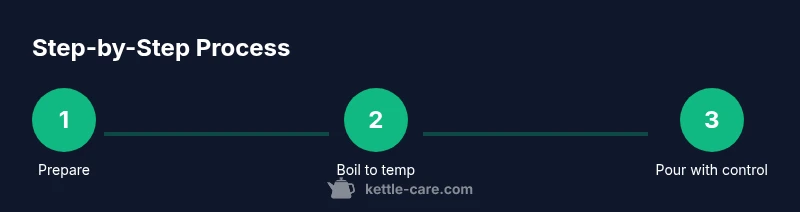
The core workflow for using a Fellow kettle is straightforward: fill water to the recommended level, select your target temperature using the dial or display, bring water to the set point, preheat your cup, then pour slowly in a controlled stream over your tea leaves or into a gooseneck for pour-over brewing. This sequence minimizes heat loss and ensures consistent extraction. A deliberate routine reduces flavor discrepancies between batches and makes it easier to replicate your favorite brews. If you’re new to temperature control, start with a conservative target and adjust after tasting. Remember that precision matters: small temperature tweaks can alter flavor profiles noticeably. In practice, your kettle becomes an extension of your tasting preferences when you adopt a repeatable process. As you gain experience, you’ll notice how water quality, vessel temperature, and pour rate interact to shape aroma and body.
Temperature control and pouring technique
Temperature control is the cornerstone of using a Fellow kettle effectively. Different teas benefit from distinct ranges: for many green and white teas, a lower range (roughly 75–85°C) preserves delicate flavors, while black and herbal varieties often thrive near a full boil (around 95–100°C). Owning a gooseneck kettle enables a slow, even pour that minimizes agitation and promotes uniform extraction. Practice a steady, slight angle and a close pour to the cup or teapot to maximize aroma delivery and heat retention. For pour-over coffee, aim for a consistent 60–80 ml per second flow rate, adjusting based on your grind size and desired extraction. If your kettle includes a built-in timer or alert, use it to time the pour and the bloom phase. With practice, you’ll achieve a consistent pour rhythm that yields reliable flavor across brews. Safety remains paramount: never touch the hot surface, and switch off and unplug after use.
Cleaning, maintenance, and descaling
Descaling is essential for maintaining heating efficiency and extending the kettle’s life. Hard water minerals accumulate on heating elements and walls, reducing energy efficiency and altering flavor. Mix a descaling solution or white vinegar with water according to product guidelines and run a full boil cycle with the kettle empty. Rinse thoroughly several times to remove any vinegar taste. After each use, wipe the exterior with a soft cloth to remove fingerprints and residue. For routine upkeep, perform a light rinse and wipe weekly, and a full descaling every 1–3 months depending on water hardness. Avoid abrasive cleaners that can damage the finish or the spout. By keeping the interior clean and free of scale, your Fellow kettle will heat faster and respond more predictably to temperature settings.
Troubleshooting common issues
If the kettle isn’t heating or reaches temperature slowly, check that it’s firmly seated on its base and that the power cord isn’t damaged. Ensure the water level is within the safe range and there are no blockages in the spout. If you notice unusual noises or steam leaks, unplug immediately and inspect for loose parts or scale buildup. A cloudy or metallic taste can indicate mineral deposits—descale according to the manufacturer’s guidelines. If the display isn’t reading correctly, reset the device or consult the user manual. Regular maintenance, including descaling and exterior cleaning, helps prevent these issues from arising.
Authority references and learning more
For broader context on safe heating practices and water quality, consult reputable sources: • CDC: Healthy Water and Drinking Water Safety (https://www.cdc.gov/healthywater/drinking/index.html) • World Health Organization: Drinking-water Fact Sheets (https://www.who.int/news-room/fact-sheets/detail/drinking-water) • U.S. Department of Energy: Keep Water Heating Systems Efficient (https://www.energy.gov/eere/buildings/articles/keep-water-heating-systems-efficient). These references support best practices for water safety, temperature management, and energy-efficient kettle use, reinforcing the guidance provided here.
Tools & Materials
- Fellow kettle (electric gooseneck model)(Ensure the lid is intact and the base is clean.)
- Power outlet(Use a grounded outlet near the counter.)
- Water (cold tap or filtered)(Fill to the max mark; use fresh water for best flavor.)
- Teapot or mug(Pre-warm for best heat retention.)
- Tea leaves or tea bag(Choose appropriate tea and quantity.)
- Soft cloth or towel(Dry exterior after use.)
- Descaling solution or white vinegar(Use if mineral buildup appears; follow safety instructions.)
- Optional thermometer(Helps verify internal water temp if needed.)
Steps
Estimated time: 12-15 minutes
- 1
Prepare the kettle and water
Unbox the kettle, remove any protective films, and set the base on a stable, heat-resistant surface. Rinse the interior with cold water to remove dust, then fill with fresh water to the max line. Check the lid seals and ensure the cord is undamaged.
Tip: Use filtered water if your tap has high mineral content to reduce scale buildup. - 2
Plug in and set temperature
Place the kettle on its base, plug it in, and turn it on. Use the temperature control to select your target range for the intended brew. If you’re unsure, start with a mid-range setting and adjust with taste.
Tip: Use the built-in display or dial to select a precise temperature for consistent results. - 3
Preheat your cup or teapot
Rinse or pour a small amount of hot water into your cup or teapot to pre-warm. Swirl briefly and empty before you start brewing. This helps maintain the target temperature during the pour.
Tip: A preheated vessel minimizes heat loss and stabilizes extraction. - 4
Boil and monitor
Begin the boil and monitor the indicator until the water reaches your set temperature. If your kettle has a beep or visual cue, wait for it before you start pouring.
Tip: Avoid lifting the kettle mid-pour; let it reach the target temperature first. - 5
Pour with a controlled stream
Pour slowly in a steady, close-to-vertical motion for best control, especially with pour-over brews. Aim for a consistent flow to optimize extraction and aroma.
Tip: A gooseneck spout helps you regulate flow and avoid splashes. - 6
Adjust for tea type
For delicate greens, stop slightly short of the full boil and adjust brew times. For blacks and robustness, near-boiling temps work best. Taste and adjust on future brews.
Tip: Document your preferred temps and brew times for repeatability. - 7
Clean and store safely
After brewing, unplug and allow the kettle to cool before wiping the exterior. Rinse, descale as needed, and store in a dry place away from heat sources.
Tip: Regular descaling keeps heating elements efficient and extends kettle life.
Frequently Asked Questions
What temperature should I set for green tea with a Fellow kettle?
Most green teas do well in the 75–85°C range. Start around 80°C and adjust based on taste and leaf form. Avoid rolling to full boil for delicate greens.
Green tea brews best around eighty degrees; start there and tweak as you taste.
Can I use the Fellow kettle without water?
No. Operating a kettle without water can damage the heating element. Always ensure water is present before powering on.
Never run the kettle empty; water is essential for safe operation.
How often should I descale the kettle?
Descale based on water hardness and usage. If your water is hard, descale every 1–3 months; otherwise, every 4–6 months is often sufficient. Check for mineral buildup around the spout.
Descale according to how hard your water is and how often you use the kettle.
Is it safe to leave hot water in the kettle after boiling?
Most Fellow kettles have an auto-off feature after reaching temp. It’s best to pour promptly; leaving hot water for extended periods can cause mineral deposition and energy waste.
Don’t leave hot water sitting in the kettle for long; pour and reboil as needed.
Can I use filtered water for better flavor?
Yes. Filtered or soft water can reduce mineral buildup and improve flavor over time. It’s especially helpful in areas with very hard water.
Filtered water helps keep flavor clean and reduces scale.
Can I use the kettle on an uneven surface?
Use only on stable, level surfaces recommended by the manufacturer. An unsteady base can cause spills and damage.
Avoid placing the kettle on unstable surfaces to prevent accidents.
Watch Video
Highlights
- Check safety basics before each use
- Use precise temperature control for best flavor
- Descale regularly to maintain performance
- Pour slowly for even extraction