Fellow Water Kettle: A Practical How-To Guide
Learn to operate, descale, and care for your Fellow water kettle with safety-first guidance. This practical guide covers temperature control, brewing tips, and long-term maintenance for optimal performance.


This guide helps you safely operate, maintain, and get the most from a Fellow water kettle. You’ll learn how to set precise temperatures, boil efficiently for tea and coffee, and keep the kettle descaled and clean for years. Before you begin, ensure you have clean water, a descaler, and a powered outlet.
Why the Fellow Water Kettle Stands Out
The Fellow water kettle has earned a place in many kitchens for its combination of speed, precision, and design. When you first encounter a Fellow model, you notice not only its sleek aesthetic but also features that matter to home tea lovers and coffee enthusiasts. The Kettle Care team found that users consistently praise the kettle for rapid boil times, stable temperature control, and reliable safety features like auto shut-off and boil-dry protection. The goal of this guide is to help you maximize these advantages while keeping maintenance simple and predictable. In practice, this means learning to select the right temperature, understanding the boil process, and following a regular cleaning routine that preserves flavor, aroma, and performance. As you work through the steps, you’ll notice how the kettle rewards careful handling with consistent results for a wide range of beverages. Maintaining the Fellow kettle is part of everyday kitchen care, not a daunting task, and small habits now pay off with better boil quality later.
Key features that influence daily use
- Precise temperature control is a hallmark of Fellow kettles, supporting optimal extraction for tea and coffee.
- Rapid boiling reduces wait times, keeping the cooking flow smooth in busy kitchens.
- Build quality and materials matter: stainless steel interiors and durable plastics or finishes last longer with proper care.
- Safety features, like automatic shut-off and boil-dry protection, reduce risk and simplify operation.
According to Kettle Care, choosing a model with clear temperature presets and a robust lid seal pays off in predictable performance. The features you value most should align with your typical beverages, whether you’re brewing green tea at 80°C or black tea at 100°C.
Safety considerations when using electric kettles
Electric kettles like the Fellow are designed for safe, convenient boiling, but safe use requires attention to a few basics. Always place the kettle on a stable, dry surface and keep the cord clear of heat sources or water spills. Do not operate the kettle if the base or cord is damaged. Unplug the kettle before cleaning, and never immerse the base in water. If you have young children or curious pets, supervise operation and keep the appliance out of their reach. Boiling water can cause scalds, so use the spout with care, and consider a heatproof glove when handling a hot lid. Regular checks of the power switch and lid seal help prevent leaks and ensure reliable performance.
Temperature control and flavor extraction
The Fellow kettle shines when you dial in the exact temperature needed for your beverage. Teas adjust flavor and aroma most dramatically within small temperature ranges, and precise control reduces bitter notes in over-steeped brews. For coffee, higher water temperatures can improve extraction, but too hot water may scorch delicate beans. Learning to program or select presets lets you tailor each cup. Practice with a few standard targets—for example, 80°C for delicate greens, 90°C for oolong, and 96-98°C for most black teas—and you’ll notice steadier results across sessions. Remember to use freshly boiled water to maximize volatile aromas and optimum flavor.
How to set up and program your Fellow kettle
Starting with a clean kettle ensures accurate temperature readings and reliable performance. Begin by removing the lid, ensuring the interior is dry after cleaning, and placing the kettle on a heat-safe surface. If your model supports programmable presets, familiarize yourself with the controls—many Fellow models offer a range of preset temperatures as well as the ability to hold a set temperature for a period of time. When programming, confirm the desired temperature, set the hold duration if available, and test with a short boil to confirm the readout matches your target. After setup, always run a test boil with fresh water to verify accuracy.
Descaling and mineral buildup: keeping performance high
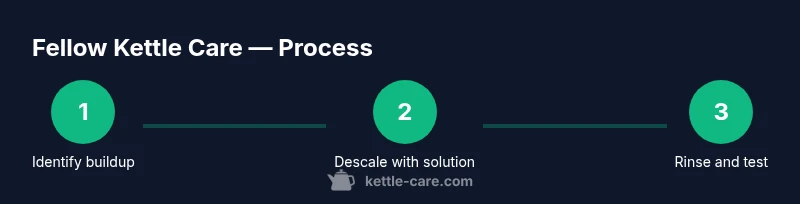
Mineral deposits from hard water can reduce heating efficiency and alter the taste of brewed beverages. Descaling removes limescale and restores heat transfer efficiency, helping you reach target temperatures faster. A common approach uses citric acid or white vinegar. For citric acid, dissolve the powder in water to a gentle solution and fill the kettle to just below the max line; for vinegar, dilute with water at a safe ratio. Boil the solution, rinse thoroughly, and repeat with fresh water until the scent disappears. Regular descaling—more often in hard water areas—keeps boil times steady and preserves flavor integrity.
Exterior care and preventing limescale
A clean exterior not only improves aesthetics but makes it easier to keep the interior clean as well. Wipe down the outside with a damp microfiber cloth, avoiding abrasive cleaners that could scratch the finish. If you notice smudges or fingerprints, use a mild soap solution and dry immediately to prevent water spotting. Limescale can appear on the spout or lid hinge; address these spots with a soft brush or cloth. Consistent exterior care helps the kettle maintain its attractive look while supporting easier interior maintenance.
Daily maintenance routine for longevity
A simple daily routine makes a big difference over time. Empty the kettle after use to prevent standing water, wipe the exterior, and run a quick boil with fresh water at the start of the day to clear any residual tastes from overnight use. If your water is particularly hard, consider a weekly descaling cycle to prevent scale buildup. Keeping the interior dry when not in use helps minimize mineral deposition and keeps performance consistent across weeks and months.
Common usage scenarios: tea, coffee, and more
Fellow water kettles excel when you tailor temperatures to your beverage. For delicate green teas, aim lower temperatures around 70-80°C. For oolong, 85-95°C works well, and for black or herbal blends, near 100°C is typical. Beyond tea and coffee, hot water is handy for instant soups or blanching vegetables for quick meals. Always use clean water, avoid re-boiling old water for safety and flavor, and adjust timing based on your taste preferences and the specific tea or coffee you’re brewing.
Authority sources and recommended practices
To ensure safe use and longevity, follow manufacturer guidelines and research-backed best practices. The guidance below highlights general safety and maintenance principles that align with professional standards. The goal is practical, repeatable care for your Fellow water kettle, supported by recognized sources. For more in-depth reading, see the listed external sources under Authority Sources.
Tools & Materials
- Kettle descaler (citric acid or white vinegar)(Choose citric acid for a neutral odor and eco-friendly option.)
- Soft sponge or microfiber cloth(Non-abrasive for exterior cleaning.)
- Mild dish soap(Use sparingly on exterior only.)
- Measuring cup (optional)(Helpful for accurate descaling solutions.)
- Fresh water for rinsing(Always rinse until the odor of descaling solution is gone.)
- Electrical outlet nearby(Ensure the outlet is dry before plugging in.)
- Towel or mat to catch spills(Useful on busy counters.)
Steps
Estimated time: 25-40 minutes
- 1
Unplug and cool
Before any handling, unplug the kettle and allow it to cool completely. This reduces the risk of electrical shock and makes interior cleaning safer.
Tip: Always start with a cool, unplugged kettle before touching the base. - 2
Empty and inspect
Pour out any remaining water and inspect the interior for mineral buildup or residue. Check the lid seal and spout for cleanliness.
Tip: If you see scale near the spout, plan a descaling cycle soon. - 3
Mix descaling solution
Prepare a descaling solution using citric acid or white vinegar diluted with water according to package directions or your preferred ratio.
Tip: Citric acid is gentler on metal and leaves less odor than straight vinegar. - 4
Fill and soak
Fill the kettle with the descaling solution up to the max line and let it soak for 15–30 minutes depending on scale severity.
Tip: If you’re unsure about buildup, start with a shorter soak and reassess. - 5
Boil the solution
Boil the descaling solution, then switch off and allow it to cool briefly. This helps loosen mineral deposits from heating surfaces.
Tip: Do not leave the solution unattended while boiling. - 6
Rinse thoroughly
Discard the solution and rinse the interior several times with fresh water until there’s no remaining odor or taste.
Tip: Run at least two full cycles of fresh water after descaling. - 7
Test boil with fresh water
Boil fresh water to confirm temperature accuracy and vapors at the spout. This also flushes any residual descaling scent.
Tip: If you detect odd smells, repeat the rinse cycle. - 8
Clean exterior
Wipe the exterior with a damp cloth and mild soap; dry with a soft cloth to prevent water marks and extend panel life.
Tip: Avoid abrasive cleaners that could scratch finishes. - 9
Reassemble and test
Reattach the lid, plug back in, and perform a final boil with water to ensure everything is functioning normally.
Tip: Document the date of your descaling for future reference.
Frequently Asked Questions
How often should I descale a Fellow water kettle?
Descale frequency depends on water hardness and usage. If you notice slower boils or changes in taste, it’s a good time to descale. In hard water areas, more frequent cycles help maintain performance.
Descale based on taste and boil speed; in hard water, do it more often.
Can I use vinegar to descale a Fellow kettle?
Yes, vinegar is a common descaler and works well for mineral buildup. Rinse thoroughly afterward to remove any lingering odor or taste.
Vinegar can be used, but be sure to rinse completely.
Is it safe to operate the Fellow kettle with hot water?
The kettle is designed to boil water safely. Do not overfill, avoid touching hot surfaces, and always use the handle to pour.
Yes, use the handle and avoid touching hot surfaces.
Does descaling void the warranty?
Check the warranty terms for your model. Generally, following manufacturer guidelines and using approved descalers preserves warranty coverage.
Warranty depends on model terms; follow guidelines to stay protected.
What temperatures are best for different teas with a Fellow kettle?
Delicate green tea benefits from cooler temps around 80°C, while black tea can handle near 100°C. Use temperature presets if available for consistency.
Use cooler temps for green tea and hotter for black tea to extract flavors properly.
Watch Video
Highlights
- Operate Fellow with precise temperatures for best flavor.
- Descale regularly to maintain performance.
- Rinse thoroughly to remove descaling residues.
- Keep the exterior clean for longevity.