Fellow Coffee Kettle Maintenance: Clean, Descale, and Care
Learn how to safely clean and descale your Fellow coffee kettle. This educational guide covers descalers, rinsing, safety, and routine maintenance to extend kettle life and keep your brews tasting their best.


By the end of this guide, you'll safely clean and descale your fellow coffee kettle, preserving flavor and performance. You'll learn which descalers work best, how to identify mineral buildup, and the exact steps to rinse and dry for safe, tasty brews. Follow the step-by-step process for reliable results every time.
What is a Fellow Coffee Kettle and Why Care?
A Fellow coffee kettle is prized for precision in pour-over brewing, consistent temperature, and a sleek, modern design. Proper maintenance keeps those benefits intact and protects the long-term performance of your kettle. When you invest in a Fellow kettle, regular cleaning and descaling help preserve the clean taste of your tea and coffee, avoid mineral buildup, and extend the life of internal components. According to Kettle Care analyses, routine care reduces scaling and keeps the kettle functioning within spec, ensuring you enjoy consistent pour control. This guide uses practical steps you can apply at home, with attention to safety and material care. The goal is to help homeowners and tea lovers maintain peak performance without risking damage to the kettle’sFinish and electronics.
Understanding How Cleaning Impacts Performance
Regular cleaning affects flow rate, heating efficiency, and the overall flavor profile of your beverages. Mineral buildup can insulate heat surfaces and alter temperature accuracy, which in turn affects extraction and taste. The Fellow kettle design usually features a precision gooseneck and a filtered spout, both of which benefit from gentle cleaning to remove mineral films and oil residues from brewing sessions. A clean kettle also minimizes the risk of off flavors and ensures your gooseneck remains responsive when you pour slowly for pour-over techniques. In short, good maintenance supports consistent performance and better tasting tea and coffee. The Kettle Care team emphasizes routine care as part of safe, reliable home brewing.
Tools and Setup: What You Need Before You Start
Preparing the right tools makes cleaning safe and effective. You’ll want a mild cleaning solution (descaling agent or safe homemade alternative), a soft cloth, a non-abrasive sponge, a bottle brush for interior surfaces, water, and a clean towel. Keep vinegar or citric acid on hand only if you’re comfortable with these descalers and follow label directions. Set up a well-lit workspace and ensure the kettle is unplugged and cool before starting. This prep minimizes risk and helps you achieve a thorough clean without damage to the exterior or heating element. The goal is a straightforward process that you can repeat seasonally or whenever buildup appears, especially in areas with hard water.
Descaling Fundamentals: Mineral Buildup and Safe Agents
Hard water leaves mineral deposits on interior surfaces and heating elements, which can degrade efficiency and flavor. Safe descaling options include mild household agents like white vinegar or citric acid solution, or commercially recommended descalers. Always dilute/descale according to product guidelines and avoid bleach or corrosive cleaners that can damage metal surfaces or plastic components. Only use descalers that are compatible with your kettle’s materials, particularly if the interior is nonstick or coated. Descaling should aim to remove scale without causing pitting or scratching. Kettle Care recommends verifying compatibility with Fellow’s materials and performing a test clean on a small area if you’re unsure.
Step-by-Step Interior Cleaning Routine
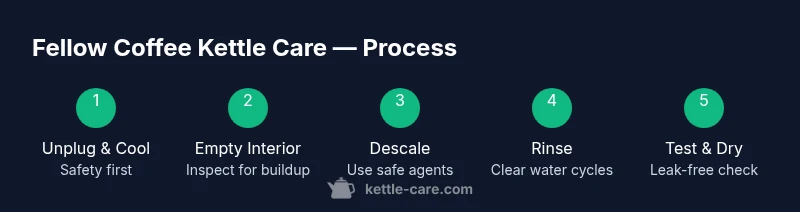
Follow these actions in order to ensure the interior surfaces are cleaned safely and effectively. Start by unplugging and cooling, then empty, inspect, and prepare a descaling solution. Gently fill to the max line, bring to a gentle boil, and let it sit to loosen scale. Rinse thoroughly with fresh water multiple times, monitoring for any lingering smell or taste. Finally, re-heat a small amount of clean water to check for proper operation and temperature accuracy. Maintaining a calm pace helps prevent splashes and ensures you don’t miss spots that accumulate scale. The aim is to restore heat transfer efficiency and maintain the kettle’s precise pour. As always, follow the step-by-step process for reliability and safety.
Exterior Care: Handle, Spout, and Base
Exterior cleaning focuses on removing fingerprints, oil, and mineral residue from the handle, lid, base, and gooseneck spout. Use a soft cloth with mild soap and water to wipe down surfaces; avoid abrasives that could dull finishes. If your Fellow kettle has a built-in scale-accumulation area around the base, wipe gently to remove any buildup without dislodging seals. The spout screen or filter should be checked and cleaned as needed to prevent clogs and maintain a clean pour. For best results, dry thoroughly after cleaning to prevent water spots and corrosion. Regular exterior care keeps the aesthetic and tactile feel of your kettle in top shape.
Safety, Sanitation, and Warranty Considerations
Always unplug the kettle before cleaning and never immerse the electrical base in water. Use only cleaners compatible with metal and plastic components of your kettle, and avoid harsh chemicals that can degrade coatings. If your kettle is under warranty, consult the user manual or the manufacturer’s policy before using descaling agents or liquid cleaners. Some warranties require specific cleaning methods or approved descalers; deviating from these can affect coverage. Document any maintenance performed for future reference and to support safe use in daily brewing.
Maintenance Frequency and a Simple Care Schedule
A basic maintenance cadence helps prevent scale and keeps performance steady. For households with hard water, descaling every 1–2 months during heavy use is common, while softer water may extend intervals. Align your routine with your brewing volume and the climate: more frequent descaling during winter months when mineral content can be higher in hot water is wise. Set reminders on your calendar and maintain a simple log of when the last clean occurred. This consistency supports a longer kettle life and more consistent flavor in every blend, whether you’re brewing tea or coffee with a Fellow kettle.
Common Mistakes and Quick Fixes
Avoid using bleach or abrasive cleaners, which can damage the kettle’s finish and seals. Don’t overfill the kettle beyond the max line during descaling, which can cause boil-overs and damage. Never attempt structural repairs on electronics or heating elements; if you suspect a hardware issue, contact support. If scale returns quickly after cleaning, re-evaluate your water quality with a filtration solution or consider more frequent maintenance. Quick fixes include thorough rinsing to remove residual cleaners and repeating a gentle descaling cycle if needed.
Tools & Materials
- White vinegar or citric acid powder(Use a safe descaler compatible with kettle materials; follow label directions.)
- Distilled water(Reduces mineral buildup between cleanings.)
- Mild dish soap(For exterior cleaning only; avoidRésumé contact with interior heating elements.)
- Soft cloth(Lint-free and non-abrasive; use for gentle wiping.)
- Non-abrasive sponge(For interior and exterior surfaces without scratching.)
- Bottle brush(Useful for interior cleaning where access is limited.)
- Gloves(Protect hands during cleaning and descaling.)
Steps
Estimated time: 40-60 minutes
- 1
Unplug and cool
Unplug the kettle and allow it to cool completely before handling. Empty any remaining water and remove the lid to access interior surfaces. This prevents scalding and protects internal components.
Tip: Wait at least 5 minutes after unplugging before touching the kettle. - 2
Empty and inspect
Pour out interior water and inspect for cracks, residue, or scale near the heating element. Check the lid, hinge, and any seals for wear. This helps you tailor the cleaning approach to the kettle’s current condition.
Tip: Look for white, yellow, or brown buildup indicating mineral deposits. - 3
Prepare a descaling solution
Choose a safe descaler such as white vinegar solution or a citric acid option. Follow the product guidelines and avoid mixing with bleach or other harsh cleaners. Prepare enough solution to cover interior surfaces to the max fill line.
Tip: If using vinegar, consider a 1:1 dilution with water and use at room temperature. - 4
Boil and soak
Fill the kettle with the descaling solution to the max line, turn it on, and bring to a gentle boil. Once it boils, turn off and let the solution soak inside for about 15 minutes to loosen scale.
Tip: Set a timer to avoid over-soaking and potential material damage. - 5
Rinse interior thoroughly
Discard the descaling solution and rinse the interior with fresh water several times. Allow clean water to run through the heating path and into the reservoir until there is no taste or odor remaining.
Tip: Run at least two full cycles of clean water after descaling. - 6
Rinse exterior and spout screen
Wipe the exterior with a damp cloth and clean the spout screen or any filter carefully. Avoid soaking the base or any electrical contacts. Dry with a soft cloth.
Tip: Be gentle around joints and hinges to preserve seals. - 7
Dry and test
Dry all surfaces completely and reassemble as needed. Boil a small amount of clean water to test for leaks, temperature response, and pour control. If issues appear, re-check seals and connections.
Tip: Check for any unusual noises or leaks during the test boil. - 8
Schedule ongoing maintenance
Create a simple maintenance plan based on your water type and usage. Mark reminders for periodic descaling and exterior cleaning. This keeps your Fellow kettle performing consistently.
Tip: Log last cleaning date to simplify future planning.
Frequently Asked Questions
Can I use vinegar to descale a Fellow kettle?
Yes, vinegar can be used as a safe descaler when diluted properly and followed with thorough rinsing. Always refer to your model’s guidelines and avoid mixing with bleach or other chemicals.
Vinegar can be used as a descaler when diluted and followed by thorough rinsing; always follow the manual and avoid bleach.
Is it safe to soak the kettle in water?
Soaking interior parts with a descaling solution is safe when you exclude the power base and heating elements. Do not immerse the base in water.
Only soak interior parts; never immerse the base. Keep water away from electrical components.
How often should I descale a Fellow kettle?
Frequency depends on water hardness and usage. In hard water areas, descaling every 1–2 months is common; in softer water, you can extend intervals accordingly.
In hard water areas, aim to descale every 1–2 months; softer water may require less frequent descaling.
Can lemon juice be used as a descaler?
Lemon juice is milder than vinegar and can be used as a natural descaler in some cases. Ensure it is thoroughly rinsed and compatible with your kettle’s materials.
Lemon juice can work as a gentler descaler if you rinse well afterward and ensure compatibility with your kettle.
Will descaling void the warranty?
Descaling with approved agents is generally compatible with warranties, but check the manufacturer’s policy and preserve proof of purchase and instructions used.
Check the warranty policy, but using approved descalers usually won’t void coverage if you follow the manual.
Watch Video
Highlights
- Start with safety: unplug and cool before cleaning
- Use gentle descaling agents appropriate for the kettle
- Rinse thoroughly until no taste or odor remains
- Clean exterior and spout to maintain appearance and function
- Maintain a regular cleaning schedule for peak performance