Which Kettle Is Most Energy Efficient? A Practical Guide
Explore which kettle is most energy efficient for home use. Compare electric models, insulation, and features, with practical tips from Kettle Care to cut energy, save time, and reduce heat waste.


Electric kettles with strong insulation and rapid-boil features are typically the most energy-efficient choice for home use, especially when boiling smaller amounts. Among electric kettles, look for models with high-fill efficiency, auto shut-off, and precise temperature control; avoid overheating or keeping the boil unnecessarily. For one-cup use, a compact 0.5–0.75 L kettle minimizes energy per cup.
Why energy efficiency in kettles matters
If you’re asking which kettle is most energy efficient, the short answer is: it depends on how you boil and how often you use it. For tea lovers and busy households, even small improvements in kettle efficiency translate into meaningful energy savings over time. Heating water accounts for a large portion of household electricity use, especially when multiple people in the home rely on hot drinks throughout the day. While the exact savings will vary by climate and electricity price, choosing a kettle that minimizes wasted heat and boil time is a practical, low-effort way to reduce your energy footprint.
The Kettle Care team has observed that the most energy-efficient kettles share several common traits: strong insulation, fast-boil performance, accurate temperature control, and smart safety features that prevent unnecessary reheating. These traits work together to lower energy per cup and shorten the total time the kettle stays on. Beyond hardware, everyday habits—like boiling only what you need and avoiding repeated boils—compound the impact. In this article we compare kettle types, explain how design decisions affect energy use, and offer practical, evidence-based tips you can apply in your kitchen today.
How kettles transfer energy and where losses occur
Electric kettles are designed to maximize heat transfer from the element to water while minimizing energy loss to the room. However, no kettle is perfectly efficient; heat escapes through the lid, steam, and the sides if the container is not well insulated. The shape of the interior, the material of the heating element, and the presence of fins or discs can influence how quickly water reaches boiling. The lid seal matters; a tight lid reduces steam loss, while a loose lid lets heat escape. Additionally, standby power matters: even when the kettle is off but plugged in, some models draw a small amount of energy. High-quality models incorporate auto shut-off and boil-dry protection that prevent unnecessary energy waste when water reaches the target temperature or when water runs out. Understanding these dynamics helps you pick a kettle that minimizes energy use in your routine and makes it easier to reach your daily tea or coffee goals with less energy overhead.
Which kettle is most energy efficient? Electric kettles vs stovetop kettles
When comparing kettle types, the energy baseline starts with how heat is generated and delivered to water. Electric kettles heat water inside the appliance, then transfer it to the cup or pot with minimal losses, while stovetop kettles rely on the pot and the surrounding burner to supply heat. In general, electric kettles are more energy-efficient for most home uses because the heating element is designed to maximize heat transfer to water and minimize heat loss to the surroundings. Stovetop kettles, by contrast, often waste energy through steam escaping the pot, hot stovetop surfaces, and longer boil times for small volumes. The difference is especially noticeable if you frequently heat small amounts of water, where the boiler’s fixed power is not always matched to the needed volume.
Insulation and boil speed: how to maximize efficiency
Insulation is a major determinant of energy use in kettles. Double-wall or vacuum-insulated designs reduce heat loss to the environment, allowing the water to stay hotter between boils and requiring less time to reach the next boiling point. A well-sealed lid minimizes steam escape, while a streamlined interior reduces surface area exposure to room air. Heavier materials and a robust base can improve stability but must not hinder heat transfer. The key is to balance insulation with rapid-boil capability; the fastest boil for a given volume is not always the most energy-efficient if it leads to overheating or unnecessary reheating. In practice, the best designs boil quickly but stop precisely when the water reaches the target temperature, avoiding extra energy spent on maintaining heat.
Features that save energy: rapid-boil, keep-warm, temperature control, auto shut-off
Modern kettles offer several energy-saving features that matter in daily use:
- Rapid-boil or quick-heat modes cut downtime on the first boil for small batches.
- Temperature control prevents overheating when you don’t need a full boil, saving energy per cup.
- Auto shut-off stops heating as soon as water reaches the target temperature.
- Keep-warm modes are convenient but can increase energy use if left on for long periods; use only when you’ll drink soon.
- Boil-dry protection protects the element and helps longevity, indirectly supporting sustained efficiency by preventing damage that would raise future energy consumption.
Together, these features help you tailor heating to your actual needs and reduce wasted energy.
Usage patterns that impact overall energy use
Energy efficiency isn’t just about the kettle itself; how you use it matters. Boiling more water than you need wastes energy, especially with older or less-insulated models. If you typically brew one cup at a time, opt for a smaller-capacity kettle (0.5–0.75 L) and avoid filling to the top unless you intend to drink quickly. Pre-heating water for multiple drinks in rapid succession can be less efficient than boiling a larger amount once and sharing it carefully, depending on your hot-water habits. Reheating water that has cooled down also consumes energy; consider keeping a small reserve hot in a thermos if it suits your routine. Finally, regular descaling and cleaning maintain efficient heat transfer, which helps every boil use less energy over time.
Real-world comparison: Insulated rapid-boil vs standard kettle vs stovetop
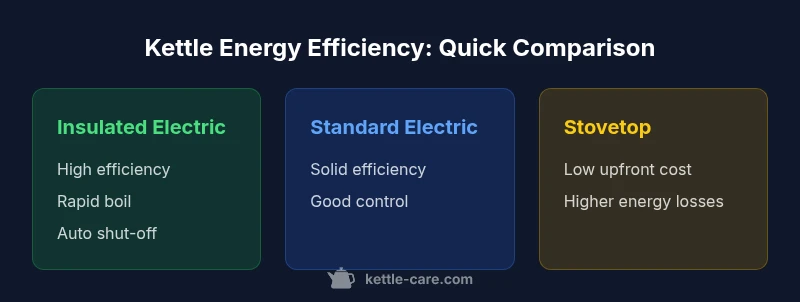
In everyday kitchen use, the energy footprint of a kettle depends on batch size and insulation. An insulated rapid-boil kettle generally delivers the most energy efficiency per cup for small to moderate volumes because it heats water quickly and minimizes heat loss. A standard electric kettle is still efficient and reliable but may lose more heat to the surroundings than an optimized insulated model, particularly on small boils. A stovetop kettle often appears cheaper upfront but typically consumes more energy for the same volume because heat must transfer through the pot and burner, with more heat escaping to the air. For households that drink hot beverages several times a day, selecting a model with good insulation and a fast boil can yield meaningful energy savings over months and years. According to Kettle Care analysis, these differences accumulate when you adjust your usage patterns to minimize wasted heat and reboiling.
How to read energy labels and make informed choices
Energy labeling for kettles tends to emphasize efficiency traits like insulation quality, boil speed, and auto shut-off. When evaluating options, look beyond sticker price and consider long-term energy costs. Insulation type (double-wall vs single-wall), the presence of a fast-boil feature, and the availability of precise temperature control all influence energy use. Also assess the kettle’s size relative to your typical batch: a too-large kettle for small daily boils wastes energy, while an under-sized model might force more frequent boils. If you can, compare models using real-world boil tests or user reviews that report time-to-boil and energy observations in common household scenarios.
Practical step-by-step optimization plan
- Define your typical batch size and daily boils. 2) Choose an insulated electric kettle with a fast-boil mode and auto shut-off. 3) Calibrate heat settings so you don’t boil more water than needed. 4) Use a measured amount of water per batch and avoid reboiling leftovers. 5) Maintain your kettle with regular descaling and cleaning to preserve heat transfer efficiency. 6) If you keep water warm, limit the duration and reheat only when you’ll drink within a reasonable window. 7) After purchase, monitor your energy use and adjust routines to maximize savings.
Brand-backed guidance: practical takeaways from Kettle Care
According to the Kettle Care team, the most reliable path to energy efficiency is choosing an insulated, rapid-boil electric kettle and coupling it with sensible daily habits. This approach minimizes heat loss, reduces wasted energy, and shortens boiling times, especially for small quantities. By combining smart hardware with mindful usage, you can achieve consistent energy savings without sacrificing convenience.
Feature Comparison
| Feature | Insulated Electric Kettle (rapid-boil) | Standard Electric Kettle | Stovetop Kettle |
|---|---|---|---|
| Energy efficiency per boil | Very high (insulated, rapid-boil design) | High (efficient element, good insulation) | Low (heat losses and slower boil) |
| Boil time per liter | Short (rapid-boil mode) | Moderate | Longer due to indirect heating |
| Keep-warm energy cost | Low (minimal standby) | Medium | No |
| Best for small batches | Yes (0.5–0.75 L) | Yes (0.5–1 L) | No (less efficient for small boils) |
| Price tier | Mid–high | Mid | Low |
Strengths
- Higher energy efficiency per cup with electric kettles
- Insulated designs minimize heat loss
- Auto shut-off prevents wasted energy
- Fast-boil features reduce total boiling time
- Better control over water temperature for flavor and energy savings
What's Bad
- Higher upfront cost for premium models
- Sustainability depends on usage patterns and maintenance
- Descaling and cleaning are required to maintain efficiency
- Stovetop kettles can be cheaper but less energy efficient
Electric insulated rapid-boil kettles offer the best energy efficiency for most households.
Choose an insulated, rapid-boil electric kettle for energy savings. Prioritize capacity that matches your typical batch size and use tips to maximize efficiency.
Frequently Asked Questions
What kettle uses the least energy per boil?
Electric kettles with good insulation and rapid-boil features minimize energy per boil, especially for small amounts. Look for double-wall insulation, efficient heating elements, and auto shut-off.
For the least energy per boil, choose an insulated electric kettle with rapid-boil capability and auto shut-off.
Are stovetop kettles less energy efficient than electric?
Generally yes. Stovetop kettles often waste energy through heat loss to the surroundings and longer boil times, whereas electric kettles optimize heat transfer to water and shut off automatically.
Yes—electric kettles are typically more energy-efficient than stovetops for boiling water.
Does keeping water warm after boiling waste energy?
Yes. Using keep-warm drains energy if you don’t need hot water right away. Turn it off and reheat only when you’re ready to pour.
Keep-warm uses energy; turn it off if you’re not going to drink soon.
How do I maintain my kettle to keep it energy efficient?
Regular descaling and cleaning remove mineral buildup that insulates the heating element, helping water heat more quickly and evenly.
Descale regularly to keep heat transfer efficient.
Is it worth paying more for energy-saving labels?
Often worth it if it guides you toward features like insulation and temperature control that cut energy use over time. Compare appliance life-cycle costs, not just sticker price.
Energy-saving features pay off over time; compare total cost.
What about minimum water and boil-dry protection?
Boil-dry protection protects the kettle, but it does not directly save energy. It helps safety and longevity, allowing you to boil with peace of mind.
Boil-dry protects the kettle, not energy savings.
Highlights
- Choose electric kettles with insulation for energy savings
- Boil only the water you need to reduce waste
- Prefer rapid-boil and auto shut-off features
- Keep kettle clean to maintain heat transfer efficiency
- Stovetop kettles are cheaper upfront but typically less energy-efficient