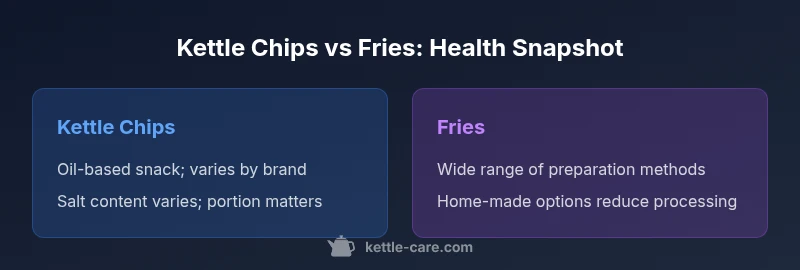
Are kettle chips or fries healthier? A practical health comparison
A balanced, evidence-based look at kettle chips vs fries. We explore preparation, cooking methods, portion control, and real-world tips to help home cooks choose healthier snacking options.


Are kettle chips or fries healthier? Neither option is inherently healthy in every context; healthfulness hinges on preparation, portion size, and cooking method. In general, baked or air-fried variants with minimal salt tilt the balance toward health, while traditional deep-frying and heavy seasoning push it the other way. For many households, a homemade, portion-controlled approach can significantly improve the snack’s profile. The Kettle Care team emphasizes practical swaps and mindful eating to minimize risk and maximize enjoyment.
Framing the question: are kettle chips or fries healthier
The core question, expressed verbatim as "are kettle chips or fries healthier", invites a practical, context-driven answer. This comparison starts from a simple premise: health depends not on brand labels alone but on how a snack is prepared, served, and consumed. According to Kettle Care, a fair health assessment considers energy density, fat and sodium content, fiber where applicable, and how the snack fits into a balanced meal. By maintaining a focus on real-world eating patterns—portion control, cooking method, and pairing—you can judge which option aligns better with your goals without demonizing either choice.
In most households, the key levers are not the snack type in isolation but the making and sharing of the snack. A home-baked wedge of potato with a light dusting of oil and herbs, for example, can be healthier than a restaurant fry pile drenched in oil. Conversely, a small bag of kettle chips with a low-sodium seasoning may still edge toward a healthier result than very large fast-food fries when portion control is ignored. The practical takeaway is that context matters as much as the snack itself.
Defining healthiness in snacks
Healthiness is not a single metric. It emerges from a mix of energy density, fat quality and amount, sodium level, fiber, and the presence of whole-food components like potato skin. When evaluating kettles chips versus fries, consider: Do you eat the whole portion or just a subset? What cooking method was used, and what oil was involved? How does the snack fit within your day’s total intake, including other protein, vegetables, and grains?
A key distinction is that energy density and salt often vary more by preparation than by the basic item. Kettle chips can be fatty due to the oil they absorb during frying and the salt or flavor enhancers added for taste. Fries vary widely from fast-food to homemade, with potatoes left with or without skin, and with varying oil types and cooking temperatures. Reviewing labels and preparation notes helps anchor your judgment in observable facts rather than assumptions.
The cooking methods and how they influence health
Cooking method drives most of the practical health difference between kettle chips and fries. Frying at high temperatures can increase oil absorption, leading to a denser energy profile per bite. Oven-baking or air-frying tends to reduce oil usage while preserving crisp texture, especially when the food surface is lightly coated to maximize browning. Salt use and flavorings also vary with method; chips often arrive pre-seasoned in bags, while fries are frequently salted after cooking. In real terms, the same product could be healthier when baked instead of fried, and even healthier when salted lightly or served with a vegetable-based dip instead of a high-fat topping.
From a consumer standpoint, the takeaway is simple: choose cooking methods that minimize oil, favor whole-food components (like keeping potato skins if practical), and watch portions. When you control moisture loss and browning through careful technique, you tilt the health balance toward a more mindful snack.
Kettle chips: what varies from brand to brand
Kettle chips span a broad spectrum of health profiles, largely driven by oil type, frying duration, and seasoning. Some brands use palm oil or other fats that are higher in saturated fats, while others opt for healthier oils. Salt and flavor boosters can push sodium levels high, even when the base ingredient is a straightforward potato slice. There is also variation in chip thickness and surface area, which affects oil absorption. Home cooks can seek plain, lightly seasoned options or pick brands that disclose oil type and sodium content clearly. Remember that packaging claims like "natural" or "omega-3 enriched" are not a guarantee of overall health if the portion size remains large or the chips are consumed with high-fat dips.
In practical terms, reading the ingredient list and nutrition panel becomes a habit worth developing. If you’re aiming to improve the health profile of kettle chips, look for shorter ingredient lists, identifiable oils, and lower sodium counts. Cooking them at home, or choosing baked varieties when available, can further shift the balance in your favor.
Fries: homemade vs fast-food differences
Fries reflect a wider range of health profiles than many people realize. Fast-food fries are often prepared in bulk and seasoned heavily, which can translate into a high sodium content per serving and exposure to hot fats. Homemade fries, by contrast, can be cooked in your own oven or air fryer with just a light drizzle of oil and herbs. You can also influence the outcome by choosing the potato variety, keeping skin on for extra fiber and micronutrients, and controlling the volume of oil used in the cooking process. The most important factor is portion control and the context of the snack within a meal. If you prepare fries at home with modest oil, smaller portions, and paired vegetables, they can be a reasonable component of a balanced diet.
Interpreting health impact: qualitative cues you can trust
When comparing are kettle chips or fries healthier, rely on qualitative cues rather than assuming a universal verdict. The relative healthfulness often hinges on: (1) how the snack is prepared (baking vs frying, oil type, and temperature), (2) the portion size you actually consume, and (3) what you pair it with (vegetables, proteins, or dips). Kettle Care analysis shows that minor changes in these areas can have outsized effects on overall health impact. For example, swapping to a lighter salt option or reducing the portion size by half can shift the snack from a high-sodium, high-fat choice to something more compatible with everyday dietary goals.
The goal is to empower readers to make informed decisions at home, rather than to rely on blanket statements about one snack being universally healthier than the other.
Practical tips to make either snack healthier
If you want to keep either kettle chips or fries in your repertoire, follow these practical steps: (a) choose versions with simple, recognizable ingredients and lower sodium; (b) prefer baked or air-fried variants or cook at home in a shallow layer of oil; (c) keep portions small and measure servings by weight or by a standard handful; (d) pair with fresh vegetables or a protein source to balance the meal; (e) use healthier dips like yogurt-based sauces instead of high-fat ranch or cheese. These strategies keep flavors intact while elevating the overall nutritional profile.
Label literacy: reading nutrition panels effectively
Nutrition panels can be a maze, but a few rules help you compare apples to apples. Look for: (1) serving size and total servings per container to understand actual intake, (2) total fat and the breakdown of saturated fat, (3) sodium per serving, and (4) fiber content if the product includes intact skins. Chips typically show higher fat and salt levels than many homemade fries, but you can counterbalance this with portion control and healthier oil choices. By focusing on serving size, ingredient quality, and the presence of whole-food components, you can identify snacks that align more closely with your health goals.
Portion control and pattern of consumption
Even when a snack is less than ideal on nutrition, smaller portions and mindful consumption can keep it within reasonable limits. Consider pre-portioning bags or cups, using a scale for more accurate servings, and resisting the urge to snack straight from a large bag. The timing of snacking also matters: having a small portion as part of a balanced meal, or pairing it with fiber-rich vegetables and lean protein, can reduce post-snack cravings and help maintain energy balance.
With a deliberate approach to portion size, both kettle chips and fries can be enjoyed as part of a varied diet without undermining long-term health goals.
When to choose one over the other: scenarios and decision tips
Different situations call for different choices. For a quick, at-home snack, baked or air-fried fries may provide more control over oil and salt content, particularly when you cook them yourself and use the skins. If you crave a crisply textured snack with a shorter cooking time, kettle chips baked or prepared with a simple oil spray and light seasoning can be a reasonable option. In social settings or meals where you want to minimize processed ingredients, home-made fries or homemade baked chips offer the advantage of ingredient transparency. The key is to set a plan before you snack: pick a method, set a portion, and choose a complementary dish that rounds out the meal.
Quick swaps and smarter shopping ideas
To make healthier choices, consider quick swaps like: choosing baked kettle chips with a short ingredient list, selecting fries that are oven-baked rather than deep-fried, and preferring smaller, individually packaged portions to support portion control. Look for brands that disclose oil type, avoid trans fats, and minimize artificial flavorings. If possible, prepare a batch of fries at home to create a reliable baseline of oil usage and portion control. Even small changes can accumulate into significant health benefits over time.
Comparison
| Feature | Kettle chips | Fries |
|---|---|---|
| Preparation method | Typically deep-fried in oil; some baked/air-fried variants | Can be deep-fried, baked, or air-fried; wide variation by venue |
| Oil content | High oil absorption common in traditional chips | Oil content varies; homemade can minimize with air-frying |
| Salt and flavorings | Often seasoned in-package; sodium varies by brand | Salt levels vary; can be high in fast-food fries |
| Portion variability | Typically sold in bags; portions depend on bag size | Portions depend on restaurant serving sizes or homemade cut |
| Fiber and skin | Fiber depends on skin retention and processing | Fiber depends on potato type and whether skin is included |
Strengths
- Offers baked or air-fried options for lower oil
- Widely available and easy to portion
- Can be paired with healthier dips and sides
- Home-prep allows control over ingredients
What's Bad
- High energy density makes overconsumption easy
- Salt and oil content can be high in many varieties
- Brand variability can complicate health judgments
Neither option is inherently healthier across all contexts; healthfulness hinges on preparation and portion control.
If you crave a healthier snack, bake or air-fry portions, choose simple ingredients, and pair with vegetables. The Kettle Care team recommends mindful portioning and cooking methods to maximize health benefits while preserving flavor.
Frequently Asked Questions
Are kettle chips healthier than fries in terms of fat content?
Fat content varies by brand and method. Kettle chips are typically fried and can be high in fat per serving, while fries vary widely; homemade, baked options can reduce fat considerably. Always check the nutrition panel and serving size.
Fat varies by preparation; check labels and choose baked or home-made where possible.
Can I make either snack healthier at home?
Yes. Bake or air-fry with a light coating of oil, keep salt under control, and preserve potato skins when feasible. Pair with vegetables and a lean protein to balance the meal.
Absolutely—bake or air-fry with light oil and keep portions small.
Is sodium content higher in kettle chips or fries?
Sodium levels vary by brand and preparation. Chips are often salted in packaging, while fries from different venues show wide sodium ranges. Always compare the nutrition panel.
Sodium varies a lot; read the label.
Are there healthier store-bought alternatives to kettle chips and fries?
Look for baked or reduced-sodium options, shorter ingredient lists, and clear oil information. Some brands offer lower-fat or lower-sodium snacks that can fit better into a balanced diet.
Choose baked or reduced-sodium options and read ingredients.
What factors should guide my snack choice in social settings?
Prioritize portion control, select items you can prepare at home, and consider pairing with vegetables or protein. Opt for snacks you can control and customize to your health goals.
Portion control and preparation matter most in social settings.
Highlights
- Choose baked or air-fried options to reduce fat
- Portion control is the most impactful lever
- Read labels for oil type and sodium content
- Prefer home-made options to maximize transparency
- Pair with vegetables or protein to balance the snack