Heating Milk in an Electric Kettle: A Practical Guide
Learn whether it's safe to heat milk in an electric kettle, understand the risks, and explore safer alternatives. Expert guidance from Kettle Care for dairy heating at home.


Yes, you can heat milk in an electric kettle, but it's not ideal for many models. Milk solids can scorch, foam, and cling to the heating element, causing odor and performance issues. If you must do it, use a kettle with temperature control, stay near the kettle, and clean thoroughly afterward.
Safety first: should you heat milk in an electric kettle?
According to Kettle Care, heating milk in an electric kettle is a common question in home kitchens. Can you heat milk in an electric kettle? Yes, it’s technically possible, but it comes with caveats. Milk contains fats, sugars, and proteins that can scorch and foam aggressively when heated, leaving stubborn residues on the heating element and spout. These residues can transfer flavors to future hot drinks and may affect device performance over time. Additionally, dairy can produce a milky buildup that complicates cleaning and may void warranties if the manufacturer explicitly warns against heating dairy. For safety, never leave a kettle unattended while heating dairy, avoid boiling or scalding, and always unplug and cool the kettle before attempting a thorough cleaning. If your model has a dedicated dairy mode, thermometer, or separate rating for dairy use, that is the best option. The bottom line from Kettle Care: heating milk in an electric kettle should be approached with caution, respect for the device, and a plan for quick cleanup.
How electric kettles work and why milk behaves differently
Electric kettles heat water by energizing a heating element and relying on a thermostat to cut off when the water reaches a preset temperature. Milk, however, is more complex. It contains proteins that denature and fats that emulsify, which means it can foam vigorously and cling to metal surfaces as heat rises. Unlike pure water, milk doesn’t always respond predictably to thermostat feedback, so it can scorch or burn before the indicator tells you it’s done. The result can be an off flavor, lingering dairy smell, and residue that’s hard to remove. Understanding these dynamics helps explain why many manufacturers advise against heating dairy in general-purpose kettles and why temperature control features are particularly valuable if you choose to attempt it.
Pros and cons of heating milk in an electric kettle
Pros:
- Quick access to warmed milk when you already have the kettle on.
- Convenience for light dairy heating without using a separate appliance.
- In some models, precise temperature control can help you avoid rolling boil.
Cons:
- Dairy residue can foul the kettle and affect future brews.
- Foaming and scorching are common problems that can require heavy cleaning.
- Warranty implications if the user manual warns against heating dairy.
- Milk heating is less predictable than water heating, which increases the chance of spills or burns if you’re not watching closely.
How to proceed if you decide to heat milk in a kettle
If you decide to try heating milk in an electric kettle, start with a model that supports temperature control or has a dedicated dairy setting. Use the smallest practical amount of milk, and keep a close eye on the process. Do not bring milk to a full boil, since boiling increases foaming and spill risk. When you finish heating, rinse and wipe the interior promptly to minimize residue, and consider using a separate kettle for dairy if you frequently heat milk.
This approach reinforces the idea that safety and maintenance should guide your choice. The Kettle Care team emphasizes that, for most households, a dairy-specific method or an alternative (like a stove-top method or a dedicated milk frother) is the smarter path over using a standard multi-function kettle.
Techniques to minimize scorching and residue
To minimize issues, use a kettle with temperature control and set it to a gentle warming mode rather than a high heat. If your kettle lacks precise control, heat at the lowest setting and monitor constantly. Opt for milk that’s pre-chilled and pour it into a clean, dry container before heating to reduce sticking. Avoid letting the milk reach a rolling boil; it increases foaming and creates spill risk. Stirring is not always possible in most kettles, but if yours allows safe access to the interior, a quick stir can help distribute heat more evenly and reduce hot spots. After heating, rinse the interior with warm water and wipe the lid and spout to remove any dairy film.
Cleaning and maintenance after heating milk
Dairy residues are notoriously stubborn. Immediately after heating, unplug the kettle and rinse the interior with warm water. For stubborn film, fill with warm water and a mild, non-abrasive detergent, then rinse thoroughly. Avoid harsh scrubbing that could scratch the interior coating. Dry everything completely before storing. If you notice lingering dairy odor, repeat a light cleaning cycle with hot water and a splash of white vinegar or a food-safe descaler, as per your kettle’s manual. Regular maintenance helps prevent buildup that could compromise performance or taste in future uses.
Alternatives: milk frothers, stovetop methods, and other options
If you frequently heat milk, consider alternatives that minimize risk. A dedicated milk frother or a small saucepan on the stove offers better control over temperature and texture, and it’s easier to prevent scorching. A microwave can be quick for small amounts, but it can heat unevenly and dry out edges. For frothing, electric milk frothers provide creamy microfoam without the risk of scorching. If you enjoy warm milk for beverages like café latté or hot chocolate, alternatives often yield better textures with less cleanup.
Features to look for in a kettle if you plan to heat dairy
If you still want a kettle that handles dairy occasionally, prioritize models with precise temperature control, a temperature hold function, and a wide-mouth interior for easier cleaning. A nonstick interior or a removable, washable lid guards against residue buildup. Look for a kettle with an easy-to-read thermometer or a dedicated dairy mode. Finally, verify the manufacturer’s guidelines regarding dairy to avoid warranty issues. The best option is to select a model that clearly supports multiple heating tasks, including dairy.
Real-world scenarios and decision guide
Many home cooks heat small amounts of milk for warming beverages, but the decision often depends on your kettle and your tolerance for extra cleaning. For infrequent use, a careful, monitored approach with a temperature-controlled kettle can work. For regular milk heating, invest in safer alternatives like a stovetop method or a dedicated milk frother. By understanding your device’s limitations and following best practices, you can reduce risk and keep your kitchen running smoothly.
Tools & Materials
- Electric kettle with temperature control(Prefer models that specify dairy use or have a dairy-safe interior.)
- Milk (dairy or non-dairy)(Small amount for testing; avoid large volumes in non-dairy models.)
- Thermometer (digital or infrared)(To monitor temperature without guesswork.)
- Heat-safe mug or pitcher(Stainless steel or ceramic is ideal.)
- Clean sponge and mild dish soap(For interior and exterior cleaning after use.)
- Soft towel or microfiber cloth(For drying and wiping spills.)
Steps
Estimated time: 20-30 minutes
- 1
Check compatibility
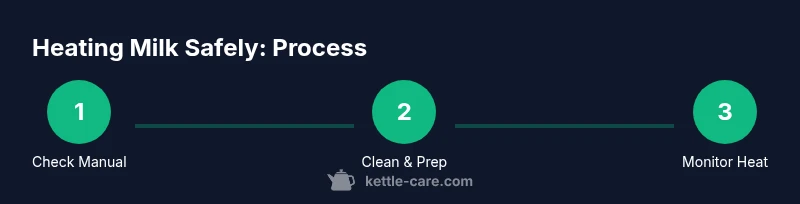
Review the kettle manual to confirm whether dairy heating is supported. If the manufacturer warns against heating dairy, do not proceed with that model to avoid warranty issues or damage.
Tip: If in doubt, contact customer support for clarification. - 2
Clean and prep
Wash the interior with warm soapy water, rinse thoroughly, and dry completely. Dairy residues can affect flavor and appliance performance if left to linger.
Tip: Avoid using abrasive cleaners that could scratch the interior coating. - 3
Pour milk to a safe amount
Measure a small amount of milk that fits under the max fill line. Do not overfill, as milk foaming can spill and damage the kettle.
Tip: Use a heat-safe mug or measuring cup for the milk before pouring into the kettle. - 4
Set to low heat
Choose the kettle’s lowest heat setting or temperature control option to heat gradually. Dairy heats faster than water and can scorch if heated too quickly.
Tip: Keep the kettle within sight to react quickly if foaming begins. - 5
Monitor the process
Watch for steam and foam. Do not leave unattended. If you see rapid foam or a burbling sound, stop heating and remove the kettle from the base.
Tip: If your kettle supports a “keep warm” function, switch to that once the milk reaches the desired warmth. - 6
Avoid boiling
Do not bring milk to a full boil; boiling can cause excessive foaming and spillover, and it can burn the milk on the interior.
Tip: Turn off the heat as soon as you notice the milk steaming with small bubbles. - 7
Pour and rinse
Carefully pour the warmed milk into your mug. Rinse the kettle interior with warm water immediately to remove dairy film and prevent buildup.
Tip: Rinse promptly to minimize lingering odors. - 8
Clean thoroughly
Wash the interior and exterior with mild detergent, then rinse well. Dry completely before storing to prevent moisture damage and odors.
Tip: De-scale if you notice mineral buildup after repeated use with dairy. - 9
Evaluate and decide
Assess whether dairy heating is practical for your routine. If not, switch to alternatives like a stovetop method or a dedicated milk frother for regular use.
Tip: Document any issues to help future households decide on the best approach.
Frequently Asked Questions
Is it safe to heat milk in an electric kettle?
Heating milk in an electric kettle is possible but not ideal. It carries risks of scorching, foaming, and residue that can affect both flavor and appliance performance. Use caution and clean promptly after heating.
Heating milk in an electric kettle is possible but not ideal. It can scorch or foam, so proceed carefully and clean the kettle right after.
Will heating dairy void my kettle warranty?
Some manufacturers advise against heating dairy in general-use kettles, which can affect warranty coverage. Always check your model's manual before attempting dairy heating.
Check your manual first. Some kettles bar heating dairy and may affect warranty.
Can I still use the kettle for tea after warming milk?
Yes, but you should clean the interior thoroughly to remove any dairy residue that could flavor or contaminate future brews.
Yes, but clean the kettle well before using it for tea again.
What should I do if the milk scorches or sticks to the kettle?
Stop heating immediately, unplug, and perform a thorough cleaning. A scorched interior can be stubborn and require a descaling cycle or detergent soak.
If it scorches, stop heating and clean the kettle well before reuse.
Are there kettles designed specifically for heating dairy?
Some models advertise dairy-friendly features, but always verify with the manufacturer. In most cases, a separate dairy tool like a milk frother is safer for regular use.
There are specialized devices, but verify with the maker. Often a separate frother is safer.
Watch Video
Highlights
- Check your kettle's guidelines before heating dairy.
- Use the lowest heat setting and monitor closely.
- Clean thoroughly after heating to prevent odor and residue.
- For frequent milk heating, explore safer alternatives.