Can You Use Kettlebells for Bench Press? A Safe Guide
Explore can you use kettlebells for bench press with safety, technique, and alternatives. Learn how kettlebell pressing compares to dumbbells and barbells, plus setup, progression, and maintenance tips.


Yes, you can press with kettlebells, but it is not always ideal for every lifter. The offset grip and unilateral load change stability and shoulder alignment compared with dumbbells or a barbell. If you choose kettlebells, start light, keep a safe scapular position, and consider floor press or single arm variations to reduce risk. Prioritize form over load.
Can you use kettlebells for bench press? A practical look
If you are wondering can you use kettlebells for bench press, the quick answer is yes in principle, but it comes with tradeoffs. Kettlebells demand more wrist and shoulder control because the weight sits on a curved handle and shifts slightly during the press. This can boost shoulder stability for some athletes, yet it also raises the potential for awkward loading if your technique slips. According to Kettle Care, safety and form should guide every kettlebell pressing decision. Start with light loads to gauge how your joints respond, and compare with safer alternatives like dumbbell or barbell pressing when your goal is maximal loading or even loading across both sides. In practice, kettlebell press work can be valuable as an accessory, improving scapular control and ribcage bracing that transfer to other lifts. Treat it as a movement skill first, strength training second, and you will minimize risk while still gaining carryover to bigger lifts.
Biomechanics: how the kettlebell shape changes pressing mechanics
Kettlebells present a handle that sits above the weight, creating an offset center of mass. This geometry changes how you engage the lats and core to stabilize the torso, and it shifts the elbow and wrist positions compared with a straight bar. A kettlebell press often requires a neutral wrist and a slightly tucked elbow to maintain control as the weight arcs and then travels back toward the rack. The lever effect can improve shoulder health when performed with precise control, but poor grip or excessive elbow flare can provoke strain on the AC joint or rotator cuff. Practically, you may feel your chest and triceps working differently, and you might notice a stronger need to brace your core to keep the spine neutral. If you have preexisting shoulder issues, use lighter loads, limit range of motion, and test a floor press variant before committing to a bench press with kettlebells.
Safety and shoulder health when bench pressing with kettlebells
Shoulder health is paramount when kettlebells enter your bench routine. Begin every session with a thorough warmup that targets the shoulders, pecs, and scapular muscles. Maintain a stable scapular position by pinching the shoulder blades together lightly and keeping the chest tall. Avoid flaring the elbows excessively; a 30 to 45 degree line relative to the torso tends to reduce strain on the front deltoid and the AC joint. Use a controlled tempo with a modest range of motion, especially as you adapt to the offset load. If you experience pain or a sharp twinge, stop immediately and switch to a safer variation such as a floor press or dumbbell press. Always ensure the bench is secure, feet are planted, and your range of motion remains comfortable and controlled.
Grip, wrist, and elbow considerations
Grip choice matters a lot when pressing with kettlebells. You can use a two-handed grip for more control or grip the handle in a neutral position to keep the wrist straight. Your wrist should stay neutral, not bent backward under load. The press path should keep the kettlebell close to the midline of the chest, with the elbow tracking at a moderate angle to protect the shoulder. If you notice numbness, tingling, or a sharp pain in the elbow or shoulder during descent or press, reduce the weight immediately and reassess alignment. A common fix is to shorten the range of motion slightly and pause at the chest to reestablish bracing.
Variations and progressions: floor press, rack press, and single-arm options
Beyond the standard bench press, you can explore safer alternatives to build pressing strength with kettlebells. A floor press reduces range of motion and stabilizer demand, often lowering shoulder strain. The rack press keeps the kettlebells in a racked position at the chest, which can improve control and engagement of the upper back. Single-arm presses challenge core stability and prevent unilateral strength imbalances, but require lighter loads and careful cueing. When progressing, move from floor press to rack press and gradually to a bench press with both arms using controlled tempos. Each variation emphasizes different muscle groups and motor patterns, so rotate them across blocks to avoid overuse and keep shoulders resilient.
Programming guidelines: sets, reps, and progression with kettlebell pressing
A thoughtful program integrates kettlebell pressing as a supplement rather than a sole loading strategy. Start with 2–3 sets of 6–8 reps at light to moderate load, focusing on form and scapular control. Increase volume slowly by 1–2 reps per week or add a set every other session, never chasing heavier loads at the expense of technique. Use a tempo of 2 seconds down, 1 second pause, and 1 second up to teach control and reduce momentum. Space kettlebell pressing days apart by at least 48 hours to allow shoulder recovery. Pair these movements with targeted mobility and rotator cuff work to maintain shoulder health and stability.
Common mistakes and fixes
A frequent error with kettlebell bench pressing is allowing the elbow to flare and the wrist to collapse under load. Fix this by bracing the torso, drawing the shoulders back, and keeping the kettlebell close to the chest. Another common issue is pressing with a jerky or ballistic tempo; adopt a smooth, controlled rhythm with a brief pause at the chest. Ensure the bench is stable and the feet are planted; any wobble can magnify loading on the shoulder. Finally, avoid lifting beyond your capability; this increases the risk of falling weights and poor spinal alignment. With cautious loading and consistent technique work, you can safely incorporate kettlebell pressing into your routine.
How to choose weight and progression for kettlebell bench pressing
Choosing the right weight starts with your current strength and movement quality. Begin with a weight that allows you to complete all planned reps with clean technique and full chest engagement. If you find your form breaking before completing the set, drop the load or pause between reps. Progression should be gradual: add small increments (1–2 kg or 2–5 lbs) every 2–3 weeks, or increase repetitions before increasing load. Track your reps, sets, and any cues about shoulder discomfort. The aim is to improve control, bracing, and range of motion, not simply to lift heavier weights. For balanced development, alternate kettlebell bench pressing with traditional bench work performed with a barbell or dumbbells.
Maintenance and safety: care for your kettlebells and bench setup
Keep kettlebells in good condition by wiping them down after use and storing them in a dry, clean area to prevent rust on metal handles. Inspect the handle and the bell for chips or cracks before every session, as a compromised kettlebell can fail during heavy presses. Clean the bench and surrounding area to prevent slipping, and ensure the bench remains level and stable. If your gym space includes uneven floors, place a mat under the bench for extra stability. Regular mobility and shoulder-health work will extend the life of your joints and improve longevity of your pressing movements.
Tools & Materials
- Flat bench(Stable, level surface; non-slip mat underneath if needed)
- Kettlebell(s) for bench press(Light-to-moderate weight; suitable for single-arm or double-arm press)
- Weight belt or wrist strap(Optional for extra support during heavier sets)
- Spotter or training partner(Important for heavier loads or near-max attempts)
- Yoga mat or padding(Comfort for back if needed)
Steps
Estimated time: 20-25 minutes
- 1
Prepare your setup
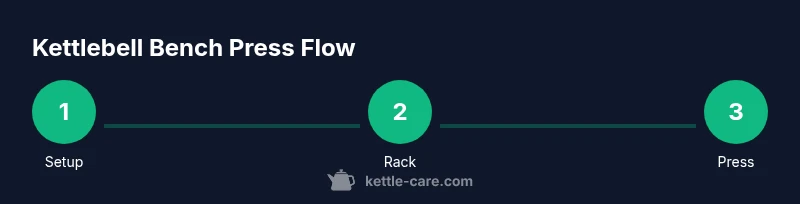
Position the bench on a stable surface, check the kettlebell(s) and floor for stability, and select a weight that you can press with control. Set your feet firmly and brace your core. Confirm there is space to rack safely.
Tip: Test the bench and kettlebell grip with a dry grip before loading; a stable base prevents wobble during reps. - 2
Rack the kettlebell safely
Bring the kettlebell to chest level using two hands, then switch to a stable rack position with elbows tucked in. Ensure the bell sits close to the chest and the weight is balanced before you begin the press.
Tip: Keep the far shoulder relaxed and avoid twisting the wrist at rack as you align the weight for the press. - 3
Lower under control
Descend the kettlebell slowly to the chest while maintaining a braced core and neutral spine. Maintain a 30–45 degree elbow angle from the torso to protect the shoulder joints.
Tip: Pause briefly at the chest if you feel any instability; resetting ensures a stronger press. - 4
Press to full extension
Contract the chest and triceps to press the kettlebell back to the starting position. Exhale as you press, and keep the wrist neutral to prevent strain.
Tip: Avoid locking the elbows too aggressively at the top; a slight micro-lock protects the joints. - 5
Return to rack and reset
Lower the kettlebell back to the rack position with careful control, then place it on the floor safely if you are finished. Reset your stance and breathing before the next rep.
Tip: Between sets, shake out the wrists and adjust your grip to maintain comfort. - 6
Repeat or transition
If you are continuing, repeat for the planned number of reps. When switching weights or variations, ensure your form remains consistent throughout the set.
Tip: Maintain consistent tempo across all reps to avoid compensatory movements.
Frequently Asked Questions
Is kettlebell bench press safer than dumbbell bench press?
Both can be safe when performed with proper form; kettlebell presses demand more wrist control and a stable brace, which can reduce or increase risk based on technique and load. Start light and prioritize technique before load.
Both options can be safe if you focus on form and control; begin with light kettlebells to learn stability before increasing weight.
Can you use a single kettlebell for both arms at once on the bench?
Yes, you can perform a double-arm press with one kettlebell or hold two kettlebells in a staggered grip. Ensure symmetry by using light loads and watching for side-to-side differences in force output.
Yes, you can press with one kettlebell or two; start with light weights to maintain balance and symmetry.
What are the benefits of floor press with kettlebells?
The floor press reduces range of motion, lowers shoulder load, and helps build triceps and chest strength with fewer stability demands than a full bench press.
Floor presses limit range of motion, making them a safer way to build pressing strength with kettlebells.
How should I adjust the tempo when using kettlebells on the bench?
Use a controlled tempo, such as 2 seconds down, a brief pause, and 1–2 seconds up. This ensures stability and reinforces proper scapular positioning.
Press slowly and with a pause to stay in control and protect your joints.
What signs indicate I should stop using kettlebells for bench pressing?
If you feel sharp pain in the shoulder, wrist, or elbow, or if your form deteriorates significantly, stop and reassess technique, weight, or switch to a safer variation.
Stop if you feel sharp pain or lose control; reassess technique and consider safer alternatives.
Watch Video
Highlights
- Master control before increasing load
- Kettlebell pressing requires bracing and joint awareness
- Use floor or rack variations to reduce risk
- Progress gradually with mindful tempo
- Prioritize form over weight