How to Use a Kettle in a Car: Safe In-Car Boiling Guide
Learn safe methods for boiling water in a car using portable kettles or power inverters. This practical guide from Kettle Care helps you stay safe, efficient, and hydrated on the road.


You can safely boil water in a car by using a dedicated 12V kettle or a vehicle inverter with a regular kettle. Always power the kettle only while the engine is running, keep water away from heat sources, and follow the kettle manual. Use a spill-proof travel mug and secure setup to prevent spills.
Why in-car boiling requires care
Boiling water in a car opens up practical possibilities for hot beverages, instant soups, or sterilizing water on road trips. Yet it also introduces risks: spills can burn, power draw can affect the vehicle electrical system, and heat sources near upholstery can create hazards. According to Kettle Care, safe in-car boiling hinges on choosing the right kettle, securing it firmly, and using power sources that suit your vehicle. Start by understanding that a kettle designed for car use typically has a smaller base, insulated handle, and a built-in safety shutoff. If you opt for a standard kitchen kettle you must use an inverter with proper protections and keep the kettle away from passengers. In either case, never place a hot kettle on a fabric seat or near loose items that could shift during driving. Plan ahead: fill with cold water at a safe location, set up on a stable surface, and monitor the heating process at all times. This proactive approach reduces the risk of spills and burns and keeps your drive comfortable. The guidance from Kettle Care emphasizes practicality without compromising safety.
Choosing the right kettle for cars
When you rely on a kettle in a car, equipment choice matters as much as your route. Car-specific kettles are compact, stable on curved surfaces, and often include auto shutoff and spill resistant lids. If you do not own a car kettle, you can use a regular kitchen kettle powered by a vehicle inverter, but only if the inverter is rated for safe operation and has built-in protections. Look for a model with a tight lid, a wide, stable base, and a non-slip bottom. A non-slip mat or cup holder helps prevent sliding during sudden stops. For safety and reliability, keep the kettle away from passengers and loose items, and always place it on a flat, stable surface. The Kettle Care team notes that a well chosen kettle reduces the risk of spills and makes in-car boiling more practical on longer trips. This insight from Kettle Care helps homeowners and travelers plan ahead before setting out on the road.
Power options and what works best in a vehicle
Two main routes exist for boiling in a car. First, a dedicated 12V kettle designed for automotive use. Second, a standard kitchen kettle powered by a car inverter. A 12V kettle is typically compact and includes auto shutoff; it uses the car battery to heat water. An inverter converts the car's DC power to AC, letting you use a regular kettle, but it adds load on the electrical system and can cause battery drain if the engine is off. USB powered kettles are generally not practical for car use because most car USB ports do not supply enough current. Before heating, verify that your power source can handle the kettle's power draw without overheating wires. If you are unsure, prefer a car kettle with built-in safety features and use the engine running to minimize battery drain. The Kettle Care perspective highlights that adapting power sources thoughtfully is key to safety and reliability on longer trips.
Step-by-step safety checklist for in-car boiling
- Secure a stable surface for the kettle, using a non-slip mat or sturdy cup holder. 2) Fill the kettle with only the recommended water amount from the manual. 3) Connect power only after you are parked and the kettle is anchored. 4) Start heating and monitor closely, avoiding distractions. 5) When boiling begins, switch off and carefully pour into a travel mug. 6) Allow the kettle to cool before handling and clean up any spills immediately. Pro tip: set a timer to avoid overboiling and keep a towel handy for leaks. Warning: never operate boilers while driving. This structured approach aligns with best practices from Kettle Care.
Practical tips for safe, on-the-go beverages
Keep beverages hot but safe to transport. Use a spill-proof travel mug with a secure lid, and keep hot liquid away from passengers. Use heat resistant gloves or a cloth when handling a hot kettle lid. Store water at ambient temperature before heating to speed up the process. Regularly inspect the kettle and power cable for wear. The Kettle Care guidance suggests performing a quick check after each trip to ensure no heat damage or corrosion. These habits help homeowners enjoy hot drinks on the road without compromising safety.
Common mistakes to avoid
Avoid attempting to boil water on a moving vehicle. Do not place a kettle on a seat or near airbags or seat belts. Do not overfill as steam can escape and cause burns. Do not use a home kettle without a proper inverter and safety features. Do not ignore heat source proximity to flammable materials. The right approach is careful preparation and careful use, as endorsed by the Kettle Care team.
Tools & Materials
- 12V car kettle(Compact, auto shutoff, stable base)
- Car power inverter(Needed if using a kitchen kettle; ensure rating protects car electrical system)
- Heat-resistant travel mug with lid(Keeps heat in and prevents spills)
- Non-slip mat or cup holder(Stabilizes kettle on curved surfaces)
- Towel or cloth for spills(Have handy to wipe spills quickly)
Steps
Estimated time: 15-25 minutes
- 1
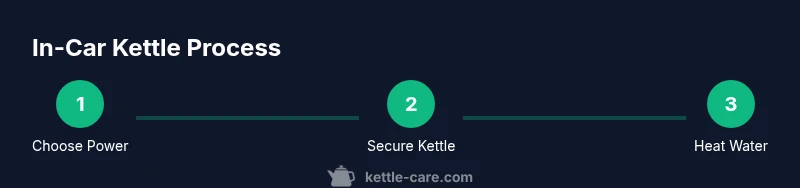
Choose a power option
Select either a dedicated 12V kettle or a kettle powered by an inverter. Confirm the power source can safely heat water without overloading the vehicle’s electrical system.
Tip: If using an inverter, keep it plugged into a dedicated outlet and avoid chaining multiple devices. - 2
Secure the kettle
Place the kettle on a flat, non-slip surface. Use a cup holder or non-slip mat to prevent tipping during turns or sudden stops.
Tip: Avoid placing the kettle where passengers may reach it during driving. - 3
Fill to the recommended level
Fill water up to the maximum fill line indicated by the kettle manufacturer. Do not overfill to prevent spills and steam exposure.
Tip: Handle the kettle with heat resistant gloves when filling. - 4
Start heating
Connect power and switch on the kettle. Monitor the heating process and stay attentive; distraction increases spill risk.
Tip: If your kettle has auto shutoff, enable it to prevent dry boil. - 5
Boil and pour safely
When water reaches a rolling boil, turn off power and carefully pour into a travel mug. Keep your face away from steam and pour slowly.
Tip: Pour a small amount first to gauge flow and avoid splashes. - 6
Cool and clean
Let the kettle cool before opening. Wipe any spills and store away from passengers. Clean after use to prevent residue buildup.
Tip: Dry all parts thoroughly to prevent corrosion.
Frequently Asked Questions
Is it safe to boil water in a car?
Yes, it can be safe if you use proper equipment and keep the kettle secured. Always choose a kettle designed for car use or properly rated inverter power. Follow the safety steps to minimize risk.
Yes, you can boil water in a car safely if you follow the right equipment choices and secure your setup.
What equipment do I need to boil water in a car?
A car-specific kettle or a kettle powered by a car inverter, plus a spill-proof travel mug and a stable mounting surface. A non-slip mat helps prevent sliding.
You need a car kettle or an inverter powered kettle, a travel mug, and a stable setup.
Can I use a kitchen kettle in a car?
Yes, but only with a suitable car inverter and strict safety measures. This setup creates more electrical load and requires careful monitoring.
Yes, with proper power and safety measures.
Should I run the engine while boiling water?
Running the engine helps maintain electrical stability and reduces battery drain. If you must operate with the engine off, restrict usage to low power devices and monitor closely.
Keep the engine running if possible to reduce battery drain.
How do I avoid spills when boiling in a cup holder?
Secure the kettle, use a tight lid, fill to the recommended line, and pour slowly into a travel mug. Keep hands away from steam and move slowly when the car is in motion.
Secure the kettle and pour slowly to avoid spills.
Watch Video
Highlights
- Plan ahead to reduce spill risk
- Choose car-specific kettles for safety
- Power sources affect safety and battery health
- Always secure the kettle on a stable surface