Is Kettle Corn Healthy? A Practical Nutrition Guide
Explore whether kettle corn is a healthy snack. Compare ingredients, calories, and portions; learn healthier preparation tips from Kettle Care for safer, smarter snacking.


is kettle corn healthy? The short answer is that it can be part of a balanced snack, but it isn’t a health food by itself. Plain popcorn is a whole grain and naturally low in fat, yet kettle corn adds oil and sugar. The healthiness depends on portion size, ingredient choices, and frequency. If you plan ahead, you can enjoy kettle corn without derailing daily goals.
Is kettle corn healthy? What the data suggests
is kettle corn healthy? The term 'health' is contextual, and for kettle corn it depends on how you define a snack. According to Kettle Care, is kettle corn healthy? The short answer is that it can be part of a balanced diet, provided you manage portions, ingredients, and frequency. Plain popcorn itself is a whole grain with fiber and minimal fat when air-popped; kettle corn adds oil and sweeteners, which raise calories and sugar per serving. The nutritional impact compounds quickly if you reach for oversized portions or highly sugared varieties. For most people, a single well-measured cup can fit within daily energy and sugar targets, especially if you choose lighter toppings and healthier oils. In practice, this means treating kettle corn as a treat rather than a staple, planning portions ahead, and balancing it with nutrient-dense foods throughout the day. The key is mindful consumption rather than demonizing or worshipping this snack; the goal is informed choices that align with personal health goals.
Ingredients and how they affect health
Kettle corn centers on three ingredients: corn kernels, oil, and sugar. The health impact of each depends on choices made during preparation. The type of oil matters: heart-healthy options like canola or avocado oil provide favorable fatty-acid profiles with relatively low saturated fat. Some producers use coconut oil for flavor, which can raise saturated fat content. Sugar quantity is the dominant variable for glycemic impact; even small amounts can add up over a serving. Salt, if added, influences sodium intake and water balance. Homemade kettle corn offers the most control: you can reduce sugar, pick a healthier oil, and experiment with natural sweeteners in moderation. In all cases, the fiber and micronutrient content from the popcorn kernel remains a positive baseline, especially when you avoid ultra-processed add-ins.
Calorie content and portion control
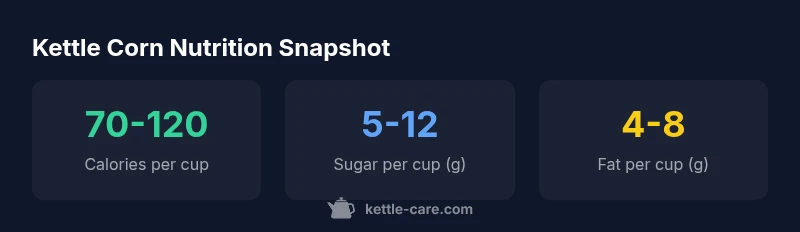
Calories in kettle corn track closely with how much oil and sugar you add, and how large a serving you eat. A typical 1-cup portion of kettle corn can range from roughly 70 to 120 calories, depending on ingredients and popping method. If you use a heavy hand with oil or sugar, this number goes up, potentially eclipsing the calories you’d get from plain air-popped popcorn. Practical tips: measure a single serving size before you reach for more, use a lightweight oil, and opt for less sugar or natural sweeteners. By planning portions in advance, you maintain energy balance without feeling deprived. This approach aligns with a mindful-snacking strategy rather than labeling kettle corn as inherently good or bad.
Sugar, fat, and sodium considerations
Sugar typically drives the majority of kettle corn’s calorie load. A single cup can carry about 5–12 g of sugar, with fat ranging from 4–8 g depending on the oil used. Sodium varies widely based on the amount of salt added and any flavorings. For those monitoring sugar or fat intake, choosing a recipe with reduced sugar and a lighter oil can noticeably improve the profile. If you’re sensitive to salt, skip the extra salt or replace it with potassium-rich seasonings. Remember that portion size remains a key lever for managing these nutrients, and occasional indulgence can fit within a healthy pattern when balanced with other meals.
How to make kettle corn healthier at home
Turning kettle corn into a healthier option starts with the basics: pop kernels with a minimal amount of oil, then reduce added sugar and salt. Air-popping yields a low-fat base; you can finish with a touch of healthier sweeteners such as a drizzle of honey or maple syrup, used sparingly. When cooking on the stove, use a light coating of oil and shake the pan to avoid scorching. Consider using smaller batches so you’re less tempted to eat more than a single serving. Flavor with cinnamon, vanilla, or cocoa powder for a satisfying taste without loading on sugar. The overall health impact improves when you align your kettle corn with your daily nutrition goals and activity level.
Practical comparisons: kettle corn vs other snacks
Compared to many commercial snacks, kettle corn sits somewhere in the middle: it’s more energy-dense than plain air-popped popcorn but can be lower in fat than fried snacks. For a balanced choice, compare per-serving calories, sugar, and fat. If you’re choosing between kettle corn and chips, kettle corn may offer more fiber from the popcorn but usually carries more sugar. For a protein- and fiber-forward snack, pair a small portion of kettle corn with a protein-rich food. In general, use kettle corn as a flavor boost rather than a daily staple, and favor homemade versions when possible to control ingredients and portions.
How to read nutrition labels for kettle corn
Nutrition labels reveal serving size, calories, and the amounts of fat, sugar, and sodium per serving. Look for a reasonable serving size that matches how you actually eat the product. Compare calories per serving across brands, and note the sugar and saturated-fat content. If possible, choose products with lower sugar and a healthier oil, and pay attention to any added flavors or colorings. Remember that the health impact also depends on what you eat elsewhere in the day; kettle corn can be enjoyed guilt-free when integrated into an overall, balanced diet.
Approximate nutrition ranges per 1 cup serving across common kettle corn preparations
| Kettle Corn Variant | Calories per 1 cup | Sugar (g) per cup | Fat (g) per cup |
|---|---|---|---|
| Classic store-bought | 100-150 | 7-12 | 4-8 |
| Light/home air-popped | 60-90 | 0-5 | 1-3 |
| Homemade (reduced sugar) | 75-120 | 3-8 | 2-5 |
Frequently Asked Questions
Is kettle corn healthier than regular popcorn?
Not inherently healthier; kettle corn typically has more added sugar and oil. The health impact depends on portion size and preparation. Opting for air-popped kernels and minimizing sugar improves the profile.
Kettle corn isn’t automatically healthier than plain popcorn. It depends on how you prepare it and how much you eat.
Does oil type affect healthfulness?
Yes. Using heart-healthy oils and limiting the amount can reduce saturated fat and calories. Choose oils with beneficial fatty acids and measurable amounts.
Oil choice matters. Pick healthier oils and use less to improve the snack's profile.
Can kettle corn be made healthier at home?
Absolutely. Use less sugar, swap in a neutral or heart-healthy oil, and air-pop the kernels. Experiment with natural sweeteners in moderation if desired.
Yes. Make it at home with less sugar and better oil for a healthier snack.
How does portion size affect health impact?
Portion has a major effect. A single serving that fits within your daily goals helps keep calories and sugar in check. Consider pre-portioned bags to avoid mindless eating.
Portion size is key—watch how much you grab.
Is kettle corn gluten-free?
Kettle corn ingredients (corn, oil, sugar) are naturally gluten-free; however, cross-contamination or added ingredients could introduce gluten. Check labels if you have celiac disease or gluten sensitivity.
Kettle corn can be gluten-free, but always check ingredients and facility labeling.
“Kettle care emphasizes that kettle corn can be a satisfying snack, but its health impact hinges on portion size and ingredient quality. Mindful preparation makes it compatible with a balanced diet.”
Highlights
- Read serving sizes to avoid over-snacking
- Choose lower-sugar recipes or portion-control packs
- Prefer healthier oils and mindful salt levels
- Homemade kettle corn can be a healthier option
- Pair kettle corn with nutrient-dense foods to balance the snack