Kettlebell Swing for Glutes: Safe, Effective Form
Discover a safe, effective kettlebell swing for glutes. This guide covers setup, hip hinge, common errors, progression cues, and practical tips backed by Kettle Care insights to build a strong posterior chain.


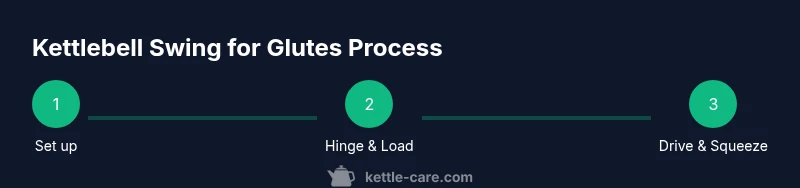
According to Kettle Care, the kettlebell swing for glutes is a hip-dominant move that powerfully targets the glutes and the posterior chain. Begin with a hip hinge, neutral spine, and a light-to-moderate kettlebell. Hinge to load, then drive the hips forward to finish with a strong glute contraction. Maintain a steady tempo, bracing your core and breathing smoothly throughout.
Why the kettlebell swing is effective for the glutes
The kettlebell swing is a highly effective way to load the glutes and posterior chain through a controlled hip hinge and explosive hip drive. When executed correctly, the movement trains hip extension—primarily through the gluteus maximus—while engaging the hamstrings and the core to stabilize the spine. This combination supports safer movement patterns in daily tasks, lifting, and athletic activities. In the context of the kettlebell swing for glutes, the focus is on generating power from the hips rather than from the arms, which helps minimize strain on the lower back. From a programming perspective, glute activation is enhanced when you maintain a neutral spine, avoid excessive knee bend, and finish with a deliberate hip squeeze at the top of the swing. According to Kettle Care, prioritizing form over load at the early stages yields superior glute engagement and long-term progress. If you’re new to this exercise, start with a light weight and slowly progress, listening to your body and keeping technique central to every rep.
How the hip hinge drives glute engagement
The hinge pattern used in the kettlebell swing is the key to glute activation. The hips bend—not the knees—to load the glutes and hamstrings, then rapidly extend to propel the kettlebell. Practicing a clean hip hinge with a neutral spine ensures the glutes do most of the work and reduces compensations that can strain the back. A common cue is to imagine the tailbone tipping toward the wall behind you while keeping the ribcage down and the chest proud. As you swing, the glutes fire to extend the hips, while the abs and lats brace to stabilize the torso. This alignment supports a safer, more efficient movement for both beginners and seasoned athletes, and it translates well into other hip-dominant lifts you may perform in training.
Setup cues for safe glute-focused swings
A solid setup is non-negotiable for glute-focused swings. Stand with your feet shoulder-width apart, toes pointed slightly outward, and the kettlebell positioned a short swing in front of you. Maintain a neutral spine, engaged core, and relaxed shoulders. Grip the handle with a firm, relaxed grip, and ensure your shoulders are pulled back and down to keep the upper back active. Inhale to brace, then exhale as you hinge and drive the hips forward. Prioritize a controlled descent and ascent, avoiding any jerky movements that disrupt the spine or knee alignment. The goal is a smooth, powerful hip extension that leaves the glutes as the primary engine of the movement.
A practical warm-up to prep for glute engagement
Before loading up, warm up the hips, glutes, and hamstrings with dynamic moves like leg swings, hip circles, and light glute bridging. This preps the muscles for the hinge pattern and reduces injury risk. Gentle mobility work for the hips improves range of motion, which supports a deeper, safer hinge. Spending a few minutes on mobility and activation work can dramatically improve glute recruitment during the swing and help you feel the correct muscles working during the lift.
Authority sources for further reading
For readers seeking authoritative guidance on safe exercise and glute-focused training, consult: • NIH/National Library of Medicine resources on resistance training and glute activation • CDC guidance on safe physical activity and strength training basics • American College of Sports Medicine (ACSM) position statements on performance and injury prevention. These sources reinforce that technique and progressive loading are essential for optimizing glute development while protecting the spine and joints.
How to translate this into a training plan
Incorporate the kettlebell swing for glutes into a broader program that includes mobility work, posterior chain–focused moves, and sufficient rest. Start with a conservative volume and gradually increase exposure as technique solidifies. Pair the swing with other hip-dominant exercises like deadlifts or hip thrusts as you advance, ensuring you maintain proper form and bracing throughout all movements. Remember, the goal is sustainable progress, not immediate heavy loads.
Tools & Materials
- Kettlebell(Choose a weight that allows a clean hip hinge and controlled hip drive; start light.)
- Flat-soled training shoes(Stable, non-slip sole for balanced foot anchoring.)
- Exercise mat(Optional for floor-based warm-ups and mobility drills.)
- Towel or grip cloth(Helpful for grip if sweating.)
Steps
Estimated time: Estimated total time: 15-20 minutes
- 1
Set up stance and grip
Position your feet hip-width apart with a slight toe flare. Grasp the kettlebell handle with a firm grip, keeping the shoulders down and back. Initiate with a small knee bend and a neutral spine, ready to hinge from the hips.
Tip: Keep the spine neutral and the gaze forward to protect the neck. - 2
Brace your core and spine
Engage the core as if bracing for a punch. Maintain a tall chest and active upper back through the set. This bracing supports the spine during the hinge and hip-drive phases.
Tip: Exhale as you initiate the hinge to promote stable bracing. - 3
Hinge at the hips to load glutes
Push your hips back while maintaining a neutral spine. The kettlebell should travel a short distance in front of your legs as you load the posterior chain. Avoid bending from the waist or rounding the back.
Tip: Imagine you’re closing a car door with your hips rather than bending your spine. - 4
Drive through the hips to swing
From the loaded hinge, explode the hips forward to propel the kettlebell to chest height or eye level. The arms remain relatively relaxed; the power comes from hip extension.
Tip: Do not pull with the arms; the motion is generated at the hips. - 5
Squeeze glutes at the top
At the top of the swing, contract the glutes for a moment while keeping the core braced. The kettlebell should briefly suspend or travel at a controlled height before returning.
Tip: Finish with a neutral spine and a proud chest to protect the neck. - 6
Return with control and reset
Allow the kettlebell to swing back down in a guided arc. Hinge again from the hips and prepare for the next rep with a fresh brace and stable stance.
Tip: Maintain a smooth tempo and avoid any bouncing or slam-landing of the bell.
Frequently Asked Questions
What weight should I start with for glute-focused kettlebell swings?
Begin with a light kettlebell that allows you to practice the hip hinge and hip drive without compromising form. Prioritize technique over load and increase weight gradually as you can perform sets with perfect form.
Start with a light weight to learn the hip hinge and hip drive with proper form, then progress slowly as you master the technique.
Why does my back hurt during swings even when I think my form is good?
Back pain often indicates a breakdown in spinal neutrality or insufficient core bracing. Recheck your hip hinge, keep the spine aligned, brace the core, and avoid overextending at the top.
Back pain usually means the spine wasn't stable enough. Recheck alignment and brace your core.
Is there a difference between a swing and a deadlift for glute focus?
Both movements target the posterior chain, but the swing uses a hinge with explosive hip extension to generate momentum, whereas a deadlift emphasizes controlled lifting with more horizontal tension. Use both in a balanced program for optimal glute development.
The swing uses hip drive and momentum, while the deadlift focuses on controlled lifting; mix both for balance.
How often should I train glute-focused kettlebell swings?
Start with 1–2 sessions per week focused on the swing, ensuring adequate recovery between sessions. As technique improves, you can gradually expand training days to include related posterior-chain movements.
Begin with 1–2 sessions weekly and build up as your form improves.
Can I perform kettlebell swings if I have knee pain?
Yes, with caution. Focus on a shallow hinge that minimizes knee stress, maintain a neutral spine, and choose a lighter weight. If pain persists, consult a professional before continuing.
Light, controlled swings with a shallow hinge can be safer if knees bother you; monitor pain and seek guidance if it continues.
Watch Video
Highlights
- Master the hip hinge before adding load.
- Let the hips drive the swing, not the arms.
- Keep a neutral spine and braced core throughout.
- Progress gradually to protect the back and joints.
- Prioritize glute contraction at the top of each rep.