Kettlebell Swings Before and After: Safe Progression and Form
Explore kettlebell swings before and after with a safe progression, baseline assessment, and practical cues. Learn hip hinge, bracing, and form-tracking to verify real improvements while staying safe.


Goal: master safe kettlebell swings and track form improvements from start to finish. You’ll learn the hip hinge, bracing cues, and breathing; how to assess baseline versus after-progress changes; which regressions and progressions to use; common mistakes to avoid; and a simple 4-week progression with safety checks. These are practical cues you can apply today.
Understanding kettlebell swings before and after
When people discuss kettlebell swings before and after, they mean tracking how your technique evolves as you gain control, strength, and confidence. The idea is to establish a safe baseline, then progressively increase demand while preserving spine neutrality and hip drive. This approach helps you see whether improvements come from a better hip hinge, stronger bracing, or more efficient breathing. It also highlights the moment when a heavier weight doesn’t yield better form, and when you should regress instead of pushing through discomfort. By focusing on mechanics first, you reduce risk and build durable strength that carries over to other lifts and daily tasks.
Key indicators of progress include smoother hip hinge initiation, less compensatory movement from the lower back, and the ability to maintain a neutral spine through the entire swing cycle. In practice, set a starting weight you can control for 8–12 reps with clean technique, film your sets, and compare footage against a defined checklist. This method makes the “before” and “after” comparison objective, not based on pace or feel alone. It also supports exploring tempo, range of motion, and breathing patterns over time.
Baseline assessment: setting your starting point
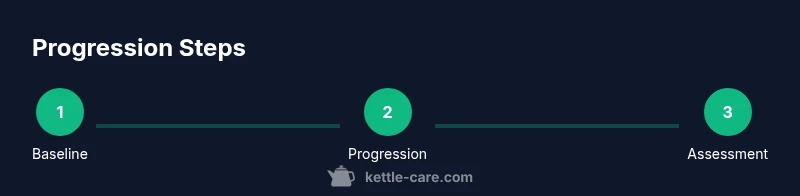
A solid baseline for kettlebell swings before and after starts with a clear snapshot of form, stability, and control. Begin with a lightweight kettlebell you can manage for 8–12 reps while maintaining spine neutrality. Record a side-view video from a fixed angle to evaluate hip hinge, shoulder alignment, and the path of the kettlebell. Use a simple checklist: neutral spine, hips leading the movement, a braced core, and a relaxed grip. Note any compensations: rounded back, shrugged shoulders, or arms pulling too hard. Baseline data isn’t about speed; it’s about consistent technique you can replicate and compare later. Over several sets, you’ll also track endurance—how many quality reps you can perform before form deteriorates.
Safe setup and warm-up for kettlebell swings
Safety starts with a clean setup and warm-up. Begin with 5–7 minutes of mobility for hips, hamstrings, and thoracic spine, followed by 2–3 minutes of light cardio to raise general readiness. Create a safe practice space with a non-slip surface and ample clearance. Check your footwear and ensure the kettlebell handle is comfortable to grip. Pre-activate the posterior chain with glute bridges or dead-bug variations, and practice a few tape-timed hinge reps to refine pelvis position. The warm-up primes your hips and back for controlled loading, making kettlebell swings before and after feel smoother and safer.
Remember to breathe steadily: exhale on the upswing and reset on the downswing. This breathing pattern supports bracing and reduces unnecessary tension.
The hip hinge and bracing cues: fundamentals of movement
The hip hinge is the engine of the kettlebell swing, not a squat or an arm pull. Stand with feet hip-width apart, toes angled slightly out, and the kettlebell between the legs. Hinge at the hips while keeping the chest tall and spine in a neutral position. Brace the core as if about to receive a light punch to the stomach—this brace should stay engaged throughout the swing. The cue “drive the hips, not the arms” helps you transfer force from the ground through your hips and into the kettlebell. Breath control further stabilizes the spine and improves timing. For kettlebell swings before and after, strong bracing translates to cleaner patterns and fewer compensations.
Progression strategies: regression, progression, and load
Progression should be systematic and conservative. If you can’t maintain form with a given weight, regress to a lighter weight or reduce range of motion. When form is solid, gradually increase either weight, sets, or reps—never all at once. For kettlebell swings before and after, a typical plan might include 3–4 weekly sessions, focusing on 8–12 reps per set, with 2–4 sets per workout. Use a 1–2 minute rest between sets. To progress, add a small weight increment, extend the tempo slightly on the ascent, or add one more set. The key is maintaining technique while loading time and volume up gradually.
Common faults and fixes you can apply
Common swing faults include rounding the lower back, shrugging the shoulders, bending the knees excessively, and pulling with the arms. To fix these, re-check your hip hinge, engage the lats to maintain shoulder alignment, and keep the kettlebell on a controlled vertical arc close to the body. If the movement feels rushed, slow down the tempo and emphasize the hip drive rather than speed. Use a mirror or video to confirm you’re not compensating with the arms or shoulders. A neutral spine and a braced core are non-negotiables in kettlebell swings before and after.
Sample 4-week progression plan for kettlebell swings before and after
A structured progression helps you observe tangible improvements while maintaining safety. Week 1 focuses on mastering form with a light weight and high-quality reps: 3–4 sets of 8–12 reps, 60–90 seconds rest. Week 2 adds volume or a small weight increase while preserving technique. Week 3 introduces a moderate weight and reduced reps (4 sets of 6–8 reps) to emphasize control. Week 4 tests form with a slightly heavier weight and 5x5 or a similar scheme, while continuing to film sessions for comparison. Throughout, track your baseline-to-after progress by comparing video captures and note improvements in hip drive, spine stability, and breathing quality.
Tracking progress with video and notes
Documenting kettlebell swings before and after requires consistent recording and a simple scoring system. Record side views from a fixed angle for every session. Use a checklist to evaluate hip drive, spine angle, and shoulder position. Compare against your baseline to quantify improvements in stability and power. Keep notes on tempo and breathing, which can also improve as you progress. This method provides objective evidence of gains rather than relying on subjective feelings.
Safety checklist and long-term form maintenance
Prioritize safety over intensity. Always warm up and cool down, maintain a neutral spine, and avoid loading through pain. If you experience persistent back discomfort, seek advice from a fitness professional or healthcare provider before continuing. Regularly reassess your movement patterns and adjust your progression to keep kettlebell swings before and after within safe limits. Documented form checks and progressive loading help sustain gains while minimizing risk.
Tools & Materials
- Kettlebell (appropriate weight for your level)(Choose a weight you can control for 8–12 reps with clean technique.)
- Flat, non-slip surface(Ensure space around you to avoid hits or falls.)
- Timer or app(Track sets, rest periods, and tempo.)
- Phone or camera for video review(Record side view to compare form over time.)
- Mirror or reflective surface(Helpful for real-time self-correction.)
Steps
Estimated time: 20-25 minutes
- 1
Gather gear and warm up
Select an appropriate kettlebell and prepare a safe practice area. Do a 5–7 minute mobility routine targeting hips, hamstrings, and thoracic spine, then light cardio to raise readiness.
Tip: Begin with 5–8 minutes of mobility plus light cardio to prime the movement. - 2
Set stance, grip, and spacing
Stand with feet hip-width apart, toes slightly outward. Place the kettlebell 1–2 feet in front of you. Grip the handle with a relaxed palm and align wrists neutral.
Tip: Keep a soft grip and avoid overtightening the wrist. - 3
Hinge and brace
Bend at the hips, push your hips back while maintaining a neutral spine. Engage the core as if bracing for a punch, keep chest tall, and look forward. The brace should feel like a firm block in the midsection.
Tip: Imagine closing a door with your hips while keeping ribcage stable. - 4
Drive the hips into the swing
From the hinge, explode the hips forward through the glutes to send the kettlebell to shoulder height or eye level. Let the arms guide the weight only after the hips have generated power.
Tip: Lead with hip extension, not shoulder shrug or arm pull. - 5
Breath and finish
Exhale on the upswing as you reach peak height, then inhale on the return to the start. Maintain a controlled, smooth arc and avoid flinging the kettlebell.
Tip: Breathing cadence supports bracing and control. - 6
Progress with intention
If technique is solid, add small increments in weight or volume. Stop if form deteriorates. Re-test baseline every 2–4 weeks with video review.
Tip: Progress gradually to preserve form and safety.
Frequently Asked Questions
What are the key cues for a safe kettlebell swing?
Focus on a proper hip hinge, a neutral spine, a braced core, and steady breathing. Avoid pulling with the arms or rounding the back. Maintain shoulder alignment throughout the movement.
Use hip hinge, neutral spine, braced core, and steady breathing. Avoid arm pull or back rounding.
How do I know my form has improved after a week?
Compare side-view videos week to week and look for a cleaner hip drive, less spine flexion, and fewer compensations. Recheck your baseline checklist and note the changes.
Compare your weekly videos for cleaner hip drive and fewer compensations.
What starting weight should I use?
Choose a weight that allows 8–12 reps with flawless technique. Prioritize form over load and increase gradually as control improves.
Start with a weight you can control for 8–12 reps with perfect form.
How often should I test progress?
Test every 2–4 weeks, depending on your adaptation rate and training stress. Use a consistent setup and video angle for reliable comparisons.
Test every 2–4 weeks with consistent video setup.
Can I perform kettlebell swings if I have back pain?
If back pain exists, pause and consult a professional. Use regressions and lighter loads, and ensure medical clearance before resuming.
If you have back pain, stop and consult a professional before continuing.
What metrics help track before-and-after gains?
Video analysis, range of motion, repetition quality, tempo consistency, and absence of pain during reps are all valuable metrics for before-and-after gains.
Use video, motion checks, tempo, and rep quality to track gains.
Watch Video
Highlights
- Start with baselines before adding load
- Maintain hip-driven movement with braced core
- Progress gradually over 4 weeks
- Document improvements with video analysis
- Prioritize safety over speed