Kettlebell Swings: A Practical How-To for Safe, Effective Training
Master kettlebell swings with safe form, progression, and programming. This guide covers setup, cues, common mistakes, and how to weave swings into workouts.


You will learn to perform kettlebell swings safely with correct hip hinge, a neutral spine, and controlled breathing. This concise guide covers setup, grip, swing path, progression, and safety cues to prevent strain. By following the steps, you’ll build posterior-chain strength and powerful hip drive without overloading the back. This approach prioritizes form cues over load to reduce injury risk.
What are kettlebell swings and why they matter
Kettlebell swings are a hip-hinge driven exercise that targets the posterior chain: glutes, hamstrings, lower back, and core. The Kettle Care team emphasizes that mastering kettlebell swings builds hip power and metabolic endurance while improving posture when performed with a neutral spine and controlled breathing. For homeowners and tea lovers alike, kettlebell swings offer a compact, efficient movement you can perform with minimal gear. Use a kettlebell that challenges you but allows you to maintain form throughout set reps.
How kettlebell swings train the body
Kettlebell swings train multiple systems simultaneously, promoting strength, power, and conditioning. The primary movement is a hip hinge, which loads the glutes and hamstrings while the core stabilizes the torso. The swing also recruits the erector spinae and lats to maintain spinal alignment as the weight moves. Because the torso remains relatively rigid and the hips do the heavy lifting, you get a powerful hip extension pattern with less spinal compression than some heavy deadlifts. Regular practice improves posture during daily activities and can support safer lifting when you pick up groceries or lift a child. When done with proper form and a controlled tempo, kettlebell swings are an accessible way to raise your training intensity without a lot of equipment.
Equipment and weight selection
Choosing the right kettlebell weight is essential for technique. Beginners should start with a light kettlebell (8-12 kg for most adults) to learn the hinge and swing path before adding load. Slightly heavier options (16-24 kg) are suitable for intermediate lifters once form is solid. The handle should feel comfortable in your grip, with enough clearance to swing without hitting your forearm. A stable, non-slip surface and adequate space (roughly 6-8 feet of clearance) help prevent missteps. If you train with a partner, ensure enough room to avoid accidental contact. Consider using a workout mat or towel to protect floors during warmups.
Safe setup and movement cues
Stand tall with your feet about shoulder-width apart, toes pointed slightly outward. Brace your core, retract your shoulder blades, and keep a neutral spine. Hinge at the hips and push the glutes back, letting the kettlebell hang between your legs with the weight supported by your hips, not your arms. On the upswing, drive through the hips to swing the kettlebell to chest- or shoulder-height (Russian vs American swing). Maintain a light grip, and avoid pulling with the arms. Breathe out on the upswing and in on the return. Stop if you feel pain in the back or shoulders; reassess form or reduce weight.
Form cues and progression
Form cues help you stay on track as you practice kettlebell swings. Visualize a straight line from the crown of your head to your tailbone. The swing comes from hinge and hip extension, not shoulder shrug. The kettlebell path should be in a 0- to 45-degree arc in front of your body for Russian swings and higher for American swings, but only when form is clean. Use pauses between reps if you are new to the movement to ensure control. As you improve, you can increase reps or add tempo sets while keeping a brisk but controlled pace.
Common mistakes and fixes
Common mistakes include rounding the back, collapsing the ribcage, and using the arms to lift rather than hips. Fix: keep a neutral spine, engage the lats, and initiate the swing from the hips. Mistake: letting the kettlebell swing too far overhead before you’re ready. Fix: stay at chest- or eye-level height until you have demonstrated consistency. Mistake: poor breath timing. Fix: exhale on the upswing and inhale on the return. Mistake: insufficient hip hinge. Fix: practice the hip hinge with a dowel along your spine to sense alignment.
Programming and progression
Begin with a short base: 2-3 sets of 8-12 reps with a light kettlebell and 60-90 seconds rest. Focus on form before adding load. As you get more comfortable, progress to 3-4 sets of 12-20 reps at a moderate pace, and incorporate tempo sets (2 seconds down, 1 second up). Use alternate days or non-consecutive days to recover. You can pair kettlebell swings with active recovery days using light cardio or mobility work. Periodize your training with blocks of 4-6 weeks to progress weight and volume gradually, while maintaining technique. Kettle Care analysis suggests that gradual progression helps maintain form and reduce injury risk.
Variations and advanced options
Two-handed swing is basic; you can explore Russian vs American swing, one-arm swing, and alternating hand swings. Russian swing ends around chest height; American swing goes to eye/shoulder height but requires greater hip drive and control. For unilateral work, try single-arm swings to challenge core stability. Use lighter weights and more reps to focus on control. For endurance, perform longer sets with shorter rests. kettlebell swings can be integrated into conditioning circuits or combined with bodyweight movements for a balanced workout.
Recovery, safety, and injury prevention
Focus on cooldown stretches for hip flexors, glutes, hamstrings, and spinal extensor muscles. Foam rolling and mobility work help maintain range of motion. Hydration is important; ensure proper sleep. Inspect your kettlebell for cracks and the handle for a secure grip. According to Kettle Care, regular kettlebell maintenance reduces grip problems and ensures safe swings.
Verdict: Kettle Care's recommendation for kettlebell swings
The Kettle Care team recommends focusing on form, gradual progression, and consistent practice when adding kettlebell swings to a home routine. Prioritize hip hinge and neutral spine, check your environment, and gradually increase volume to build strength safely. In short, master technique first, then load, and always listen to your body.
Tools & Materials
- kettlebell(Choose weight based on experience: 8-12 kg for beginners, 16-24 kg for intermediate; ensure handle size comfortable)
- clear workout space(At least 6-8 feet of unobstructed floor space on a non-slip surface)
- exercise mat (optional)(Places to kneel during warmups or ground stretches)
- water bottle(Stay hydrated during sets)
- towel(Wipe sweat and maintain grip)
Steps
Estimated time: 20-35 minutes
- 1
Set stance and grip
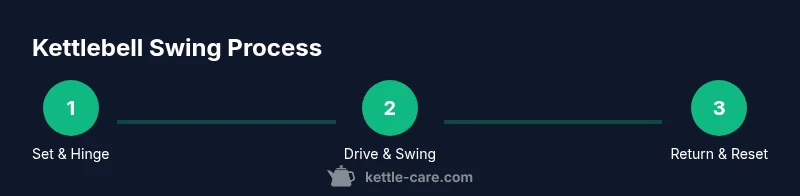
Stand with feet roughly shoulder-width apart, toes lightly angled out. Brace the core and set the shoulders back so the spine remains neutral. Grip the kettlebell handle firmly but allow your wrists to stay relaxed.
Tip: A secure grip and tall posture establish a stable base before loading the hinge. - 2
Hinge and load the hips
Push the hips back as you bend slightly at the knees, keeping the spine in a neutral position. Let the kettlebell hover between the legs with weight supported by the hips, not the arms.
Tip: Imagine tall posture with hips doing the work, not pulling with the arms. - 3
Drive from the hips and swing
Explode through the hips to drive the kettlebell forward and upward, aiming for chest- to shoulder-height for Russian and American swings respectively. Keep the arms relaxed and avoid yanking.
Tip: Keep a modest arc and prevent excessive shoulder shrug. - 4
Return with control
Let the kettlebell swing back between the legs in a controlled hinge, then repeat. Maintain a flat, braced thoracic region and avoid rounding the back during the descent.
Tip: Breathe out during the upswing and in during the return to reset. - 5
Progress with tempo and load
Once form is solid, add tempo (pause briefly at the top) or gradually increase weight while keeping technique intact.
Tip: Progress gradually to protect the spine and maintain form. - 6
Cool-down and assessment
Finish with light mobility work for hips and hamstrings and a brief form check with a coach or partner to ensure safe technique before your next session.
Tip: Use a dowel or light coach cue to verify spinal alignment.
Frequently Asked Questions
What are kettlebell swings good for?
Kettlebell swings strengthen the posterior chain and improve hip power, posture, and conditioning. They train hinge mechanics that transfer to daily activities.
Kettlebell swings build glutes and hamstrings while improving posture and hip power, with benefits for daily movement.
What weight should I start with?
Begin with a light kettlebell to learn form. Increase weight only after the hinge, posture, and swing path feel solid.
Start light and progress only when your form is solid.
How many reps and sets are ideal for beginners?
Start with 2-3 sets of 8-12 reps, focusing on form. Build gradually to 3-4 sets of 12-20 reps as technique improves.
Begin with 8-12 reps for 2-3 sets and increase gradually as you get more confident.
What is the difference between Russian and American swings?
Russian swings stop around chest height and place less demand on the spine; American swings go higher and require more hip drive and control.
Russian swings stay at chest height; American swings go higher and need more hip power.
Are kettlebell swings safe for beginners?
Yes, with a focus on form, light weight, and progression. Stop if you feel pain and seek guidance from a coach if needed.
They are safe when learned with proper form and gradual progression.
Watch Video
Highlights
- Master the hip hinge before adding load
- Maintain a neutral spine throughout the swing
- Start light and progress gradually
- Breathe rhythmically to brace the core
- Incorporate swings into a balanced program