Kettle Bell Swing Exercise: Safe, Effective Home Guide
Learn the kettle bell swing exercise with a focus on hip hinge, breathing, and safety. This comprehensive guide covers form, progression, warm-up, and common mistakes for safe, efficient training at home.


You will learn a safe, efficient kettlebell swing by mastering the hip hinge, neutral spine, and controlled breathing. This guide covers warm-up routines, correct swing patterns, common mistakes, progression options, and safety tips to protect your back, shoulders, and wrists while maximizing power, endurance, and metabolic benefits.
What is the kettlebell swing and why it matters
The kettlebell swing is a hip-dominant, ballistic movement that builds posterior-chain strength, core stability, and cardiovascular endurance. Unlike many resistance lifts that isolate muscles, the swing trains tempo, power, and conditioning in a fluid, functional pattern. For beginners, the goal is to develop a reliable hip hinge, a neutral spine, and a controlled rhythm before adding load or speed. The kettlebell itself serves as a compact, versatile tool that can be used for a wide range of workouts, from strength blocks to metabolic finisher circuits. According to Kettle Care analysis, focusing on safe form and progressive loading reduces injury risk and yields sustainable gains over time.
Biomechanics: hip hinge, spine, and timing
A proper kettlebell swing hinges at the hips, not the lumbar spine. The movement starts with a hinge and a slight knee bend, then the hips drive the bell forward, with the arms acting pasively. The spine should remain neutral, chest tall, and shoulders packed down and back. The core bracing, hip extension, and breath coordination create a coordinated kinetic chain. Timing is critical: inhale for your setup, exhale through the hard brace as you accelerate the hips, and reset softly on the way down. This approach protects the low back and maximizes power transfer from hips to bell.
Setup and space: equipment, grip, and stance
Prepare a single kettlebell of appropriate weight. Stand with feet slightly wider than hip width, toes pointing slightly outward. The grip should be relaxed but secure, with the kettlebell handle resting against the palm. The swing uses a two-handed or one-handed grip depending on your program. Clear space, a non-slip surface, and a mirror (optional) help you monitor form. Keep the kettlebell on a vertical arc in front of you, not swinging behind your body. A solid warm-up primes the hips, hamstrings, and glutes for safe loading.
The basic swing: step-by-step form
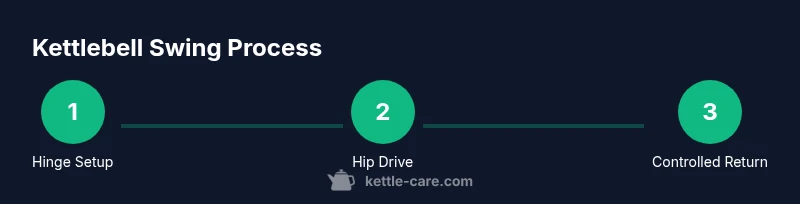
- Hinge at the hips with a neutral spine and chest tall. 2) Grip the kettlebell handle with both hands. 3) Hips drive forward to propel the bell to roughly chest height. 4) Let the kettlebell swing back down by hinging again and reset for the next rep. 5) Maintain a light touch with the shoulders and keep the neck in line with the spine. 6) Breathe: exhale on the upswing, inhale on the downswing. 7) Avoid pulling with the arms; the power comes from hip drive, not arm flexion.
Common mistakes and fixes
- Rounding the back: prioritize a neutral spine and pack the shoulders.
- Squatting rather than hinging: push hips back, then drive forward from the hips.
- Too much shoulder involvement: keep chest up and shoulders depressed to reduce upper-back strain.
- Overduing the swing height: start at chest height and progress gradually.
- Gripping tightly: maintain a relaxed grip to conserve energy and reduce forearm fatigue.
Address each issue by drilling the hinge in front of a mirror or with a coach, and slow the tempo to emphasize technique over speed.
Warm-up routines before swinging
Begin with 5–7 minutes of mobility for hips, hamstrings, and thoracic spine. Include hip hinges without weight, bodyweight good mornings, leg swings, and an ankle mobility drill. Add 2–3 activation moves for the glutes and core, such as glute bridges and dead bug variations. A proper warm-up improves hip extension, spinal stability, and neuromuscular readiness, reducing injury risk during the swing.
Safety considerations and risk management
Use an appropriate kettlebell weight for your experience level and never sacrifice form for reps. Start with slow tempo and a conservative load, progressing only when technique is solid. Clear the area of obstacles and ensure the floor is stable. If you have a history of back or shoulder pain, consult a professional before attempting kettlebell swings. Stop if you experience sharp pain, dizziness, or compromised balance, and re-evaluate your form with a trainer.
Training progression and programming tips
Begin with 2–3 sets of 8–12 reps at a light to moderate weight, 2–3 days per week. Once you can perform flawless reps, consider tempo variations, heavier loads, or one-handed swings to challenge the posterior chain differently. Alternate swing days with mobility work and other lower-body lifts to create a balanced program. Track reps, weight, and perceived effort to guide gradual progression and prevent stagnation or injury.
Integrating swings into a balanced routine: sample weekly plan
A practical weekly plan could include: Day 1 – kettlebell swing focus (2–3 sets of 8–12 reps), Day 2 – mobility and core, Day 3 – lower-body strength, Day 4 – active recovery or conditioning, Day 5 – sprint or interval finisher with swings as a metabolic component. Adjust volume and rest based on your fitness level and goals. Always prioritize technique before loading.
Post-workout recovery and mobility
Cool down with 5–10 minutes of gentle mobility and breathing work. Focus on hip flexors, hamstrings, and the back. Use light walking, assisted stretches, or a guided mobility routine. Hydration and nutrition post-workout support recovery. If you feel persistent stiffness or soreness, incorporate additional mobility sessions or consult a coach to refine your technique and address any compensations.
Tools & Materials
- Kettlebell(Choose a weight that allows 8-12 clean reps with strict form (start lighter and progress).)
- Space to swing(Clear 6-8 feet of clearance in all directions; non-slip surface.)
- Workout mat or soft floor(Provides comfort for warm-up and cooldown phases.)
- Water bottle(Stay hydrated during the session.)
- Mirror or video device(Helps monitor hip hinge and spine position.)
Steps
Estimated time: 25-40 minutes
- 1
Assess readiness and select weight
Check your back health and mobility. Choose a light weight that you can control for 20–30 seconds of continuous swings, ensuring you can maintain a neutral spine. This foundation prevents injury as you progress.
Tip: If you can’t maintain form for a full set, reduce the weight or reps and revisit basics first. - 2
Warm up hips and posterior chain
Do 5–7 minutes of hip hinges, glute bridges, and hamstring activation to prime the movement pattern. Warming up reduces stiffness and helps you achieve a clean hip drive.
Tip: Include a dynamic hamstring stretch with light activation before swinging. - 3
Set stance and grip
Stand with feet slightly wider than hips, toes pointing slightly out. Grasp the kettlebell with both hands or adopt a one-handed grip per your plan. Maintain a relaxed grip and ready stance.
Tip: Keep the kettlebell close to your body in the setup to avoid unnecessary momentum. - 4
Hinge with a neutral spine
Bend at the hips, push your butt back, and keep your chest up. The spine stays neutral, not rounded or excessively arched. Your hamstrings and glutes should feel the load.
Tip: Imagine you’re closing a door with your hips rather than pulling with your arms. - 5
Drive hips to propel the bell
From the hinge, explosively extend the hips to drive the kettlebell outward and upward to chest height. The arms stay relaxed; power comes from hip extension.
Tip: Exhale as you reach the top of the swing to brace the core. - 6
Pause briefly at the top
Briefly suspend at chest height to control momentum before letting the bell descend. This teaches timing and prevents over-arching.
Tip: Keep the core braced and avoid shrugging the shoulders. - 7
Return with a hinge
Let the kettlebell swing back down by hinging again, not by pulling with the arms. Reset into the initial hip hinge for the next rep.
Tip: Maintain a light knee bend; avoid deep squats during the descent. - 8
Breathing and bracing
Inhale during the prepare/downswing phase; exhale forcefully through the top of the swing while bracing the core. Proper breathing protects the spine.
Tip: Use a consistent rhythm to keep pace with your reps. - 9
Monitor form and progression
Record reps, weight, and tempo. Ensure form stays sound before increasing load, height, or speed. Small, steady increments beat big jumps in risk.
Tip: Use a mirror or partner feedback to catch compensation patterns early. - 10
Cool-down and mobility
Finish with 5–10 minutes of mobility work for hips, spine, and shoulders. Gentle stretches and breathing help recovery and readiness for next session.
Tip: Hydrate and perform light stretching to reduce post-workout soreness.
Frequently Asked Questions
What weight should I start with for kettlebell swings?
Begin with a light kettlebell to learn the hip hinge pattern and breathing. Increase weight gradually only after perfect form is achieved across multiple reps.
Start light, focus on form, and increase weight slowly as you prove the pattern is solid.
How high should the kettlebell swing go?
Aim for chest-to-shoulder height, depending on your mobility and strength. Do not aim for US Olympic heights; prioritize control and form.
Keep the kettlebell at chest height or slightly higher, ensuring you can control every rep.
Is the kettlebell swing safe for people with back pain?
Spotting with a professional is advised. If pain occurs during hinge or drive, stop and reassess form or switch to a modification like a hip hinge without load.
If you have back pain, consult a clinician and avoid loads that aggravate symptoms.
How many reps and sets should I perform for beginners?
Start with 2–3 sets of 8–12 reps at a comfortable weight. Progress by small increments in reps or weight once technique is consistent.
Begin with 2–3 sets of 8–12 reps, and add reps or weight gradually as you improve.
What are the most common kettlebell swing mistakes?
Rounding the back, squatting instead of hinging, and using arm strength rather than hip drive are the top errors. Use mirrors or coaching to correct them.
Common errors include a rounded spine and relying on the arms; fix these by focusing on hip hinge and core bracing.
Can I use kettlebell swings as a pure cardio workout?
Yes, but balance with strength work and mobility. Swings can be incorporated into metabolic conditioning or as a functional hammer for endurance.
Swings can boost cardio, but pair them with other lifts and mobility work for balance.
Watch Video
Highlights
- Master the hip hinge before adding weight
- Maintain a neutral spine and braced core
- Breath in sync with the swing cycle
- Progress gradually to prevent injuries
- Warm-up and cool-down for lasting gains