Kettle Bell Swing Ladder: A Progressive Training Guide
Learn a safe, step-by-step kettle bell swing ladder to boost strength and cardio. This guide covers form, progression, warm-up, scaling, and routines for home workouts.


Goal: master a kettle bell swing ladder—an efficient, progressive swing workout that ramps reps or rounds for strength and cardio. According to Kettle Care, you’ll need a light kettlebell, a clear workout space, a timer, and a simple warm-up. Use clean hip hinge, stable core, and controlled crescendos for safe, effective progression.
What is a kettle bell swing ladder?
A kettle bell swing ladder is a structured progression of swings that increases volume across defined rungs or rounds. It combines rhythm, tempo, and controlled hip hinge to build power, endurance, and technique in a single workout. The ladders can be customized by weight, rep pattern, and rest periods to fit beginners through intermediate athletes. For safety, use a light kettlebell and aim for smooth, controlled swings rather than speed. As the Kettle Care team notes, progressive ladders help maintain form while steadily increasing workload, making it easier to track improvement over time.
Safety first: proper form and common mistakes
Before you start, ensure you have enough space, a non-slip surface, and a kettlebell you can control. The most common errors are rounding the back, losing the neutral spine, and letting the hips overswing. Focus on a strong hip hinge, braced core, and a deliberate, breath-driven tempo. If you feel pain in the lower back, stop and reassess your setup. According to Kettle Care analysis, prioritizing form reduces injury risk and improves efficiency. Keep the gaze forward, ribs drawn down, and hips driving the movement rather than pulling with the arms.
Building the ladder: a progressive plan
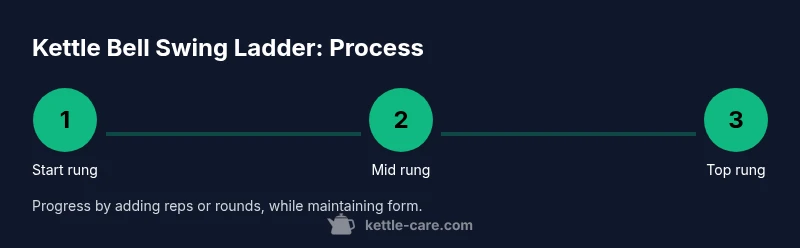
Start with a gentle ladder: 5 reps per rung for 3 rounds, then add reps per rung every 1-2 sessions or by one extra round until you reach a target of 15-20 reps per rung, depending on your conditioning. Alternate between two ladder templates: ascending (5-7-9-11) and descending (11-9-7-5). Keep rest periods 20-40 seconds between rungs. Use a timer to cue each rung and track your progress. The ladder can be adapted by weight, range of motion, or tempo to suit your goals while maintaining form and rhythm.
Warm-up and mobility for kettlebell swings
Prepare hips, hamstrings, and thoracic spine with dynamic moves: hip hinges, leg swings, arm circles, and thoracic rotations. Perform 5-8 minutes of mobility, then light warm-up sets with an empty kettlebell. Warming up reduces stiffness and improves swing mechanics, which in turn supports safer ladder progression. Focus on unlocking hip hinge patterns and maintaining a tall posture throughout the warm-up.
Technical tips: grip, stance, and hip hinge
Grip the handle with a firm, relaxed grip; maintain a tall posture and neutral spine. Stand with feet hip-width apart, toes slightly turned out. Hinge at the hips, push the glutes back, and drive through the hips to swing the kettlebell to chest height or eye level. Breathe out on the upswing and inhale on the downswing. Keep shoulder blades retracted slightly to brace the upper body before initiating each rep. Consistency in tempo matters more than speed.
Common pitfalls and fixes
Notice common pitfalls like back rounding, excessive forward lean, or a bell that travels too close to the body. Fixes include cueing a tight core, pulling the ribs down, and maintaining a neutral spine. If the kettlebell drifts forward, shorten the arc or reduce weight. If balance is an issue, widen your stance slightly and keep hips square to the ceiling. Progress gradually and listen to your body's signals to prevent form breakdown.
Scaling the ladder for different goals
For endurance, extend the ladder by adding rounds or reducing rest. For strength, use a heavier kettlebell and smaller ladder increments. For power, execute the ladder with explosive hip drive and a controlled finish. Always prioritize form over volume, and adjust based on how you recover between sessions. The ladder is a tool for consistent progress, not a test of brute force.
Putting it into a routine
Incorporate the ladder 1-2 times per week as part of a larger strength or cardio circuit. Pair it with mobility work on off days and ensure you complete a proper cool-down. Track your ladder progression in a notebook or app and adjust weights and reps based on how you recover. The Kettle Care team recommends gradually integrating the ladder into your routine rather than jumping into max effort too soon.
Quick-start sample ladder (beginner-friendly)
- Round 1: 5-5-5-5 with 20-second rests
- Round 2: 6-6-6-6 with 20-30 second rests
- Round 3: 7-7-7-7 with 30-second rests
Use a light kettlebell and focus on hinge mechanics, breath, and control. Increase the ladder gradually as your form remains solid and your endurance improves.
Tools & Materials
- Kettlebell(Choose weight based on your level; beginners typically start with 8-12 kg, then progress as form becomes solid.)
- Non-slip workout mat(Provides grip and knee protection during transitions.)
- Timer or stopwatch(Pacing: cue each rung/rest interval; a phone timer is fine.)
- Water bottle(Hydration between sets if needed.)
- Towel(Wipe sweat and maintain grip readiness.)
Steps
Estimated time: 25-40 minutes
- 1
Set up your space
Clear a 6-8 foot radius with a flat floor. Place the mat, position the kettlebell at hip height reachable without twisting, and ensure a stable stance. This minimizes tripping hazards and supports safe hinge mechanics.
Tip: Check clearance around you; a wall behind you is fine if you maintain a neutral spine and controlled motion. - 2
Choose a safe kettlebell
Select a weight that allows you to complete the ladder with clean form. Start light and observe how your hips drive the weight, not the arms.
Tip: If you feel any back discomfort, drop weight and reassess your form before continuing. - 3
Warm up dynamically
Do 5-8 minutes of mobility and light hinge drills to prime the hips and spine. Include hip hinges, bodyweight squats, and thoracic rotations.
Tip: Keep your core braced and ribs down during warm-ups to protect the spine. - 4
Establish a neutral spine
Brace core, retract shoulder blades slightly, and maintain a neutral spine throughout the ladder. This ensures safe loading on the low back.
Tip: Imagine a string pulling lightly from the crown of your head to the ceiling to stay tall. - 5
Initiate with a hip hinge
Push your hips back, not down, and allow the kettlebell to swing from hip height with a controlled arc. Avoid pulling with the arms.
Tip: Exhale during the hip drive to help maintain core stability. - 6
Perform the first rung
Complete the first set of the ladder with your chosen reps. Focus on a smooth hip hinge and a consistent swing height.
Tip: If the bell travels too high or too low, adjust tempo before increasing reps. - 7
Pace and breathe
Maintain a steady tempo; exhale on the upswing and inhale on the downswing. Keep rests short and purposeful.
Tip: Tempo is more important than speed; quality over quantity protects the spine. - 8
Progress to the next rung
Increase reps per rung or add a round according to your plan. Stop if form deteriorates.
Tip: Use a notebook to track ladder progression and identify when to escalate. - 9
Cool down and reassess
Finish with light stretching for hips, glutes, and hamstrings. Review how you felt during the workout and note any deviations in form.
Tip: A brief cooldown helps reduce post-workout soreness and reinforces good habits.
Frequently Asked Questions
What is a kettle bell swing ladder?
A kettle bell swing ladder is a progressive sequence of swings that increases volume across defined rungs or rounds. It blends technique with gradual workload so you can build endurance and power safely.
A kettle bell swing ladder is a laddered swing progression. It starts with fewer reps and builds up, helping you gain endurance safely.
What weight should I use for the ladder?
Start with a light kettlebell you can control for all reps with good form. Increase weight gradually only after your technique remains solid across several ladder rounds.
Choose a light kettlebell you can control. Increase weight slowly as your form stays solid.
Can beginners perform a kettle bell swing ladder?
Yes, with a focus on form and slower progression. Start with the smallest ladder and a light weight, then build reps as you feel stable.
Beginners can, if they prioritize form and slow progression.
How long should I rest between ladders?
Rest 20-60 seconds between ladders depending on intensity. Shorter rests keep the workout cardio-focused; longer rests aid form preservation when learning.
Rest 20 to 60 seconds, depending on how you feel and your form.
How do I progress safely over weeks?
Increase reps per rung or rounds gradually every 1-2 weeks while maintaining perfect form. If technique falters, slow down or drop weight.
Progress slowly, keep form solid, and adjust as you recover.
Watch Video
Highlights
- Master the hip hinge before ladder progression
- Progress gradually to protect the spine
- Maintain neutral spine and braced core throughout
- Use a timer to pace each rung and rest
- Track progress and adjust weights responsibly