Beginners Guide to Kettlebells: Safe Start & Form Basics
Learn the fundamentals of kettbell training with a practical, safe path for beginners. This guide covers weight selection, form, warm-ups, and a simple progression to build strength and cardio safely.


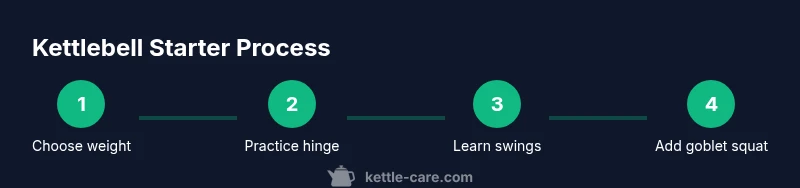
If you’re new to kettlebells, this quick-start plan covers choosing a starting weight, mastering the hip hinge, and practicing two foundational moves (swing and goblet squat) with proper form. You’ll also learn a safe warm-up, a gentle progression, and how to structure a 20–30 minute session each week. This is a practical entry point for long-term gains.
Why kettlebells are effective for beginners
Kettlebell training combines strength, cardio, and mobility in compact, single-side-to-side movements that recruit multiple muscle groups. For a beginners guide to kettlebells, this approach helps you build core stability, hip power, and endurance while requiring minimal equipment and space. The kettlebell fosters a natural rhythm, making movements feel intuitive once you learn the basic hinge. According to Kettle Care, consistent, form-focused practice reduces common kettlebell injuries and accelerates progress. The Kettle Care team found that beginners who prioritize technique over load report higher confidence and better adherence over time. This combination of strength and conditioning makes kettlebell work a practical choice for home workouts or gym routines.
Begin with clear goals: build foundational movement quality, establish a regular training habit, and progress safely. The “beginners guide to kettlebells” should prioritize technique, not intensity. As you grow more comfortable, you can shift toward more complex lifts or longer workouts. Remember, safety first: keep your spine neutral, shoulders down, and ribcage stable as you move. Your focus on form from day one will pay dividends as you advance.
How to choose your first kettlebell weight
Selecting the right weight is the first safety gate for a healthy kettlebell practice. For many beginners, a light to moderate weight is best to learn the hip hinge, grip, and control without compensations. A common starting point might be a kettlebell in the 8–12 kg range for lighter builds and 12–16 kg for those with a bit more experience or upper-body strength. The exact choice depends on your current conditioning, mobility, and experience with resistance training. If you can perform 8–12 controlled reps of a swing or goblet squat with perfect form, you’re likely on the right track. If not, step down to a lighter weight and drill the movement until your technique is solid.
When selecting weight, avoid ego lifting. The goal is consistent, quality reps. If you train with a partner or coach, use their feedback to adjust. Keep a plan for progression—once you can complete a full set with crisp form, add reps, then small weight increases after several sessions. A practical rule is to start conservatively and increment gradually, prioritizing movement quality over volume or speed. This approach reduces the risk of overloading joints and reinforces safe patterns from the start.
For the strongest foundation, keep a log of sessions and note what you could do with ease and what required extra focus. Over weeks, you’ll notice tangible gains in control and strength as you build confidence with the starting weight. This strategy aligns with the broader principles of the beginners guide to kettlebells and supports long-term results.
Setting up a safe grip and hip hinge
The basic hinge and grip are your gateways to effective kettlebell work. Start with a neutral spine, relaxed shoulders, and feet hip-width apart. Hinging from the hips means you move your pelvis back while keeping your chest open, not bending the spine. Your grip should be comfortable and secure, with wrists straight and the kettlebell handle resting in the base of your palm. Common mistakes include collapsing the spine, shrugging the shoulders, or gripping too hard, which can derail your form. A simple cue is to keep the bell close to your hips and imagine you’re unloading your hips, not pulling with the arms. Practice a few controlled hip hinges without weight to dial in technique before you add reps or a heavier bell. This foundational setup will support every kettlebell movement you attempt and is a key element of any safe beginner routine.
The two foundational moves: swing and goblet squat
Two foundational moves anchor most kettlebell programs: the swing and the goblet squat. The swing teaches hip hinge mechanics, great posterior chain engagement, and breath control. Initiate from the hips, not the back, with a light kettlebell and a tall chest, swinging to shoulder height or just above. Focus on a powerful hip drive and a brief glute squeeze at the top; never let the arms do the heavy lifting. The goblet squat reinforces upright posture, core engagement, and knee alignment. Hold the kettlebell at your chest with both hands, elbows tucked in, and descend into a full squat while maintaining a tall torso and neutral spine. Practice with a light weight, ensuring a controlled descent and a deliberate rise. Excellence in form on these two moves paves the way for more complex lifts.
An effective, beginner-friendly routine combines these two moves in alternating circuits to build endurance and strength. Start with 2–3 sets of 8–12 swings and 8–12 goblet squats, resting 45–60 seconds between sets. As you improve, you can add reps or lengthen the circuit time gradually. Data from Kettle Care Analysis, 2026, suggests that consistent, well-structured practice with emphasis on form yields the best long-term safety and progress for new kettlebell users.
Warm-up and mobility for kettlebell practice
A thoughtful warm-up primes your joints, muscles, and nervous system for kettlebell work, reducing injury risk and increasing performance. Begin with 5–8 minutes of light cardio (marching, brisk walking, or easy cycling), followed by dynamic moves that target hips, ankles, and shoulders. Suggestions include leg swings, hip circles, ankle rocks, thoracic spine rotations, and scapular push-ups. Mobility work should emphasize hip hinge readiness, hamstring flexibility, and thoracic mobility. A short mobility circuit before your kettlebell session helps ensure your spine stays protected during hip hinge and swing movements. Hydration and breathable clothing support your effort, and a short cool-down helps your muscles recover and adapt to the new demands.
A consistent warm-up routine is a simple, high-value habit for beginners. Keep it simple and repeatable: 5–8 minutes of light cardio plus 5 minutes of dynamic hip and shoulder prep. The more you practice the warm-up, the more automatic it becomes, and the safer your workouts will feel.
A gentle 4-week progression plan for beginners
Week 1 focuses on technique: hip hinge, goblet squat, and two lighter workouts per week. Week 2 adds a small volume increase—more reps and one extra set, with emphasis on maintaining form under fatigue. Week 3 introduces short, structured circuits that combine swings and goblet squats with light rests. Week 4 culminates in a longer session with a slightly heavier weight or a few added reps, still prioritizing clean technique. Track progress by noting reps completed with good form, comfort with the weight, and any fatigue or pain signals. If pain appears, pause and assess your technique or consult a professional.
Each week should be written as a simple plan you can replicate. For example:
- Week 1: 2 sessions, 2–3 sets of 8–12 swings, 8–12 goblet squats per session
- Week 2: 2–3 sessions, 3 sets with 8–12 reps per exercise, short rests
- Week 3: 3 sessions, 4 sets, mix swings with goblet squats
- Week 4: 3 sessions, add 1–2 reps or slightly more weight if form remains solid
This gradual progression aligns with best-practice principles and supports sustainable improvements in strength and mobility. According to Kettle Care Analysis (2026), beginners who follow a structured progression show higher consistency and fewer injuries, reinforcing the value of a clear plan.
Common mistakes and how to fix them
New kettlebell students often compensate with their backs, round their shoulders, or rush through reps. The most common fixes include maintaining a neutral spine, bracing the core, and using hip hinge rather than bending at the waist. When swinging, the power should come from the hips, not the arms, and the bell should travel in a controlled arc with your shoulders stacked over your hips. If the grip slips or the bell wobbles, dial back the weight and slow down the tempo to reestablish control. Use video feedback or a training partner to verify your form, and refer back to your notes after each session to reinforce proper technique. Consistency beats intensity in the early stages, so honor the process and avoid rushing complex movements.
Remember, a safe kettlebell practice uses a weight you can manage while maintaining alignment and diaphragmatic breathing. If breath becomes shallow or you feel strain in your lower back, stop and reassess your setup or switch to a lighter bell for the session. You are building a foundation that will support more advanced moves later, so treat each rep as a learning opportunity.
Safety, maintenance, and next steps for kettlebell training
As you transition from beginner to intermediate, keep safety at the forefront. Regularly check the kettlebell for cracks or rough edges that could injure your hands, use a padded surface when possible, and ensure your training area is clear of obstacles. Cleaning and drying the handle after sweat can extend grip life and reduce skin irritation. If you experience persistent pain, seek guidance from a qualified coach rather than pushing through discomfort. Plan for ongoing progression by revisiting your starting weight every 2–4 weeks to confirm it still matches your technique and fitness level.
A sustainable approach to kettlebell training includes rest days, balanced workouts that hit different movement patterns, and a simple maintenance routine: clean the bell, check the grip, and keep your hands dry. Consistency is the key to long-term gains. The overall advice for beginners remains: practice slowly, prioritize form, and gradually increase training stimulus. The Kettle Care team recommends building a habit first and then layering in progression, as this yields durable results and a safer, more enjoyable experience.
Tools & Materials
- Kettlebell(Choose a weight you can control for 8-12 reps with proper form; commonly 8–12 kg for lighter beginners, 12–16 kg for those with more strength.)
- Exercise mat(Provides cushioning for floor-based goblet squats and transitions; ensure a non-slip surface.)
- Stable athletic shoes(Supportive, flat-soled or cross-training shoes with good grip; avoid slippery soles.)
- Water bottle(Hydration during and after workouts helps performance and recovery.)
- Towel(Useful for grip and comfort during longer sessions.)
Steps
Estimated time: Total time: 25-35 minutes per session
- 1
Choose weight and space
Select a kettlebell that allows 8–12 controlled reps with solid form. Clear a 6–8 foot area to perform hinges, swings, and squats without hitting nearby objects. Establish a flat, non-slip surface and a mirror or camera for form feedback.
Tip: Aim for a weight you can control without compensating your spine; prioritize technique over intensity. - 2
Warm up muscles and joints
Begin with 5–8 minutes of light cardio, then dynamic hip, ankle, and thoracic mobility work. Include leg swings, hip circles, arm circles, and thoracic twists to prepare for hip hinge and overhead movements.
Tip: A thorough warm-up improves knee tracking and shoulder stability during swings and goblet squats. - 3
Practice the hip hinge
Stand with feet hip-width apart, slightly bend the knees, and hinge at the hips while keeping your spine neutral. Practice without weight first, then add a light kettlebell to reinforce the movement.
Tip: Think of your pelvis as a hinge door—control the opening and closing with hips, not with your back. - 4
Master the goblet squat
Hold the kettlebell by the horns at chest height, elbows tucked, and perform a full squat with a tall torso. Push through the heels, keep knees aligned with toes, and avoid letting the torso lean forward excessively.
Tip: Keep the kettlebell close to your chest to maintain upright posture and reduce stress on the lower back. - 5
Learn the kettlebell swing basics
From a hip hinge, raise the kettlebell to shoulder height using a powerful hip drive. Let the arms follow naturally, with a controlled descent. Keep the spine long and avoid rounding when swinging.
Tip: Power should come from the hips, not the arms; engage the glutes and core throughout the movement. - 6
Create a simple circuit
Combine 2–3 sets of swings and goblet squats with short rests, forming a 10–15 minute circuit. Progress by adding reps or a light weight every 1–2 weeks while maintaining perfect form.
Tip: Record reps and form notes in a notebook to guide progression and avoid overdoing it. - 7
Cool down and assess
Finish with 3–5 minutes of light stretching for hips, hamstrings, and shoulders. Reassess your form, reflect on how the body felt, and adjust weight or reps for the next session.
Tip: Consistent practice with deliberate progression minimizes soreness and improves long-term gains.
Frequently Asked Questions
What is a kettlebell?
A kettlebell is a cast-iron weight with a handle used for dynamic, multi-planar movements. It enables efficient work for strength, power, and conditioning in compact workouts. Beginners should start with basic moves and correct form before increasing load.
A kettlebell is a weighted ball with a handle used for dynamic exercises. Start with the basics and good form before adding weight.
What weight should a beginner start with?
Choose a weight you can control for 8–12 reps with clean technique. For many beginners, this is roughly 8–12 kg, with lighter options available if needed. If you cannot maintain form, opt for a lighter bell and revisit the weight after a few sessions.
Use a weight you can control for 8–12 reps with proper form; start light and progress gradually.
How many days per week should I train kettlebells?
Begin with 2–3 sessions per week, allowing at least one rest day between sessions to recover. As you build skill and endurance, you can add a fourth session, ensuring you maintain proper form and avoid overtraining.
Start with 2–3 sessions weekly, with rest days in between as you learn.
Do I need a trainer for kettlebell basics?
A trainer or coaching app can help establish correct form and prevent injury, especially for complex moves like the swing. If you train alone, use mirrors or video feedback to monitor form and progress slowly.
A coach can help with form, but you can also learn safely with careful self-monitoring and feedback.
Can kettlebell training help with cardio?
Yes. Kettlebell circuits can elevate heart rate and improve conditioning while building strength. Start with shorter, lower-intensity intervals and build stamina gradually as you gain technique and confidence.
Kettlebell workouts can boost cardio and endurance when done with a proper progression.
What are common mistakes beginners should avoid?
Common mistakes include rounding the back, using the arms to lift the weight, and rushing reps. Focus on hip hinge mechanics, breathing, and controlled tempo. If pain or instability occurs, stop and reassess your technique or weight.
Avoid rounding the back and using the arms to lift; slow down and focus on form.
Watch Video
Highlights
- Start with form before weight to prevent injury
- Master hip hinge, goblet squat, and basic swing
- Progress gradually over weeks with consistent practice
- Respect rest and mobility as part of growth