Beginners Kettlebell Routine: Safe Start to Strength
Learn a complete beginners kettlebell routine designed for safe form, gradual progression, and steady strength gains at home. This guide from Kettle Care covers warm-ups, core moves, progression, and safety cues to help homeowners and tea lovers start kettlebell training with confidence.


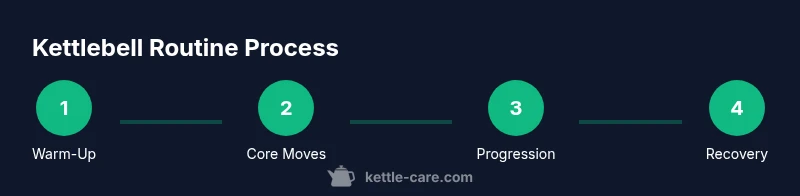
Goal: perform a safe beginners kettlebell routine that builds strength and mobility. You’ll start with a brief warm-up, master three foundational moves, and progress over weeks with simple, time-efficient workouts. Essential steps include selecting a light-to-moderate kettlebell, maintaining a neutral spine, and resting between sets to avoid fatigue.
Warm-up fundamentals for a beginners kettlebell routine
According to Kettle Care, starting with a solid warm-up reduces injury risk and primes muscles for kettlebell work. A good warm-up should be 5 to 7 minutes and include light cardio, dynamic mobility, and a few hinge-and squat prep movements. Begin with 2 minutes of brisk marching or easy step-ups to raise heart rate. Then move through dynamic hip circles, leg swings, and a gentle thoracic spine twist to mobilize the joints. Finish with a few controlled hip hinges and ankle rocks to rehearse the hip hinge pattern while waking up the posterior chain. This preparation makes every rep feel smoother and safer during the core work that follows.
- Why it matters: a thoughtful warm-up improves range of motion and motor coordination, reducing the risk of back strain during improper hinge patterns.
- Practical tip: wear flat, secure footwear and choose a clear, uncluttered workout space to avoid slips during swings.
- Quick test: perform a 60-second lighter warm-up set of swings at a tempo you can control; if your form breaks, reset and rewarm.
Choosing the right kettlebell and setup
Selecting the proper kettlebell is the foundation of a safe beginners kettlebell routine. Start with a light-to-moderate weight that you can control for 8-12 repetitions with good form. If you’re unsure, err on the lighter side and progress as your technique becomes consistent. Place the kettlebell on a stable, non-slip surface and ensure your grip is secure before each movement. Create a small, open workout space with a mat for comfort and a water bottle within reach. Regular footwear should offer a stable base, but you can train barefoot on a clean, non-slip surface if your space allows.
- Why it matters: a weight that is too heavy forces compensations (like rounding the back) and increases injury risk.
- Practical tip: keep the kettlebell close to your body during lifts to reduce strain on the low back.
- Quick test: perform a few goblet squats with the weight held at chest height; you should feel your hips and glutes engage without pain in the shoulders or back.
The foundational movements: swing, goblet squat, deadlift
The three core movements form the backbone of most beginners kettlebell routines. The swing teaches hip hinge and explosive momentum, the goblet squat builds leg and core strength with a neutral spine, and the deadlift reinforces a safe hinge pattern for lifting from the floor. Master these with strict form before adding volume. Here are concise cues for each:
- Swing: hinge at the hips, keep a neutral spine, and drive the hips forward to swing the bell to chest or eye level. Avoid bending at the waist or using the arms to lift.
- Goblet squat: hold the kettlebell by the horns at chest height, elbows inside the knees, and squat to a depth you can control without losing posture.
- Deadlift: stand with feet hip-width apart, hinge from the hips, and keep the bell close to the legs as you lift with the glutes and hamstrings.
Common form problems and fixes: rounding the back can be addressed by lowering the weight and resetting your hip hinge. If your shoulders hike during a swing, drop the bell height slightly and re-engage the lats.
- Why it matters: building sound mechanics reduces injury risk and enables longer, safer training sessions.
- Practical tip: practice each move with a mirror or inside a camera frame to monitor spine position and hip hinge quality.
- Quick test: perform 6 reps of each move with a fixed tempo; if you feel pain, consult a coach before continuing.
The 4-week progression plan
A structured progression helps beginners kettlebell routine build strength gradually while allowing the nervous system to adapt to new movement patterns. Week 1 focuses on mastering technique and light reps (3 sets of 8-10 per movement, 2–3 days per week). Week 2 adds one more set or a slight rep increase while maintaining strict form. Week 3 introduces a modest tempo change (slower descent or pause at bottom) to boost control. Week 4 combines all elements into a simple circuit and increases total work slightly to reinforce consistency. Always prioritize technique over volume, and listen to your body’s signals throughout the progression.
- Why it matters: gradual progression reduces fatigue and injury risk while reinforcing motor learning.
- Practical tip: log sets, reps, and any cues that helped or hindered your form to tailor the next week’s load.
- Quick test: track how long it takes to complete the week’s total reps without compromising form; aim for a stable pace across weeks.
Step-by-step technique primer for core moves
To support the next section of our guide, here is a concise primer that aligns with the six-step method used in the official STEP-BY-STEP block. Focus on hip hinge mechanics, braced cores, and controlled breathing. Use a light-to-moderate bell during the practice to avoid compensations.
- Why it matters: a strong foundation in technique translates to better gains and fewer injuries as weights increase.
- Practical tip: pair each movement with a deliberate inhale or exhale cue to maintain rhythm and core engagement.
- Quick test: perform each move for 2 sets of 6 reps with a slow, controlled tempo and review your posture in a mirror.
Circuit formats and how to structure your workouts
There are a few flexible formats that work well for beginners kettlebell routine. A short 20–25 minute circuit can be repeated 2–3 times per week, gradually increasing the number of rounds as strength improves. A longer 30–40 minute workout can include a 3-4 round circuit with a brief rest between rounds. If you’re short on time, perform a 3x5 set of each movement with a steady pace and minimal rest to keep form sharp. Always end with cooldown stretches to promote mobility and recovery.
- Why it matters: variety prevents plateaus and keeps training engaging.
- Practical tip: alternate between swing-focused days and squat-focused days to distribute workload evenly across the week.
- Quick test: after 4 weeks, attempt a simple 3-round circuit and evaluate whether you can maintain technique while increasing reps slightly.
Common mistakes and fixes you’ll encounter
Even with careful planning, beginners kettlebell routine can present common errors. The most frequent issues include: rounding the back in hinging moves, collapsing the ribcage during the swing, and letting the knees cave inward during squats. Corrective actions: reduce the weight, slow down the tempo, engage your core before each rep, and use hip hinge cues to drive the movement from the hips rather than the arms. A coach or video feedback can help you correct form early.
- Why it matters: addressing these issues early prevents injury and accelerates progress.
- Practical tip: set a no-paultone rule: if you lose form, stop, reset, and perform fewer reps at a controlled tempo.
- Quick test: have a training partner or mirror observe your form on 3 reps per exercise.
Recovery, safety and mobility quick wins
Recovery is where gains become lasting. Incorporate light mobility work on non-training days, including hip flexor stretches, hamstring slides, and thoracic spine rotations. Hydration, protein timing, and sleep quality play a crucial role in recovery and performance. If you experience joint pain or persistent fatigue, dial back volume and consult a professional. Routine cooling with gentle stretches enhances flexibility and reduces soreness.
- Why it matters: good recovery supports consistent training and reduces injury risk.
- Practical tip: incorporate 5–10 minutes of mobility work after every session.
- Quick test: log how you feel the day after training and adjust the next session based on soreness levels.
How to track progress and tailor to goals
Tracking progress ensures the beginners kettlebell routine stays aligned with your goals, whether that’s increased strength, better endurance, or improved technique. Use a simple log to record weight, sets, reps, and a quick form note after each session. Reassess every 4 weeks and adjust weight or repetitions to maintain a challenging but safe stimulus. If goal-oriented, add a small conditioning element or a longer slow-tempo set for progressive overload. Kettle Care recommends maintaining form first and then increasing load as you gain confidence.
- Why it matters: progress tracking helps you stay motivated and consistent.
- Practical tip: take a quick video at month-end to compare form over time and catch subtle fixes.
- Quick test: set a micro-goal (e.g., 2 extra reps per movement in week 4) and celebrate the improvement.
Tools & Materials
- Kettlebell (start with a light-to-moderate weight)(Choose a weight you can lift for 8-12 controlled repetitions with good form)
- Yoga mat(For floor-based movements and grip comfort)
- Water bottle(Stay hydrated)
- Towel(Wipe sweat and adjust grip as needed)
- Stable footwear or flat, non-slip surface(Flat, secure footing)
- Optional wrist guards or lifting chalk(If grip is a challenge)
Steps
Estimated time: 30-40 minutes
- 1
Set up and posture
Stand with feet hip-width apart. Brace your core, soft knees, and neutral spine. Keep shoulders down and relaxed. Task: align the kettlebell handle with your body so the weight sits close to your center of gravity.
Tip: Engage the core before you begin and keep the kettlebell close to your midline. - 2
Grip and hip hinge prep
Grip the kettlebell handle firmly. Hinge from the hips with a slight knee bend and a neutral spine. Let the bell travel a short distance in front of you as you prepare for the swing or goblet movements.
Tip: Imagine closing your ribcage around a small object to maintain a braced torso. - 3
Goblet squat setup
Hold the kettlebell by the horns at chest height. Elbows tuck inside the knees as you descend slowly, keeping the chest up and core braced. Stop at a depth where your hips can open without losing form.
Tip: Keep the weight close to your chest to prevent forward lean. - 4
Kettlebell swing setup
Place the weight between your legs, then drive the hips forward to propel the kettlebell to chest height. Avoid pulling with the arms; the movement should occur from hip extension.
Tip: Power comes from the hips, not the arms. - 5
Deadlift hinge from the floor
Stand with hips back, chest up, and the kettlebell between the feet. Push the hips back to lower the weight, then drive through the heels to stand tall. Maintain a neutral spine throughout.
Tip: Keep the bell close to your shins as you lift. - 6
Combine into a short circuit
Link 2–3 moves into a gentle circuit: swing -> goblet squat -> deadlift, with short rests between rounds. Start with 2 rounds and add a round every week as form stays clean.
Tip: Tempo matters: slow on the way down, controlled on the way up.
Frequently Asked Questions
Is this routine suitable for complete beginners with no prior strength training?
Yes. The routine is designed for beginners and focuses on safe form, a gradual progression, and foundational movements. If you have any medical concerns, consult a professional before starting.
Yes. This routine is beginner-friendly and emphasizes safe form and gradual progression. If you have medical concerns, talk to a professional first.
How many days per week should I do this routine?
Aim for 2–3 non-consecutive days per week to allow recovery between sessions. As you adapt, you can add a fourth session, but watch for signs of overtraining.
Start with 2 to 3 days per week, then adjust according to recovery and progress.
What if I experience back pain during the moves?
Stop the movement and reassess your hinge pattern. Ensure a neutral spine, braced core, and use a lighter weight while focusing on hip hinge rather than back extension.
If you feel back pain, stop, check your form, and try a lighter weight.
Can I do kettlebell workouts in a small space?
Yes. A compact area works as long as you have space to swing safely and a clear floor. Keep movements controlled and use a lighter bell if needed.
You can train in a small space; just keep movements controlled and ensure a clear area.
How should I progress once the routine becomes easy?
Increase either reps, rounds, or tempo gradually. Prioritize form and safety; small, incremental increases keep gains steady without injury.
Increase reps, rounds, or tempo slowly while keeping good form.
Do I need coaching to start kettlebell training?
While coaching helps, many beginners succeed with a well-structured routine and reliable video feedback. Consider a session or two if you’re unsure about form.
Coaching is helpful but not mandatory if you follow a solid routine and get feedback.
Watch Video
Highlights
- Start light and progress gradually to build technique.
- Master form before increasing weight or volume.
- Incorporate a warm-up and cooldown each session.
- Consistency beats intensity for long-term gains.