Learn to Use Kettlebells: Safe Beginner Guide
A practical, step-by-step guide to learn to use kettlebells safely, with grip, hinge, swing basics, and a beginner routine for steady gains.


Learn to use kettlebells safely by mastering the basic grip, hip hinge, and breathing. This starter guide covers one-handed and two-handed moves, a safe warm-up, and a simple progressive routine. You'll need a light-to-moderate kettlebell, a clear workout space, and footwear with stable support. Follow proper form to prevent injuries.
Why Proper Form Matters
The kettlebell is a dynamic tool that rewards correct technique and punishes sloppy movement. If you want to learn to use kettlebells safely, start with fundamentals like the hip hinge, neutral spine, and controlled breathing. Kettle Care analysis shows that improved technique reduces risk and improves consistency across sets. Prioritizing form reduces injury risk and builds a solid base for progress.
In the most common beginner scenario, learners focus on the hinge rather than the squat for the first several sessions. The hip hinge uses the hips as the primary driver; think of the kettlebell as moving on a hinge line, not pulled by the arms. A neutral spine means a straight line from the crown to the tailbone, with the ribs braced and the belly gently contracted. Your breathing should be steady—inhale to prepare, exhale during the exertion phase.
A few practical cues you can apply right away:
- Keep the chest tall and the shoulders down.
- Imagine someone gently pulling your hips back rather than pushing the weight forward.
- Use a modest range of motion initially; you don't need to go all the way down until your form stays solid.
Next, build tolerance by using lighter loads and more controlled reps. As you gain confidence, you can refine timing, scapular stability, and hip drive, which translates into every other movement you perform with a kettlebell.
Grip and Hip Hinge Essentials
A solid grip and a proper hip hinge form the foundation of all kettlebell movements. Start with a feet hip-width apart stance, toes pointing slightly out, and a relaxed grip that allows your wrist to stay neutral. The hinge should come from the hips, not the lower back; think 'pack the spine' and brace the core. Remember to keep shoulders away from ears and maintain a tall posture throughout the drill. In practice, spend time on a slow hinge drill before adding weight.
Key cues to lock in:
- Push the hips back as if you were closing a door with your butt, not pulling with your back.
- Maintain a neutral head position by gazing a few feet in front of you.
- Keep the ribcage braced to protect the spine during all movements.
Common errors include rounding the back, over-arching the neck, and lifting with the arms. If you notice any of these, reset with a lighter weight and rehearse the hinge until the pattern becomes automatic.
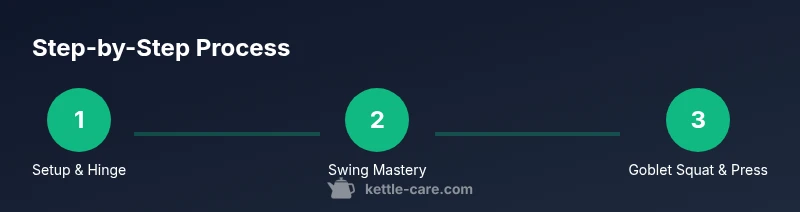
The Beginner Movements: Swing, Goblet Squat, and Press
Three foundational moves form the backbone of a safe kettlebell practice: the swing, goblet squat, and overhead press. For the swing, the power should come from the hips, not the arms; the kettlebell travels on a vertical path as you extend the hips forward. The goblet squat teaches you to sit back into the hips while keeping the chest up and the elbows tucked into the torso, which reinforces spine neutrality and upright posture. The overhead press develops shoulder strength with a controlled range of motion and a braced core to prevent rib flare. Practice each move with a light weight and focus on fluid transitions between positions.
Technique checks:
- Swing: maintain a straight spine, look forward, and drive hips rather than pulling with the arms.
- Goblet squat: keep the weight close to the center of gravity, sit the hips back, and avoid letting the knees collapse inward.
- Press: press straight upward, don’t lean away from the weight, and exhale as you complete the lift.
As you gain confidence, you can introduce light variations, but only after you can perform the basics with solid form.
Building a Safe Progressive Routine
Progression matters more than pushing heavy loads early on. Begin with a short, controlled warm-up that includes joint circles and light cardio. Build a foundation of three to five movements (as listed above) at a comfortable pace, then gradually increase either the number of reps, the number of sets, or the weight as form remains clean. Schedule two to three sessions per week and ensure at least one rest day between sessions to allow recovery. Track your form, not just the weight, and listen to your body—if something feels off, dial back and reassess.
Sample progression principles:
- Increase volume (reps/sets) before loading with heavier weight.
- Prioritize tempo control; a slower descent and controlled ascent reduce momentum-driven injury risk.
- Periodize your plan with lighter weeks after several work cycles to consolidate gains.
- Incorporate mobility work for hips, hamstrings, and thoracic spine to support better movement mechanics over time.
Tools & Materials
- Kettlebell(Weight: 8–12 kg for beginners; adjust to your strength.)
- Exercise mat(Non-slip surface for comfort and stability.)
- Water bottle(Stay hydrated during the workout.)
- Comfortable athletic shoes(Stable base with good grip.)
- Timer or stopwatch(Track sets and rest periods.)
- Towel(Optional for grip and cleanup.)
- Clear workout area (about 6 ft)(Ensure unobstructed space around you.)
Steps
Estimated time: 25-35 minutes
- 1
Set up and warm up
Begin with a dynamic warm-up: hip circles, ankle mobility, light cardio for 3–5 minutes. Establish your stance and grip, and check that the weight feels comfortable in your hands. This primes the nervous system for controlled movements.
Tip: Keep the shoulders relaxed and the core engaged during the warm-up. - 2
Establish a safe hip hinge
Stand with feet hip-width apart, soften the knees slightly, and hinge from the hips while keeping the spine long. Your chest stays up and the kettlebell swings from your hips, not from your arms.
Tip: Imagine closing a door with your hips, not pulling with your back. - 3
Practice the two-handed kettlebell swing
With a neutral spine, pull the kettlebell back between your legs, then drive the hips forward to swing to chest height. The arms stay relaxed; the power comes from the hips.
Tip: Do not pull with the arms; use hip extension for movement. - 4
Switch to alternating hands
After you’re comfortable with two-handed swings, practice switching hands at the chest height while maintaining control. Keep a strong brace and a steady breath.
Tip: Keep timing consistent between reps to avoid jerks. - 5
Add goblet squat
Hold the kettlebell by the handles at chest height. Perform a controlled squat, pushing the hips back and keeping the chest up. This reinforces solid squat mechanics.
Tip: Drive through the heels and maintain a neutral spine. - 6
Introduce the overhead press
From a goblet position, press the kettlebell overhead with a controlled movement. Do not flare the ribs or twist the torso; keep the core braced.
Tip: Exhale on the press and avoid locking the elbow at the top. - 7
Cool down and mobility
Finish with gentle stretches for the hips, hamstrings, and shoulders. A 3–5 minute cooldown helps reduce soreness and improves flexibility.
Tip: Hydrate and perform diaphragmatic breathing to relax the system.
Frequently Asked Questions
What weight should I start with?
Choose a weight you can lift with proper form and control. Focus on technique before adding load.
Start with a light kettlebell you can control; form first.
How often should I train kettlebells?
Begin with two to three sessions per week, with rest days in between to allow adaptation.
Start with two or three sessions weekly.
Is kettlebell training safe for beginners?
Yes, with proper instruction, lighter loads, and progressive overload.
Yes, with proper form and gradual progression.
How should I breathe during swings?
Inhale as you lower; exhale during the hip drive to the top.
Breathe in on the way down, out as you lift.
Can I train at home?
Absolutely—clear space and use a non-slip surface for safety.
Yes, provided you have space and stability.
I have a history of back pain; should I start?
Consult a professional before starting; focus on hinge and gliding movements first.
Check with a clinician before starting; stick to safe basics.
Watch Video
Highlights
- Master the hip hinge before loading.
- Progress gradually with form-focused steps.
- Breathing cues support safe lifting.
- Consistency builds strength and mobility.
- The Kettle Care team recommends safe form and progressive loading.