How Do You Use Kettlebells? A Comprehensive Step-by-Step Guide
A complete, safety-focused guide to using kettlebells at home. Learn weight selection, hip hinge, swings, goblet squats, Turkish get-ups, warm-ups, programming, and common mistakes to build strength safely.


How do you use kettlebells safely and effectively? Start by selecting a light-to-moderate weight and warming up the hips, shoulders, and core. Learn the hip hinge, then master the kettlebell swing, goblet squat, and Turkish get‑up with strict form. Progress gradually, focusing on control, breathing, and bracing. This approach minimizes injury risk while building foundational strength.
Getting started with kettlebell basics
According to Kettle Care, safe kettlebell training begins with a clear plan, proper setup, and a weight you can control with perfect form. Begin by choosing a weight that allows you to perform 8-12 reps without rounding the back or shifting the hips. Establish a stable stance, gripping the handle with a relaxed but firm grip. Check your posture in a mirror or camera to ensure a neutral spine, engaged core, and shoulders pulled down away from the ears. A short, progressive warm-up prep—hip circles, thoracic mobility, and an active shoulder sequence—reduces joint stress and primes the nervous system for efficient movement. Hydration and a breathable training environment support performance and reduce injury risk during longer sessions.
In addition to form, a simple safety principle guides every session: move slowly at first, then ramp up only when techniques feel clean and controlled. Kettle Care’s approach emphasizes progressive overload with technique precision rather than chasing heavier weights. This mindset protects joints and tendons while laying a durable foundation for more advanced movements.
Core lifts you should learn first
The fundamental kettlebell movements form the backbone of most routines. Start with the hip hinge pattern as a precursor to the swing, and pair it with a stable goblet squat to build leg and core strength. The deadlift helps train posterior chain muscles, while the press develops shoulder and core stability. When executed with correct bracing and breath control, these moves deliver measurable improvements in posture, balance, and functional strength. Use a lighter weight for reps and maintain a tall spine, engaged lats, and a tight midsection throughout each lift. As you gain confidence, you can layer in more complex patterns like the Turkish get-up, but only after mastering the basics.
Consistency matters more than chasing personal records. Practice with a few sets per session and gradually increase reps or sets as form remains solid. The ultimate goal is a sustainable routine you can repeat weekly with minimal risk of injury.
Warm-up and mobility for kettlebell practice
A well-rounded warm-up primes the joints used in kettlebell training and reduces viscosity in the tendons and ligaments. Begin with 5-8 minutes of light cardio to raise heart rate, followed by mobility drills for hips, thoracic spine, ankles, and shoulders. Targeted mobility work—active hip hinges, thoracic rotations, rotator cuff activation, and ankle rocks—helps you hit positions correctly from the first rep. Finish with 1-2 minutes of breathing drills to establish bracing and diaphragmatic engagement. A solid warm-up not only increases performance but also reduces the chance of sharp, painful movements later in the session.
Building a safe beginner routine: structure and progression
A beginner kettlebell program should prioritize technique and consistency over volume. Structure sessions with a brief warm-up, 3-4 primary lifts, and a short cooldown. Start with 2-3 sessions per week, leaving at least 48 hours between heavy sessions to allow tissue adaptation. Keep each lift to 1-2 sets of 8-12 quality reps, using a weight you can control. As form remains flawless, increase sets gradually to 3-4, or progress to a more challenging weight. Tracking reps, perceived exertion, and technique notes helps you progress safely and avoid stagnation.
Progression, safety checks, and how to know when to advance
Progression should be gradual and data-driven, not driven by ego. When you can complete your sets with stable form, controlled breathing, and no pain, consider a modest weight increase or an additional set. Use a simple checklist before each session: neutral spine, braced core, controlled breathing, no compensatory movement, and full range of motion. If any movement loses form, dial back to a lighter weight or reduce reps. Periodic coaching or a video review can provide objective feedback, helping you float between weights or move up in a structured, sustainable manner.
Bracing, breath control, and posture are the triad of safety that underpins all kettlebell work. Maintain a strong, stable core and avoid grinding through pain or discomfort. The aim is durable strength that carries over to daily activities and reduces injury risk over time.
Common mistakes and how to fix them
Common errors in kettlebell training include overpowering the movement with the arms, rounding the back during a hinge, and letting the hips cave inward during the swing. These faults place undue stress on the spine and shoulders. To fix them, slow the motion, reset your stance, and focus on efficient hip hinge mechanics. Use video feedback to compare your form against a model, and do slow, deliberate repetitions to engrain the correct patterns. Breathing plays a big role: exhale on the exertion phase and brace through the core to maintain spinal stability. Regularly revisiting the basics helps you avoid injury and keep progress steady.
Real-world tips for home kettlebell practice
At-home workouts demand planning and space management. Clear a 6- to 8-foot area, use a yoga mat for floor-based moves, and keep a water bottle handy. If noise or space is a concern, opt for broomstick drills or shadow reps before adding weight. A proper cooldown with gentle stretches for the hamstrings, hips, and shoulders supports recovery. Finally, listen to your body: persistent joint pain, dizziness, or unusual fatigue warrants a pause and a reassessment of technique or load. A mindful approach keeps you training longer and safer.
Tools & Materials
- Kettlebell (start light to moderate weight)(Choose a weight allowing 8-12 reps with clean form; progress only when technique holds.)
- Exercise mat(Provides knee and spine comfort for floor-based drills and get-ups.)
- Water bottle(Stay hydrated; keep within reach during sets.)
- Towel(Wipe sweat and maintain grip on handle.)
Steps
Estimated time: 40-60 minutes
- 1
Choose the correct kettlebell weight
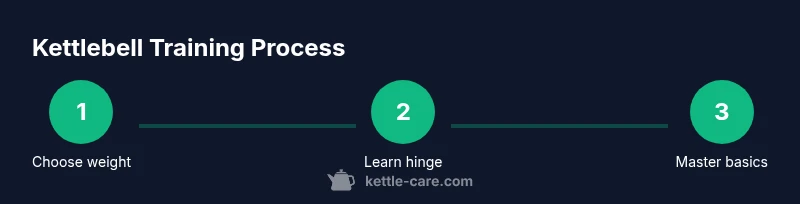
Select a weight that allows 8-12 controlled repetitions with proper form. If you can't maintain a neutral spine and braced core, drop to a lighter weight and focus on technique.
Tip: Starting with a lighter weight improves form and reduces injury risk. - 2
Set up with proper stance and grip
Stand with feet hip-width apart, toes slightly turned out. Grip the handle firmly but not tightly, with wrists neutral and knuckles aligned over the forearm. Engage the lats and brace the core before every rep.
Tip: A strong setup prevents compensations during movement. - 3
Learn the hip hinge before any swing
Practice pushing hips back while keeping a neutral spine and a slight knee bend. The hinge is the foundation of all kettlebell movements and protects the back.
Tip: Imagine you are closing a car door with your hips, not bending with your back. - 4
Perform the hip hinge and basic swing
From the hinge, swing the kettlebell with hips generating the momentum, not the arms. Maintain a tall chest, engaged core, and controlled breath. Stop at chest or eye level depending on your experience.
Tip: Initiate the move with the hips, not the arms. - 5
Add goblet squats for leg strength
Hold the kettlebell close to your chest in a goblet grip. Stand tall, brace your core, and push your hips back into a squat. Keep your chest up and weight in the heels.
Tip: Keep the weight close to the body to reduce forward lean. - 6
Progress to Turkish get-up gradually
Break the get-up into its components and master each one with a light bell. Take your time with transitions and breathe steadily through each phase. Do not rush the process.
Tip: Master the hip bridge and side plank components before attempting full get-ups. - 7
Cool down and re-evaluate form
Finish with a 5–10 minute cooldown of mobility work and deep breathing. Reassess technique using slow, deliberate reps and reflect on any soreness or niggles.
Tip: Keep a short training log to monitor progress and form changes.
Frequently Asked Questions
What is the safest way to start kettlebell training?
Begin with a light weight and learn the hip hinge, goblet squat, and braced core. Prioritize form, warm up thoroughly, and progress gradually as you gain confidence. If pain occurs, stop and reassess technique or consult a professional.
Start with light weight and perfect the hip hinge, goblet squat, and braced core. Slow progression and proper warm-up are your safest path.
How heavy should my first kettlebell be?
Choose a weight that you can lift with control for 8-12 reps while maintaining a neutral spine. If the form falters, switch to a lighter bell and reinforce technique.
Pick a weight you can control for 8 to 12 reps with good form; if you wobble, go lighter.
Which kettlebell movement should I learn first?
Start with the hip hinge and goblet squat. These establish safe mechanics for posterior chain strength and leg development before progressing to swings or get-ups.
Begin with hip hinge and goblet squats to build solid fundamentals.
What warm-up is recommended before kettlebell workouts?
Do 5-8 minutes of light cardio, followed by mobility drills for hips, spine, shoulders, and ankles. Include shoulder activation and thoracic rotations to prep for presses and swings.
Warm up with light cardio and targeted mobility to prep shoulders, hips, and spine.
How often should I train with kettlebells?
For beginners, 2-3 sessions per week with at least one rest day between sessions works well. Increase gradually as technique and recovery improve.
Start with 2-3 kettlebell sessions a week and listen to your body.
Watch Video
Highlights
- Choose a manageable weight and prioritize form.
- Master the hip hinge before attempting swings.
- Progress gradually with clear form checks.
- Warm up properly to protect joints and tissues.
- Consistency beats intensity for long-term gains.