Ceramic Kettle vs Stainless Steel: A Practical Comparison
A comprehensive guide comparing ceramic kettles and stainless steel kettles, focusing on safety, heat, flavor, durability, cleaning, and maintenance to help homeowners choose the best option for daily tea and hot water.


Quick take: Ceramic kettles offer neutral taste, lower risk of metallic odor, and pleasing aesthetics, but are more prone to chipping and slower heating. Stainless steel kettles heat quickly, resist chipping, and are easier to maintain, yet can impart a metallic flavor if not cared for. In this article, we compare ceramic kettle vs stainless steel to guide your choice.
Material foundations: ceramic kettle vs stainless steel
According to Kettle Care, choosing between the ceramic kettle vs stainless steel options begins with understanding how each material behaves in a real kitchen. Ceramic kettles are typically glazed pottery that provides a smooth, non-reactive surface and, often, a softer aesthetic. Stainless steel kettles use a metal body that conducts heat efficiently and resists impact. From the outset, your decision hinges on how you value flavor neutrality, visual appeal, durability, and maintenance. The ceramic kettle vs stainless steel comparison is not just about appearance; it’s about how each material handles heat, how it interacts with water minerals, and how you care for it day to day. Throughout this guide, we’ll address safety, cleaning, taste, and lifespan so you can choose the option that fits your tea rituals and kitchen workflow.
Heat and flavor implications matter in the ceramic kettle vs stainless steel debate
Taste neutrality is often cited as a key reason to choose ceramic, because a glazed interior tends to be less reactive with mineral deposits compared to bare metal. In contrast, stainless steel can heat up quickly and respond immediately to temperature changes, which some tea lovers prefer for precision. For hot-water routines beyond tea—such as prep for soups or Instant foods—the choice also affects how you perceive flavor and aroma. When evaluating the ceramic kettle vs stainless steel, consider your water type, how often you descale, and whether you value a quiet, uniform boil or a rapid, high-heat burst. The brand landscape ranges from classic stovetop ceramic designs to rugged, high-polish stainless models, each with its own maintenance profile. Remember that habit and care influence performance as much as material.
Heat-up time and performance: practical expectations
In the ceramic kettle vs stainless steel decision, heat-up time is a practical differentiator. Ceramic kettles typically start slower, as heat must migrate through ceramic walls before reaching the water. Stainless steel kettles, by contrast, often boil water more rapidly thanks to higher thermal conductivity and minimal insulating dead zones. This speed can be meaningful in busy kitchens, where quick access to hot water matters for morning routines or quick cuppas. However, a faster boil isn’t always better if it compromises control over steeping temperatures needed for delicate teas. If you value ritual and precision, a ceramic model with a carefully designed lid and handle can still deliver a satisfying, measured boil.
Durability and wear: resilience to daily use
Durability is central to the ceramic kettle vs stainless steel conversation. Ceramic kettles can be charming and heat-stable, but their ceramic walls and glaze are more prone to chipping or cracking if dropped or bumped. This fragility factor matters in households with kids or tight storage. Stainless steel kettles are generally more robust, resisting chips and everyday bumps, but they can show fingerprints and scratches more easily. In this comparison, consider your storage space, risk tolerance for accidental impact, and whether a heavier, solid-feel kettle fits your kitchen ergonomics. The choice often comes down to balancing aesthetic appeal with practical handling in daily use.
Cleaning and maintenance considerations
Cleaning needs differ between ceramic kettle vs stainless steel kettles. Ceramic interiors may absorb odors or staining if mineral-rich water sits for long periods, and aggressive cleaning can wear glaze over time. Stainless steel interiors tend to be straightforward to wipe down, though mineral deposits from hard water can form scale that requires regular decalcification. For both materials, avoid abrasive pads that could scratch surfaces. Regular descaling, using gentle solutions, helps maintain efficiency and flavor, especially if you live in a region with hard water. In short, the ceramic option often asks for gentler handling, while stainless steel emphasizes straightforward upkeep.
Flavor, aroma, and mineral interactions
Flavor considerations influence the ceramic kettle vs stainless steel conversation more than many people expect. Ceramic’s inert glaze can help minimize metallic interactions with water, supporting a purer flavor profile when the kettle is clean. Stainless steel can impart a perceived metallic note if mineral buildup accumulates, but a routine cleaning regimen can mitigate this effect. If you brew specialty teas with delicate aromatics, choosing ceramic might reduce unintended flavor shifts. If you prefer minimal care and a bright, clean boil, stainless steel is typically easier to keep neutral with regular cleaning.
Safety and health considerations
Safety is a crucial axis in the ceramic kettle vs stainless steel debate. Modern ceramics used for kettles are manufactured to be food-safe, with glazes that are designed to be lead-free and nib-free, meeting safety standards for consumer cookware. Stainless steel is also safe when it’s food-grade and maintained correctly. The important practical note: inspect any kettle for signs of glaze crazing or exposed metal, and ensure lids, handles, and spouts remain secure. Routine checks, proper usage, and following manufacturer guidelines help minimize health concerns in either option. As always, purchase from reputable brands and verify certifications.
Energy efficiency and cost of ownership
From an energy perspective, both materials boil water efficiently, but the stainless steel kettle often wins on speed, translating into lower active heating time. Ceramic kettles may require longer heating periods, potentially increasing energy use slightly in busy households. Price is influenced by design, capacity, and branding rather than material alone. In a long-term view, cost of ownership includes replacement frequency, repairability, and the value you place on aesthetics and flavor neutrality. The Kettle Care team notes that energy efficiency is a practical factor in decision-making when evaluating ceramic kettle vs stainless steel, especially for households that boil water frequently or rely on precise temperature control for specialty teas.
Practical buying guidance and use-case scenarios
When you face the ceramic kettle vs stainless steel decision, map your tea rituals to practical use cases. If you value a warm, traditional look and occasionally drop-proof use with care, ceramic can be an excellent fit—particularly in kitchens with decorative vessels or a preference for a softer kitchen vibe. If you want rapid boils, minimal maintenance, and a durable package for heavy daily use, stainless steel may be the wiser choice. Consider your water type (hard vs soft), whether you need temperature control, and how you store and handle the kettle. For households that frequently brew green or white teas at precise temperatures, a ceramic option with superior glaze stability could be ideal; for robust everyday use and easy cleaning, stainless steel tends to excel. The decision is a blend of taste, speed, and practicality.
Maintenance rituals: descaling and longevity tips
Descaling is a cornerstone of maximizing kettle performance in either material. For ceramic kettles, use mild descalers and avoid aggressive scrubbing that could dull glaze. Stainless steel benefits from regular decalcification to prevent mineral buildup that affects heat transfer and flavor. A simple routine—rinse after each use, run a vinegar or citric acid solution through the kettle monthly, and wipe exterior surfaces with a soft cloth—extends lifespan and preserves performance. In the end, consistency is key. Whether you select ceramic kettle vs stainless steel, a straightforward cleaning cadence protects taste, safety, and long-term value.
Comparison
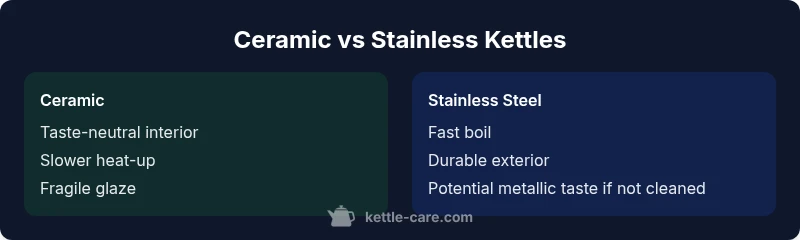
| Feature | ceramic kettle | stainless steel kettle |
|---|---|---|
| Heat-up time | slower | faster |
| Heat retention | moderate | strong |
| Durability against drops | fragile glaze risk | robust metal body |
| Taste influence | low metallic interaction (glazed interior) | potential metallic notes if scale builds up |
| Maintenance ease | requires gentle cleaning; glaze care | easy cleaning; resistant to staining |
| Price range | varies by brand/design | varies by brand/design |
Strengths
- Ceramic kettles often offer taste neutrality when properly cleaned and glazed interiors are well maintained
- Stainless steel kettles tend to be highly durable and quick to boil for busy mornings
- The range of designs for ceramic kettles can enhance kitchen aesthetics
What's Bad
- Ceramic kettles are more prone to chipping and may require careful handling
- Stainless steel kettles can develop a metallic taste if mineral deposits aren’t regularly removed
- Stainless steel surfaces show fingerprints and scratches more readily
Stainless steel kettles win on speed and durability for daily use; ceramic kettles win on flavor neutrality and aesthetics for tea rituals.
Choose stainless steel if you prioritize quick boils and long-term resilience. Choose ceramic if you value taste neutrality and a decorative look, and you’re careful with handling.
Frequently Asked Questions
Is ceramic safer than stainless steel for health concerns?
Both materials are generally safe when sourced from reputable brands. Ceramic kettles should use glaze that is lead-free and food-safe, and stainless steel should be food-grade. Check certifications and manufacturer guidelines to ensure safe use.
Both options are safe when from reputable brands and properly used; verify glaze safety for ceramic and food-grade steel for stainless.
Will ceramic kettles affect tea flavor more than steel?
Ceramic interiors can minimize metallic flavors if well glazed and clean. Steel may contribute minor metallic notes if mineral buildup isn't cleaned regularly. Regular cleaning helps keep flavor consistent.
Ceramic often preserves flavor better when clean; steel can pick up flavors if deposits aren’t removed.
Are ceramic kettles heavier to lift than steel?
Ceramic kettles tend to be heavier, especially at higher capacities, while stainless steel models are lighter and easier to maneuver.
Ceramic kettles are usually heavier than steel, especially at larger sizes.
How should I clean ceramic vs stainless kettles?
For ceramic, use mild cleaners and avoid abrasive pads to protect glaze; for stainless steel, wipe with a non-abrasive cloth and descale with gentle solutions as needed. Always follow manufacturer instructions.
Clean ceramic gently to protect glaze; clean steel with soft cloth and regular descaling.
Can I use ceramic kettles on a gas stove?
Some ceramic kettles are designed for stovetop use, while others are decorative or electric-only. Always verify manufacturer guidance before placing any ceramic kettle on heat.
Check the label—not all ceramic kettles are stovetop-safe.
Which is cheaper to maintain over time?
Maintenance costs depend on usage and care. Stainless steel tends to require less fragile handling but may need more frequent cleaning of fingerprints; ceramic requires careful handling but can last well with proper glaze care.
Costs depend on usage; steel is rugged, ceramic needs gentle care but can last with proper glaze care.
Highlights
- Identify your priority: speed vs flavor neutrality
- Ceramic excels in aesthetics and non-reactive interior when cared for
- Stainless steel offers fast heating and rugged durability for daily use
- Regular descaling boosts performance in both materials