Stainless Steel Kettle vs Glass: A Practical Comparison
A detailed, analytical comparison of stainless steel kettle vs glass, covering heating speed, safety, durability, cleaning, aesthetics, and price to help you choose the right kettle for everyday boiling in 2026.


Stainless steel kettles boil quickly and endure daily use, while glass kettles let you watch the water as it heats. When choosing between a stainless steel kettle vs glass, consider how you boil, view water, and maintain the vessel. According to Kettle Care, your daily routine and stove type will likely determine the best fit for your kitchen.
Why Material Matters in Everyday Boiling
When you're choosing between a stainless steel kettle vs glass, material choice shapes how quickly your water reaches a boil, how evenly it heats, and how easy it is to maintain. In practical terms, the stainless steel kettle vs glass decision affects not only speed but also durability, safety, and cleanup. From the perspective of homeowners, tea lovers, and busy cooks, understanding the trade-offs helps you pick a vessel that fits your kitchen routine and preferences. According to Kettle Care, material performance is a practical predictor of daily boiling reliability, especially for frequent tea drinkers and small households. Throughout this guide we compare the two common options and translate features into real-world consequences. The choice isn't only about aesthetics; it's about how a kettle behaves under your typical boil schedule, whether you need rapid water for an early-morning tea or a quiet simmer for bottle-warming. In the stainless steel kettle vs glass debate, you should weigh speed, visibility, cleaning, and long-term upkeep as you read the rest of this article.
Thermal Performance: Heating Speed and Retention
Heat transfer is at the core of the stainless steel kettle vs glass debate. Stainless steel pots are typically shaped to maximize bottom heat transfer from electric coils or gas flames, which can translate into faster boil times in many designs. Glass kettles, often made from borosilicate glass, provide a visually satisfying view of the bubbling water but may heat more gradually depending on base thickness and heating element design. In practice, the speed difference is modest for most households, and the outcome depends on the kettle’s base, wall thickness, and whether the kettle uses a separate heating element or an induction-compatible base. Both materials can hold heat well once the water is at a boil, with glass sometimes losing heat a bit faster if the outer surface is thin or poorly insulated.
Safety and Cleanliness: Contact with Water, Steel, and Glass
Stainless steel kettles are generally very durable and resistant to staining; inner linings (often aluminum or nonstick) and kettle mouth design can influence safety and flavor neutrality. Glass kettles give a transparent view of water quality, which helps you notice mineral deposits early. Borosilicate glass resists thermal shock but remains brittle if dropped. Both materials can be designed to be BPA-free and food-safe; routine descaling and regular cleaning protect taste and extend life. The bottom line: pick a model with a safe interior lining and switch on a proper cleaning routine to minimize mineral buildup. For homes with young children or busy mornings, the ability to see water level or residue can influence the cleaning frequency and perceived safety.
Durability, Care, and Longevity
Stainless steel kettles survive daily use with minimal surface damage; their hard shells resist dents and chipping when handled cautiously. Glass kettles, while attractive, require careful handling to avoid cracks from accidental knocks or temperature shocks. A well-made glass kettle with a heat-resistant base offers a longer service life than a budget glass option. Regardless of the material, routine care—like descaling, wiping the exterior, and avoiding sudden temperature changes—yields the best long-term results. Kettle Care recommends periodic inspection of the lid and gasket seals to prevent leaks and ensure tight closures despite frequent reheats.
Aesthetics and Kitchen Fit: Style, Visibility, and Space
Appearance matters in kitchen design, and the stainless steel kettle vs glass can convey different vibes. Stainless steel presents a sleek, modern look that hides water spots and fingerprints fairly well, making it practical for busy households. Glass kettles showcase the water as it heats, offering a bright, contemporary aesthetic that suits glass-front cabinets or minimalist kitchens. The choice can also influence perceived cleanliness: glass makes scale visible, which prompts regular cleaning; stainless steel hides imperfections but shows fingerprints more readily. Consider how your other appliances, cabinet finishes, and faucet hardware align with your kettle choice.
In larger kitchens or open-plan spaces, the visual footprint of the kettle can impact overall design coherence. A stainless steel finish can integrate with stainless appliances; a glass kettle can act as a centerpiece in a bright, modern scheme.
Practical Use Cases: Tea Lovers, Coffee, and Everyday Boiling
For tea enthusiasts, the water temperature and clarity matter. Glass kettles let you watch the water reach a rolling boil and gauge when to remove from heat, while stainless steel kettles keep the water hotter for longer if you want constant warmth. For households using induction stoves, check the base compatibility: induction-compatible stainless steel kettles perform reliably on most cooktops; glass versions require a compatible heating surface or an induction base. Coffee lovers will appreciate a fast, steady boil and a sturdy lid on stainless steel; those who enjoy a clear view of the brew may prefer glass for a ritual-like experience. If you frequently boil just a small amount of water, a compact model—regardless of material—can save energy and time.
Cleaning and Descaling: Best Practices
Descaling is essential for both materials to prevent mineral buildup that can affect taste and boiling efficiency. For stainless steel, use a mild acidic solution (e.g., white vinegar or citric acid) and a soft sponge to avoid scratching the exterior or interior lining. Glass kettles can show deposits more clearly, so regular cleaning with a non-abrasive cleaner keeps the appearance pristine. Always follow manufacturer instructions regarding base components and lids; avoid harsh abrasive pads. A well-maintained kettle should reach a boil quickly and evenly, regardless of material. Regular maintenance also extends the life of seals and lids, reducing the likelihood of leaks.
Price, Availability, and Value: What to Expect
Prices for stainless steel kettles vs glass kettles vary by brand, capacity, and features such as temperature control or built-in whistles. In general, stainless steel kettles offer strong value with durable construction and wide availability, often at mid-range price points. Glass kettles tend to cost a premium for aesthetics and visibility, with some models featuring color options or decorative designs. When evaluating value, consider your priority: speed and durability (stainless) or visual appeal and monitoring (glass). Seasonal sales and bundle offers can also influence overall cost, making it possible to find a good deal on either material.
Making the Choice: Quick Decision Guide
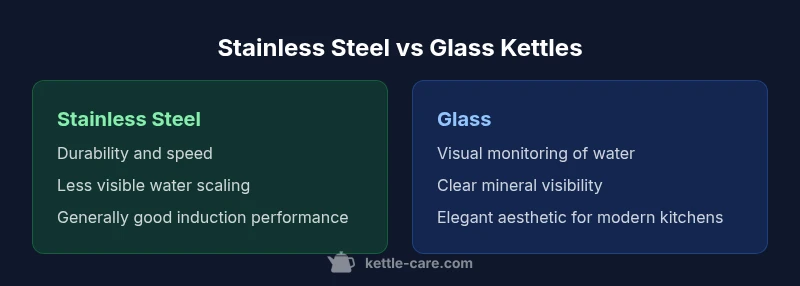
To decide between a stainless steel kettle vs glass, map your priorities to three practical criteria: speed, durability, and visibility. If you want a rugged, fast-boiling vessel that handles daily use with minimal fuss, a stainless steel kettle is the safer bet. If you prize watching the water boil, enjoy a cleaner kitchen aesthetic, and are careful with handling, a glass kettle may suit you best. Check your stove compatibility, lid design, and inside coatings before purchase, and read reviews focusing on reliability and customer support. By aligning your choice with how you actually boil water, you’ll pick the kettle that fits your kitchen rhythms.
Comparison
| Feature | Stainless Steel Kettle | Glass Kettle |
|---|---|---|
| Material | Stainless steel | Borosilicate glass |
| Heat Up Time | Often faster to boil on compatible bases | Comparable, may be slightly slower depending on base |
| Heat Retention | Excellent heat retention with metal body | Good retention; visually monitor water as it heats |
| Durability | High durability; resistant to dents and scratches when handled well | Fragile to impact and thermal shock; careful handling required |
| Ease of Cleaning | Interior coatings vary; many are easy to clean and dishwasher-safe | Glass shows deposits clearly; may require more frequent cleaning |
| Price Range | Typically mid-range to premium depending on base quality | Typically mid-to-high, driven by design and visibility features |
| Best For | Daily use, ruggedness, and speed | Aesthetic appeal and water visibility for rituals |
Strengths
- Clear water visibility helps monitor levels and mineral buildup
- Stainless steel delivers durability and rapid boiling performance
- Both materials can be food-safe when manufactured properly
- Wide model variety across price points for different budgets
What's Bad
- Glass kettles are more prone to cracking from impact or thermal shock
- Stainless steel may show fingerprints and water spots over time
- Glass models can be heavier and less induction-friendly in some designs
- Some models have varied interior coatings that affect cleaning and flavor
Stainless steel kettles generally offer better durability and boil speed, while glass kettles excel in visibility and visual appeal
Choose stainless steel if you prioritize ruggedness and quick heating. Opt for glass if you value watching the boil and prefer a decorative touch in your kitchen.
Frequently Asked Questions
Are stainless steel kettles safer than glass kettles?
Both materials can be safe when the kettle is food-grade and properly maintained. Stainless steel is highly durable and less prone to cracking, while glass provides a non-reactive surface and clear visibility of water quality. Always follow manufacturer guidelines for heat exposure and cleaning.
Both materials can be safe if well maintained; stainless steel is rugged, glass offers visual transparency. Follow care guides to keep them safe.
Which boils water faster, stainless steel or glass?
Boiling speed depends more on base design, wall thickness, and heating element than on the material alone. In many setups, stainless steel kettles reach a boil quickly due to efficient heat transfer at the base. Glass kettles can be just as fast with a good base and appropriate heat source.
Boiling speed varies with the base and heating element; stainless steel often heats quickly, but glass can be fast too with the right base.
Are glass kettles more prone to cracking or shattering?
Yes, glass kettles are more susceptible to cracking or shattering from impacts or sudden temperature changes. Choose models with sturdy borosilicate glass and use gentle handling. Always avoid pouring cold water into a hot kettle or placing a hot kettle on a cold surface.
Glass kettles can crack if dropped or shocked by temperature changes; handle with care.
Can I use stainless steel or glass kettles on induction stoves?
Induction compatibility depends on the base: most stainless steel kettles with a magnetic, flat bottom work on induction. Many glass kettles require a compatible base or adapter. Always check the product specs for induction suitability.
Most stainless steel models work on induction; glass needs a base that supports induction.
Do material differences affect taste or aroma?
In well-made kettles, material has minimal impact on taste. Interior coatings, if present, can influence flavor over time. Glass makes mineral deposits visible, which helps you clean before tasting any changes in water quality.
Material itself usually doesn’t change taste; coatings and cleanliness matter more.
What maintenance steps are common to both stainless steel and glass kettles?
Descale regularly to remove mineral buildup, clean the exterior with a non-abrasive cloth, and inspect lids and seals for wear. Use the recommended cleaners, and avoid harsh abrasives that could scratch metal or glass.
Regular descaling and gentle cleaning keep both kettles performing well.
Highlights
- Prioritize durability and speed with stainless steel for high-use kitchens
- Choose glass when visibility and aesthetics matter
- Check stove compatibility and lid design before purchasing
- Regular descaling and cleaning extend kettle life