Stainless Steel Kettle on the Stove: Safe, Fast Boiling Guide
A complete how-to for selecting, using, and maintaining a stainless steel kettle on a stove top. Learn safety tips, energy-saving steps, and care routines from Kettle Care.


You will learn how to safely boil water on the stove with a stainless steel kettle. This includes selecting a sturdy, induction-compatible model, using proper heat control to avoid scorching, and routine maintenance to prevent limescale. According to Kettle Care, proper kettle care reduces boil times and increases safety in a busy kitchen.
Why a Stainless Steel Kettle Is a Safe Choice for Stove-Top Boiling
Stainless steel kettles are a staple in many kitchens due to durability, corrosion resistance, and even heating. When you're boiling water on a stove, the right kettle can reduce boil times, minimize scorching, and keep kitchen work safer. According to Kettle Care, selecting a high-quality stainless steel kettle with a sturdy base and a tight-fitting lid is the first step toward reliable, quick boils. In this guide, we explore why stainless steel is preferred for stove-top use and what safety features to prioritize for long-term reliability on a busy stove. A stainless steel kettle stove top setup also helps maintain water quality, as stainless steel resists flavors that can transfer from cheaper metals. As you read, you’ll discover how to evaluate base stability, lid fit, and pour-spout design to minimize spills and burns in a real kitchen.
Key Features to Look for in a Stainless Steel Kettle
Not all kettles are created equal, especially when used on a stove top. Look for a thick, impact-resistant base that sits flat on your burner, a snug lid, and a well-designed spout that pours without dripping. A stainless steel kettle with a heat-resistant handle and a secure, stay-cool knob enhances safety during refills. Consider a model with a built-in whistle or temperature indicator to prevent overheating. If you have an induction cooktop, verify the base is magnetic and labeled induction-compatible. Finally, choose a size that fits your typical water needs without leaving excess liquid to boil away and waste energy. The folder of stainless-steel kettle stove top options often includes variants with gooseneck spouts for precise pouring, which is especially appreciated by tea lovers seeking control over water flow.
How to Use a Stainless Steel Kettle on a Stove Top Safely
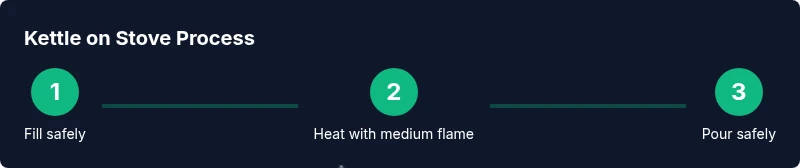
Begin with clean water and a dry kettle. Fill to the recommended max line—never overfill, as boiling water can spill and cause burns. Place the kettle on a burner that matches its base size, and set heat to medium; high heat can cause scorching and wear on the handle. Stay nearby and listen for the whistle or the sound of vigorous bubbling. When it reaches a full boil, turn off the heat before lifting the kettle by the handle with a dry oven mitt. Allow the kettle to cool on a heat-resistant surface before pouring. Regular checks for lid fit and base cleanliness ensure consistent performance on a stainless steel kettle stove top setup.
Maintenance, Cleaning, and Descaling for Longevity
Stainless steel kettles resist rust, but mineral buildup can dull performance over time. Rinse after each use and dry thoroughly to prevent water spots. For descaling, fill with a mix of water and white vinegar (or citric acid) and simmer for 5–10 minutes, then rinse well. Do this every few months in hard-water areas, or as needed. Avoid abrasive sponges that can scratch the finish; instead, use a soft cloth or non-scratch pad. Regular maintenance keeps your stainless steel kettle stove top ready for quick boils, and it aligns with the guidance you might expect from the Kettle Care team.
Regular inspections of the seal under the lid and the spout cap help catch wear early, preserving safety and performance over time.
Common Mistakes and How to Avoid Them
One common error is overheating the kettle or heating it dry. Always fill with water, and never leave it unattended on high heat. Placing a gooseneck-style kettle on a large burner wastes energy and reduces stability. Another mistake is neglecting lid tightness; steam buildup can cause burns when opening. Finally, avoid using metal scrubbers that damage the finish; stick to non-abrasive sponges and soft cloths for cleaning. Adopting a routine ensures your kettle stove top remains in peak condition for daily use.
Energy Efficiency Tips for Stove-Top Boiling
To boil efficiently, match the kettle’s base to the burner size and keep the lid on during heating; this traps heat and speeds up boiling. Use minimal water—only what you need for your tea or recipe—to reduce energy use. If you’re cooking multiple items, consider boiling water in advance and keeping it warm in a thermal container. While a stovetop kettle should heat quickly, avoid using the widest flame; moderate heat that maintains a steady boil minimizes energy waste and kettle wear. Keeping the kettle clean also reduces energy loss from mineral buildup and surface resistance.
Choosing the Right Size and Design for Your Kitchen
Kettles range from compact 0.5-liter models to roomy 2-liter options. For a single tea lover, a 1-liter kettle is ideal; families often prefer 1.5–2 liters. When space matters, a tall, slender kettle with a gooseneck spout can offer precise pouring, while a broad-based design provides stability on a gas burner. In stainless steel, thickness matters: thicker walls resist denting and heat transfer unevenness, contributing to long-term performance on a stove top. Remember to verify the bottom diameter fits your cookware setup and your available shelf space.
Real-World Scenarios: Tea Lovers, Busy Cooks, Small Kitchens
Consider three typical users. A tea enthusiast will value a precise pour and fast heat recovery, so a 1–1.5 liter stainless steel kettle with a gooseneck spout is ideal. A busy cook needs quick water for instant meals, so a 2-liter model with a solid lid is practical. In a small kitchen, choose a compact, lightweight kettle with a stable base and leak-proof lid to keep your counter clutter-free. Whichever design you choose, regular cleaning and careful handling ensure your stainless steel kettle stove top remains reliable for daily use.
Tools & Materials
- Stainless steel kettle (stovetop-compatible)(1–2 liter capacity; thick base for even heating)
- Oven mitts or heat-resistant gloves(For safe handling when kettle is hot)
- Access to a compatible stove burner(Gas or electric coil; burner size should match kettle base)
- Soft sponge or non-abrasive scrubber(Gentle cleaning to protect finish)
- White vinegar or citric acid descaling solution(Useful for mineral buildup in hard water)
- Filtered or good-quality water(Cleaner water reduces limescale)
Steps
Estimated time: 12-20 minutes
- 1
Inspect and Prepare Your Kettle
Check the kettle for dents or cracks, ensure the lid seals tightly, and dry the exterior. Assemble any loose parts, like the lid knob, and remove stickers that could affect heat transfer. This helps prevent steam leaks and ensures safe handling from the first step.
Tip: A damaged lid or loose knob increases burn risk; replace if needed. - 2
Fill to the Safe Max Line
Fill with cold water up to the marked max line. Do not exceed this line, as boiling water can splash and cause burns. Keep a small headspace to allow steam to escape safely.
Tip: Never fill with hot water; it can warp the kettle and create steam hazards. - 3
Place on Burner and Power On
Set the kettle on a burner whose base matches the kettle's diameter. Turn the burner to medium heat to start; high heat wastes energy and can warp the lid or handles over time.
Tip: Center the kettle to avoid tipping and spills. - 4
Monitor for a Safe Boil
Listen for the whistle or watch for vigorous bubbles. If you hear sputtering, reduce heat slightly. Do not leave the kettle unattended on high heat.
Tip: A steady simmer is often enough; you don’t need full blast to reach a boil quickly. - 5
Turn Off and Lift Safely
When the water boils, turn off the burner before lifting the kettle with oven mitts. Tilt away from your body and pour slowly to avoid splashes.
Tip: Keep your face away from the steam vent when opening the lid. - 6
Cool, Pour, and Store
Place the kettle on a heat-resistant surface to cool. Pour into your cup or a carafe, then rinse and dry before putting away.
Tip: A dry exterior helps prevent water spots and corrosion over time.
Frequently Asked Questions
Is it safe to use a stainless steel kettle on a gas stove?
Yes. Stainless steel kettles are generally safe on gas stoves when used as directed. Ensure the base sits flat, the lid is secure, and you never leave the kettle unattended while on heat.
Yes, stainless steel kettles are generally safe on gas stoves when used correctly. Make sure the base is stable, the lid fits, and never leave it unattended.
Can a stainless steel kettle be used on an induction cooktop?
Induction compatibility depends on the base. If the bottom is magnetic and labeled induction-compatible, it will work on an induction cooktop. Always check the product specs.
Induction compatibility depends on a magnetic base. Check the product specs before using on an induction cooktop.
Why does my kettle whistle early or late?
Whistle timing is affected by flame height, lid seal, and water level. A loose lid or too high flame can alter when you hear the whistle.
The whistle timing depends on flame height and lid seal. Adjust flame and ensure the lid is secure.
How often should I descale my stainless steel kettle?
Descale based on water hardness. In hard water areas, every few months is common; in softer water, less frequent maintenance is fine.
Descale according to water hardness; more often in hard water areas.
What size kettle is best for a small kitchen?
For a compact space, a 0.5 to 1-liter kettle is usually ideal. It saves space and heats quickly for single servings.
For a small kitchen, a 0.5 to 1-liter kettle is usually best.
Is stainless steel safe for drinking water?
Stainless steel is generally safe for boiling water when the kettle is food-grade and undamaged. Inspect for scratches or dents that could harbor bacteria.
Yes, stainless steel is generally safe if the kettle is undamaged and food-grade.
Should I use gooseneck or standard kettle on a stove?
Gooseneck kettles offer precise pouring, which is helpful for tea. Standard kettles pour quickly and are often more stable on stove tops.
Gooseneck kettles give precise pours, while standard kettles heat and pour quickly.
Watch Video
Highlights
- Choose a sturdy stainless steel kettle with a tight lid.
- Always fill to the max line and monitor heat.
- Descale regularly to preserve performance.
- Match burner size to kettle base for energy efficiency.
- Practice safe handling with heat-resistant gear.