Kettle Stove Care: Safe, Efficient Boiling Guide
Learn how to safely use a kettle on a stove, maintain it with descaling, and optimize boil times. This step-by-step guide from Kettle Care covers safety, technique, and long-term care for stovetop kettles.


Learn how to safely operate a kettle on a stove, compare stovetop kettles vs electric, and maintain your kettle with descaling and cleaning. This guide provides 9 clear steps, safety warnings, and a practical maintenance checklist to keep boiling fast, safe, and energy-efficient. Whether you brew tea daily or simmer soups, this approach saves time and protects your kettle.
Understanding the kettle stove setup
Water boils on a stove through direct heat transfer from the flame or coil to the kettle's bottom. A flat, sturdy bottom ensures even heat distribution, which helps avoid hotspots that can warp thinner metals over time. Stovetop kettles come in various materials, with gas, electric coil, and induction surfaces requiring different clearances and bases. The Kettle Care team emphasizes selecting a kettle with a heavy, flat base and a robust handle that stays cool enough to touch. Regular checks on the lid seal and spout are part of safe daily use. The goal is predictable energy use and consistent boil times, while preventing residue buildup that can alter flavor. For tea lovers, precise boil control matters for extraction, so understanding how heat transfers from stove to kettle helps you time your steeping more reliably. Routine cleaning and descaling contribute to steady performance and prolong your kettle’s life.
Choosing the right kettle for stove heating
Choosing a kettle that matches your stove and your cooking style is the first step to safer, faster boils. Stainless steel kettles are durable and easy to clean, while copper or brass bottoms can conduct heat more evenly but may require more careful care against tarnish. A flat, wide base ensures uniform contact with the stove surface, reducing hot spots. If you value a built-in whistle, check that the spout and lid allow smooth, quiet operation. For gooseneck lovers, note that some gooseneck designs are optimized for controlled pouring but may heat more slowly than traditional broad-bottom kettles. The Kettle Care analysis highlights compatibility with your heat source and the kettle’s material as key predictors of reliability and longevity. Remember to inspect the handle, hinge, and lid fit for signs of wear before purchase, as these parts affect daily use and safety.
Safety basics before heating
Before you heat any kettle on a stove, perform a quick safety check. Ensure the kettle is dry outside and inside, the lid closes snugly, and the handle is free of cracks. Place the kettle firmly on a stable burner, centering it to avoid tipping. Keep flammable materials away from the flame, and never leave the kettle unattended while it’s heating. If your stove has a loud burner or uneven flames, use a heat diffuser to distribute heat more evenly and reduce the risk of scorching. The Kettle Care Team emphasizes keeping a small fire-safety kit nearby and having a timer or watch to avoid overboiling.
Proper heating technique on a stove
A safe, consistent boil starts with controlled heat. Fill the kettle to about three-quarters to leave room for rolling boil, then place it centrally on the burner. Start on medium heat and adjust to maintain a steady boil without a sudden surge. Watch for the whistle or steam to indicate a boil, then turn off or reduce heat and remove the kettle from direct flame to prevent scorching the base. Use a dry cloth or potholder when lifting the kettle. Avoid overheating dry kettles, which can warp metals or degrade seals. If you’re boiling for tea, timing starts as soon as you hear a steady boil. The goal is a rapid, controlled boil with minimal energy waste.
Descaling and cleaning to prevent limescale
Descaling keeps kettles performing well and avoids off flavors. A common method is to fill the kettle with a descaling solution or a 1:1 mix of water and white vinegar, then bring to a gentle boil and let it sit for 10–20 minutes. Rinse thoroughly with clean water, then boil fresh water a couple of times to remove any remaining vinegar taste. For regular maintenance, wipe the exterior with a damp cloth and dry completely to prevent water spots. Kettle Care’s guidance suggests descaling more often in hard water areas and after every few months of heavy use to maintain efficiency and taste.
Energy efficiency and boil times
Maximize efficiency by keeping the kettle covered so heat stays inside. Use the smallest appropriate kettle for the amount of water to minimize energy waste and boil time. If your stove has flames that lick the sides of the kettle, reduce heat or switch to a diffused burner. Pre-warming water slightly with hot tap water can shave seconds off boil time in some setups, though this depends on your water temperature and equipment. The key is avoiding prolonged heat exposure once the water reaches a rolling boil, which wastes energy and may degrade the kettle’s enamel or coating over time.
Maintenance schedule and long-term care
Establish a simple routine to keep your kettle in top shape. Wipe down after each use and descale every few months or sooner in areas with especially hard water. Inspect the lid and handle monthly for signs of wear, and check the bottom for scratches or warping after heavy use. Keeping a habit of quick cleanups and descaling help preserve flavor integrity and extend the kettle’s life. The Kettle Care Team recommends documenting a brief maintenance log so you know when you last descale or replaced a worn gasket.
Accessories that improve performance
Consider accessories that enhance safety and efficiency. A heat diffuser can smooth out heat on gas stoves, reducing hotspot risk. A well-fitting lid reduces boil time and prevents evaporation. If you pour frequently, a gooseneck kettle offers precise flow but may require different handling on a stove. Ensure any accessory is designed for stove use and that it sits securely on your burner. These additions can shorten boil times and keep your water tasting clean.
Troubleshooting common kettle stove issues
Common issues include slow boils, limescale buildup, and strange aftertastes. If boiling is slow, check for mineral deposits and clean or descale as needed. A dull whistle or irregular steam flow can indicate a blocked vent or a loose lid; reseat or replace components as necessary. If the water tastes metallic or sulfurous, descale and clean the interior thoroughly and consider using filtered water to reduce mineral content. For gas stoves, ensure the flame is centered under the kettle and that heat is distributed evenly.
Safe storage and post-use care
After use, dry the kettle completely to prevent rust and mineral deposits. Store with the lid ajar to allow air circulation, especially in humid kitchens. Regularly inspect the exterior enamel or coating and repair any chips to prevent corrosion. A dry, well-ventilated storage space keeps the kettle in better shape for longer and helps maintain the flavor of future boils.
Tools & Materials
- Stovetop-compatible kettle (stainless steel preferred)(Flat bottom for even heat; ensure lid fits snugly)
- Lid with a secure seal(Helpful for reducing boil time and evaporation)
- Non-slip pot holder or gloves(For safe handling of hot kettle)
- Descaling solution or white vinegar(For routine maintenance and limescale removal)
- Soft cloth or sponge(For exterior cleaning without scratching)
- Mild dish soap(For routine cleaning; avoid harsh chemicals)
- Heat diffuser or trivet(Useful on gas stoves with high flames)
- Gooseneck kettle (optional)(For precise pouring; may heat slower on stove)
Steps
Estimated time: 45-60 minutes
- 1
Select the right kettle for stove heating
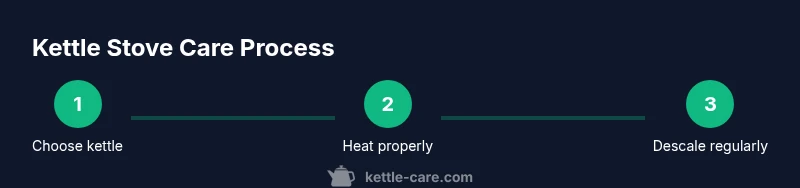
Choose a kettle with a flat, heavy base and sturdy handle. Ensure it's labeled for stovetop use and compatible with your stove type. If you want tight pouring control, consider a gooseneck model, but verify it balances well on your burner.
Tip: Test stability on the burner before filling with water. - 2
Check stove compatibility and stability
Place the kettle on the center of the burner. The bottom should sit evenly with no wobble. On very small burners, use a diffuser to distribute heat and prevent tipping.
Tip: If flames lick the sides of the kettle, move to a larger burner or lower the flame. - 3
Fill the kettle correctly
Fill to about three-quarters to leave room for boiling and prevent overflow. Do not overfill, as a rapid boil can splash water and damage the spout.
Tip: Avoid filling near the lid to reduce steam pressure near the handle. - 4
Heat on appropriate heat setting
Start with medium heat and adjust to maintain a steady boil. Do not leave the kettle unattended and monitor for a rolling boil before turning off.
Tip: If using gas, center the flame under the base; avoid high flames that exhaust heat unevenly. - 5
Watch for boil and remove from heat
When you hear a consistent whistle or steam, turn off the heat and remove the kettle to prevent scorching the base.
Tip: Use a pot holder to lift; never twist the lid during removal. - 6
Pour safely and clean after use
Pour slowly to avoid splashes. Wipe off any condensation, then dry thoroughly after washing.
Tip: Pour over the sink to catch spills; keep a cloth handy for drips. - 7
Descale as part of routine maintenance
Use a descaling solution or white vinegar solution, bring to a boil, and let soak as directed, then rinse thoroughly.
Tip: Rinse and boil clear water several times to remove residues. - 8
Store the kettle properly
Dry completely and store with the lid slightly ajar to promote airflow and prevent odor buildup.
Tip: Keep in a dry cabinet away from direct sunlight to preserve finish. - 9
Schedule ongoing maintenance
Establish a routine to descale every few months and inspect hardware monthly. This helps extend kettle life and maintain performance.
Tip: Write a simple maintenance log to track descales and part checks.
Frequently Asked Questions
Can I use any kettle on a stove?
Not all kettles are designed for stovetop use. Look for a flat-bottom design and labels indicating stove compatibility. Plastic handles near flame should be avoided, and metal kettles should not warp under normal heating.
Not all kettles are designed for stovetop use. Look for a flat-bottom design and stove compatibility labels; avoid plastic handles near flames.
How do I descale a kettle?
Mix equal parts water and white vinegar or use a commercial descaler. Bring to a boil, let sit for 10-20 minutes, then rinse thoroughly and boil fresh water to remove any taste.
Descale by boiling a water-vinegar mix, let it sit, then rinse and boil clean water to remove taste.
Is it safe to use a kettle on gas vs electric stoves?
Both can be safe if you use a flat-bottom kettle and center it on the burner. Ensure flames do not lick the kettle sides and use a diffuser if needed to balance heat.
Both are safe when used with a flat-bottom kettle centered on the burner and a diffuser if heat is uneven.
How often should I descale my kettle?
Descale based on water hardness and usage. In hard water areas, aim for every 1-3 months; otherwise, every 3-6 months is common.
Descale based on water hardness and use; in hard water, every 1-3 months is typical.
Why is my kettle taking longer to boil?
Limescale buildup, a partially closed lid, or starting with too much water can slow boiling. Descale and ensure the lid is fully open only after boiling to monitor accurately.
Scale buildup or too much water can slow boil; descale and ensure proper lid usage.
Should I use a heat diffuser?
A diffuser helps spread heat evenly on gas stoves, reducing hotspots and preserving base integrity. It is especially useful for smaller kettles.
Yes, a diffuser helps spread heat evenly and protects the kettle on gas stoves.
Watch Video
Highlights
- Choose a stove-compatible kettle with a flat bottom.
- Descale regularly to prevent limescale buildup.
- Use a lid to improve energy efficiency.
- Keep safety first when heating and pouring.
- Maintain a simple schedule to extend kettle life.