How to Know If Water is Boiling in a Kettle
Learn practical cues to know when kettle water is boiling, with visual and audible indicators, safety tips, and a step-by-step approach for safe, efficient brewing.


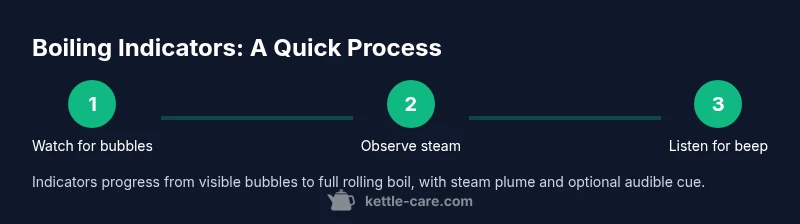
In this quick guide, you’ll learn how to know if water is boiling in kettle. Look for vigorous, rolling bubbles, rising steam, and, on models with audible cues, a defined beep or whistle. Start with cold water and heat until you observe steam escaping the lid and a continuous rolling boil. This simple set of indicators keeps brewing safe and efficient.
What boiling actually means for water
Boiling is the point at which water reaches a vigorous, sustained phase where bubbles continuously rise from the bottom and steam is visibly expelled. In practical terms, you don’t need to measure an exact temperature to know you’ve boiled the water; you rely on observable cues. According to Kettle Care, different kettles and lid designs can produce slightly different indicators, but the core signs remain consistent: strong bubbling, rising steam, and a noticeable change in the kettle’s sound or hiss as the water meets the boiling point. By understanding these cues, you can tell at a glance whether your water is ready for tea, coffee, or sterilizing tasks while minimizing waste and energy use.
Visual cues: bubbles, rolling boil, steam
The most obvious signal is bubbling. A gentle simmer shows small, slow bubbles; a rolling boil features continuous, vigorous bubbles that break the surface and produce a steady plume of steam. In stovetop kettles, you’ll often see steam rushing from the spout or lid vent as bubbles become more rapid. Electric kettles with transparent sides or lids reveal a cloud of steam near the rim. Steam patterns can vary with lid tightness and kettle material, but the transition from tiny bubbles to a full, continuous roiling effect is the universal indicator you’re at or near a boil.
Acoustic cues and time to boil
Many kettles emit a distinct sound when the water starts to boil. An audible whistle or beeper is common on many models, signaling that the boiling cycle has completed or is near completion. In quiet kitchens, your ears can be a reliable guide: once the water begins to bubble loudly and steam intensifies, the boiling phase has begun. If your kettle lacks an audio cue, pair the visual cues with a timer; this reduces the risk of overheating or evaporating water. Listening for a shorter, sharper hiss as steam escapes can also help you identify the precise moment the boil is underway.
How kettle design affects boiling indicators
Kettle design shapes how you perceive boiling. Glass or clear-panel kettles reveal bubbles and steam clearly, while metal-bodied kettles may rely more on sound and lid behavior. The lid’s fit also matters: a tightly sealed lid can trap steam and create a vigorous, rapid-boil look more quickly, whereas a loose lid may vent steam earlier and soften the visual cues. For safety, avoid lifting the lid before you’ve confirmed the boil; sudden exposure to hot steam can cause burns.
Scenario: electric kettle with glass lid vs metal lid
With a glass-lid electric kettle, you can watch bubbles form and rise from the bottom as steam gathers near the top. When the boil is fully established, you’ll see steady, uniform bubbles plus thick vapor escaping from the vent. A metal-lid electric kettle might hide visibility, so rely more on the audible beep and the time-to-boil you’ve learned from its documentation. In both cases, once you hear the beep or observe a clear steam plume, the water is boiling and ready to be poured.
Quick checks you can do without lifting the lid
If you want to avoid opening the lid, look for: (1) a healthy, continuous plume of steam rising from the vent, (2) consistent steam escaping around the lid gap, and (3) a confident, rolling bubble pattern in the water’s surface. Use a timer to verify that the boil occurred within a typical window for your kettle—usually a few minutes from start to rolling boil. Remember to handle the kettle with heat-resistant gloves if you need to touch it.
Common myths and misconceptions
Some people believe all boils are loud and dramatic; others think smaller kettles boil more slowly. Reality: boil indicators depend on heat source, kettle volume, material, and lid design. A key takeaway is to observe more than one cue—visual plus steam and, if available, audio—and always verify with a timer. Relying on a single cue can lead to under- or overboiling and wasted energy.
Safety and safety reminders
Boiling water is hot and can burn. Always use heat-resistant gloves when handling a hot kettle, keep hands and face away from the steam vent, and never leave an active kettle unattended, especially near children or pets. If you notice cracked glass, warped lids, or a malfunctioning lid, stop using the kettle and consult the manufacturer’s safety guidance. A well-maintained kettle is safer and more reliable for everyday use, including tea, coffee, and sterilization tasks.
Maintenance to keep accurate boil temps
Regular descaling and cleaning help maintain consistent boiling indicators. Scale buildup can impede heat transfer, elongating boiling times and distorting the cues you rely on. Use a descaling solution appropriate for your kettle’s material and follow the manufacturer’s instructions. As part of routine maintenance, inspect the lid seal and vent to ensure it vents properly and allows steam to escape when boiling.
How to tell when water has started boiling vs when it's fully rolling
Start boiling cues with visible bubbles forming at the bottom. The transition to a full rolling boil occurs when bubbles rise rapidly and continuously, producing a strong steam column. Some kettles reach this state quickly, while larger or more energy-efficient models may take a bit longer. The goal is to confirm a steady, ongoing boil before removing heat.
Choosing the right kettle for precise boiling
If you frequently rely on precise boiling cues, consider a kettle with transparent sides or a built-in temperature indicator. A model with a clear boil whistle can provide a dependable audible cue, reducing guesswork. For tea lovers and cooks aiming for repeatable results, choosing a kettle designed for consistent boil behavior helps maintain your routine and reduces waste.
Concluding note
Understanding how to read boiling cues empowers you to brew confidently and safely. A careful balance of visual, audible, and timing cues makes it easier to avoid overboiling and energy waste. The more you practice with your specific kettle, the quicker you’ll recognize the exact moment water is boiling.
Tools & Materials
- Kettle (electric or stovetop) with a lid(Ensure the lid seals well and the spout vent is clear)
- Timer or clock(Useful to time the time from start to rolling boil)
- Thermometer or temperature strip (optional)(For precise verification of temperature if desired)
- Strainer or cup for pouring(Have ready to avoid splashing when pouring hot water)
- Water source(Cold tap water or filtered water from your preferred source)
Steps
Estimated time: 5-7 minutes
- 1
Prepare and fill the kettle
Check that the kettle is clean and functional. Fill to the desired level, ensuring you’re not overfilling beyond the maximum line. Close the lid securely to promote efficient heating.
Tip: A clean kettle boils more efficiently; remove mineral buildup that can slow heating. - 2
Place on heat source
Set the kettle on its base or stove, ensuring the heating surface is stable. If using a stove, choose the appropriate burner size to avoid overheating the sides. Turn on the heat to a medium-to-high setting if needed to start the boil.
Tip: Don’t rush the boil—too high heat can cause splashing and uneven boiling. - 3
Watch for initial cues
As the water heats, observe small bubbles forming at the bottom that gradually rise. You may hear a gentle hiss or distant bubbling as the temperature nears boiling.
Tip: Keep your distance from the steam to avoid burns. - 4
Identify the rolling boil
The rolling boil features continuous, vigorous bubbles that break the surface, often accompanied by visible steam. This is the moment water is boiling and ready for pouring or turning off the heat.
Tip: If your kettle has a whistle or beep, be prepared to hear it when fully boiled. - 5
Move to safety or remove heat
Once the rolling boil is established, remove the kettle from heat or turn off the burner. If using a stove, carefully remove the kettle with oven mitts to avoid steam burns.
Tip: Do not touch the hot body of the kettle with bare skin. - 6
Pour and enjoy or preserve heat
Pour the water into your cup or teapot promptly to preserve the boil’s temperature. If you need to keep water hot, use a pre-warmed container and cover to minimize heat loss.
Tip: Pour slowly to reduce splashes; use a pour-over technique if preparing tea.
Frequently Asked Questions
What exactly counts as a rolling boil in a kettle?
A rolling boil is when water shows continuous, vigorous bubbles that rise rapidly to the surface, producing steady steam. Stop heating when this state becomes established to ensure the water is boiling, ready for use.
A rolling boil means the water is bubbling vigorously with steady steam. Stop heating when you see that steady boil.
Can water boil without visible bubbles?
In most household kettles, you will see bubbles as water approaches boiling. If you don’t see them, check lid seals, heat level, and whether the kettle is designed to be opaque; some models rely more on audible cues.
Boiling water usually shows bubbles. If you don’t see them, check your kettle’s lid and heat settings and listen for any beep.
Why is there steam but no loud boil?
Steam can escape early as the water heats; a full rolling boil requires robust bubbling. If steam appears without heavy bubbling, wait a bit longer or adjust heat. If the issue persists, there may be a lid issue or scale buildup.
Steam can come before a full boil. If you don’t see strong bubbles yet, give it a little more time and check the lid and scale.
Is it safe to drink water boiled in a kettle?
Yes. Boiled water is generally safe to drink as long as the kettle and water source are clean. If you suspect contamination or have a compromised kettle, clean and descale before reuse.
Boiled water is typically safe to drink if your kettle is clean. If in doubt, descale and rinse.
How can I tell quickly if my kettle has reached boiling point?
Use a combination of visual cues and any audible signals your kettle provides. A timer can help too. If your model has a temperature indicator, rely on it for a precise reading.
Combine visuals, sound, and timer. Use a temperature indicator if your kettle has one.
Watch Video
Highlights
- Observe multiple cues: visual bubbles, steam, and sound.
- Use a timer to verify boil timing and prevent overboiling.
- Choose a kettle and lid setup that matches your visibility needs.
- Regular maintenance maintains reliable boil indicators.
- Practice with your specific kettle to improve accuracy