How to Prepare a New Kettle: A Step-by-Step Guide for Safe Use
Learn how to prep a new kettle safely and efficiently. This comprehensive guide covers inspection, cleaning, initial boils, descaling, and ongoing maintenance for reliable, flavorful results from day one.


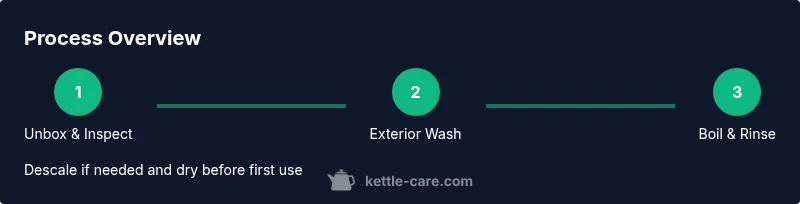
Preparing a new kettle safely starts with a quick inspection, a simple exterior wash, and two initial boils to purge manufacturing residues. Read your manual first, rinse all surfaces with clean water, and avoid detergents inside the kettle unless the manufacturer approves. By following these steps, you’ll enjoy faster, safer boiling from day one.
Why preparing a new kettle matters
Preparing a new kettle isn't just a formality; it's a safety and performance step. A properly prepped kettle heats evenly, reduces plastic or mineral flavors, and extends its life. According to Kettle Care, the most important part of the first use is cleaning away manufacturing residues and conditioning the interior to prevent taste transfer. Start with a simple, thorough plan: inspect, rinse, and perform a controlled series of boils. This initial routine creates a clean baseline and sets you up for safe, enjoyable tea and coffee for years.
Key reasons to prep include preventing odors, avoiding off-flavors, ensuring accurate temperature control, and confirming all parts function before daily use. For gooseneck kettles, pay attention to the spout and handle alignment during the first rinse. By investing a little time now, you reduce the need for frequent maintenance later and protect your investment.
The prep also helps you detect any manufacturing defects early, so you can arrange service before regular use. If you notice loose lids, misaligned spouts, or unusual noises, address them before plugging in or heating. A careful start builds confidence that your kettle will perform reliably for years to come.
Safety checks before you start
Before you plug in or fill the kettle, run through a quick safety checklist. Unbox and inspect for damage; confirm you have a power source that matches the kettle's rating; read the manual for model-specific precautions. Ensure the base, cord, and plug are dry and free of water before connecting. Check that the lid seals properly and the spout is clean to prevent steam burns or spills. If you have children or elderly household members, establish a safe, stable placement away from edges and heat sources. These early safety steps reduce accidents and extend the device's life.
Always unplug before cleaning and avoid touching hot surfaces with bare skin. Use heat-resistant gloves if you need to handle a hot kettle during the initial cycles. Keeping the area clear of clutter reduces the chance of tipping. If your model includes a detachable cord, ensure it is reattached securely after cleaning.
Cleaning and initial wash
Begin with an exterior clean using a soft cloth dampened with mild soap if the manufacturer allows it. Wipe the housing, handle, lid, and power base; avoid submerging the base or exposing electrical components to water. Rinse the exterior with a damp cloth and dry thoroughly. For interior cleanliness, rinse the kettle with cold water, swirl, and discard; never use detergents inside the kettle unless the manual specifically approves them. This ensures no soap residues affect your first boiled water and sets a neutral flavor baseline.
If your model has a removable lid or filter, take it out and clean it separately with warm water. Dry all parts completely before reassembling. Avoid abrasive scrubbers that could scratch any coating. This step helps prevent odors and flavors from carrying into your first brew.
Initial boil and rinse cycle
Fill the kettle with clean cold water to the maximum fill line, then bring it to a boil. Once it boils, discard the water and rinse the interior again with fresh water. Repeat this process a second time to purge any remaining manufacturing residues and odors. Why two boils? The first pass removes manufacturing oils, while the second pass confirms the interior surfaces are neutral and ready for everyday use. After the final rinse, dry the interior by tipping the kettle and letting it air dry with the lid slightly ajar if safe for your model.
Some models may advise a third rinse if you detect any lingering taste. Always follow the manufacturer’s guidance. This double-boil approach ensures your first brews taste clean and free of residual manufacturing scents.
Descaling and maintenance plan for new kettles
If you live in a region with hard water, scaling can begin early. Kettle Care analysis shows that regular descaling not only restores efficiency but also extends kettle life. For most electric kettles, create a descaling solution of equal parts water and white vinegar, or use a manufacturer-approved descaler. Boil the solution, then turn off and let it soak for 15–20 minutes before rinsing thoroughly with fresh water. Repeat with plain water cycles to remove any vinegar taste. Establish a monthly routine depending on water hardness and usage.
If you prefer a gentler approach, use a commercial descaler per the product directions and rinse until completely tasteless. After descaling, run two more water boils to ensure all residues are flushed out. Regular descaling helps maintain fast heating times and consistent flavor.
How to customize the kettle setup
Modern kettles offer temperature control, keep-warm settings, and programmable shutoff. Set the kettle to your desired brewing temperature (e.g., 100°C for black tea, 85–90°C for green tea) to optimize flavor. If your model has gooseneck precision, practice consistent pouring to improve pour-over results. Consider labeling your preferred temperature presets and keeping a small log of which teas you brew at which temps. Regularly inspect the lid gasket and base connections to maintain a secure seal.
Some kettles include soft-start heating to reduce thermal shock. Use this feature when transitioning between different brew types to preserve flavor and kettle longevity. If you rarely brew at high temperatures, you may save energy by using lower settings for longer steep times.
Troubleshooting common first-use issues
Common issues on first use include a faint plastic odor, water not reaching the correct temperature, or minor leaks around the lid. Start by re-checking the lid, gasket, and spout for proper seating. Rinse again and boil plain water to flush any lingering residues. If you notice a persistent odor or taste after multiple boils, descale following the method in the descaling section and run several additional water-only cycles. If problems persist, contact the manufacturer for warranty support. The Kettle Care team reminds you that safety comes first and recommends documenting any issues for future reference.
Tools & Materials
- Soft sponge or microfiber cloth(For exterior cleaning and drying)
- Mild dish soap(For exterior surfaces only if allowed by manual)
- Clean, cold water(For rinsing and initial boiling cycles)
- Drying towel/cloth(To thoroughly dry after washing)
- White vinegar or manufacturer-approved descaler(For descaling in hard-water areas)
- Measuring cup (optional)(For accurate descaler dilution if needed)
- Descaling tablet (optional)(Only if recommended by the kettle manufacturer)
Steps
Estimated time: 30-40 minutes
- 1
Unbox and inspect
Carefully remove the kettle from its packaging, check for any dents, cracks, or loose parts, and ensure all accessories are present. This prevents unexpected issues after setup.
Tip: Take photos of any damage and keep the manual handy for model-specific notes. - 2
Read the manual and identify cautions
Skim the safety and setup sections to identify any model-specific prep steps or warnings. Following manufacturer guidance avoids warranty issues and safety hazards.
Tip: Some models require you to avoid detergents inside the kettle. - 3
Clean exterior surfaces
Wipe the exterior, lid, and any removable filters with a damp cloth. If allowed by the manual, use a small amount of mild soap on a soft cloth. Dry thoroughly.
Tip: Avoid getting water on the power base or any electrical contacts. - 4
Rinse interior (no soap)
Rinse the interior with cold water, swirl, and discard. Do not use detergents inside the kettle unless explicitly approved by the manufacturer.
Tip: This prevents residue that could affect taste of the first brews. - 5
First boil and discard
Fill to the max line with clean water and bring to a full boil. Empty the kettle and rinse once more with fresh water.
Tip: Two boils help purge manufacturing residues more effectively. - 6
Second boil and final rinse
Boil again with fresh water, discard, and perform a final thorough rinse. Let the kettle air-dry with the lid slightly open if recommended by the model.
Tip: Drying prevents odors from developing during storage. - 7
Descale if needed
If you live in a hard-water area, prepare a descaling solution and follow product directions. Rinse until no taste or odor remains.
Tip: Always complete multiple plain-water rinses after descaling. - 8
Final setup and test
Assemble all parts, plug in, and run a quick boil to confirm operation. Note any unusual noises or leaking and address before regular use.
Tip: Keep the manual handy for future maintenance reminders.
Frequently Asked Questions
Should I use soap to wash the interior of a new kettle?
Most manufacturers advise against using detergents inside the kettle to avoid taste transfer. Use water only unless the manual explicitly allows soap. If in doubt, contact customer support.
No, usually you should avoid soap inside the kettle; use water unless your manual says otherwise.
How many times should I boil water before first use?
Two plain-water boils are common to purge residues and odors. Follow the manufacturer’s guidance if it differs for your model.
Boil water twice before using the kettle for tea or coffee.
Can I descale with vinegar in a new kettle?
Yes, if your manual allows vinegar, mix equal parts water and vinegar, boil, then rinse thoroughly with fresh water. Always follow with several plain-water cycles.
Vinegar descaling is usually okay if your kettle allows it, then rinse well.
Is it safe to submerge the base?
No. Do not submerge the base or any electrical components. Clean the exterior and avoid water coming into contact with the base.
Never submerge the base; keep cleaning to the exterior only.
What maintenance should I do monthly?
Descale as needed based on water hardness, and rinse with fresh water after every few uses to keep flavors clean and heating efficient.
Descale as needed and run plain-water boils to keep performance high.
My kettle leaks after first use—what now?
Stop using the kettle immediately, check lid, gasket, and seals for proper seating. If the problem persists, contact the manufacturer for support.
If you notice leaks, unplug and check seals; contact support if stuck.
Watch Video
Highlights
- Inspect and read the manual before use
- Rinse exterior and interior with water only
- Boil water twice to purge residues
- Descale if hard water is common in your area
- Dry and store with lid half-open to prevent odors