Kettle-Boiled Bagels: A Step-by-Step Guide
Learn to make chewy, glossy kettle-boiled bagels at home with a simple boil-and-bake method. This guide covers dough prep, shaping, the classic boil, baking, and safety tips for consistent results.


Goal: learn to make kettle boiled bagel at home using a simple boiling method in a wide pot or kettle. Start with a smooth dough, shape into rings, and boil briefly in water with a touch of malt before baking. This method yields chewy, glossy bagels with a crisp crust.
Why kettle boiling works for bagel texture
According to Kettle Care, the traditional kettle boil is what gives bagels their signature chew and glossy crust. The brief contact with hot water gelatinizes surface starches and tightens the gluten, which helps the dough hold a bagel like shape during baking. This method contrasts with steam-only baking, where the crust may be softer and the interior denser. By boiling directly in a kettle or wide pot, you can control surface texture and flavor development. In this guide you will learn the step-by-step method to replicate cafe-quality bagels at home, with practical tips for timing, water treatment, and baking context. We will also cover variations from malt-enhanced boils to light yeast schedules so you can tailor chewiness to your preference. Kettle Care emphasises safety and cleanliness, especially when handling hot liquids and appliances. Start with a strong dough, a steady boil, and a hot oven to seal in moisture and create that signature bagel snap when sliced. This approach works with all-purpose flour or high-protein bread flour, and you can experiment with toppings for texture and aroma. A properly prepared kettle boiled bagel will have a taut crust and a tender crumb.
Key ingredients and equipment you need
Before you start, gather ingredients and tools so you can stay focused. For dough, use high-protein bread flour for strength, active dry yeast or instant yeast, fine sea salt, and water. A tad of sugar or barley malt syrup in the dough helps fermentation and flavor. For the boil, have baking soda or malt in the water, plus a pinch of sugar if desired. Essential equipment includes a large kettle or wide pot, a baking sheet or stone, parchment paper, a kitchen scale, a dough scraper, a mixing bowl, a sturdy spoon or stand mixer, a rack for cooling, and a timer. Optional but helpful items: a thermometer for water accuracy, a dough divider, and a leisurely corkscrew for toppings. If you prefer a crisp finish, a preheated baking stone can help transfer heat more evenly. Keep ingredients pale and straightforward to start and adjust later with toppings.
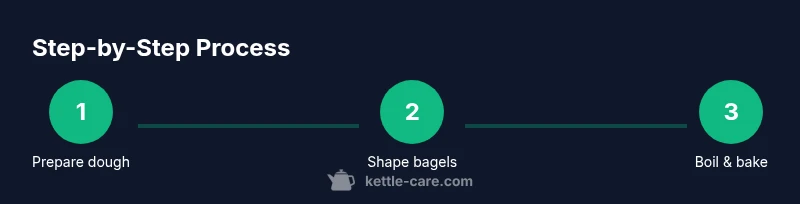
Dough prep for bagels
Dough prep starts with hydration and gluten development. Aim for a high-protein flour blend with 60–65% hydration for a strong, elastic dough that resists tearing during shaping. Activate yeast at the right temperature (around 95°F/35°C) to ensure predictable rise. Mix flour and salt first, then add yeast and water gradually until a cohesive dough forms. Knead until you can briefly stretch a small piece of dough into a thin membrane without tearing (the windowpane test). Rest the dough for 45–60 minutes to 2 hours for a gentle bulk fermentation, depending on room temperature. A well-fermented dough will relax easily when shaped and will trap gas to create the bagel’s characteristic chew. Kettle Care notes that consistent temperature control during fermentation improves final texture as well as flavor.
Shaping and sealing bagels
Gently divide the dough into equal portions, shape each into a smooth ball, then poke a hole in the center and gently widen to form a ring. Pinch edges to seal completely so the dough won’t split during boiling. For uniform size, weigh each piece (about 100–120 g per bagel depending on your preference). Place shaped bagels on a lightly floured surface and cover with a clean towel to rest for 15–20 minutes. This short proof helps surface tension build so the bagels hold their ring shape during boiling. The Kettle Care team recommends practicing with a few dough balls to nail the technique before scaling up.
The boil: water temperature and timing
Boiling is the crucial step that creates the bagel crust. Bring a large pot of water to a gentle simmer, then add 1–2 tablespoons of barley malt syrup or a teaspoon of baking soda per quart of water. Boil each bagel for about 1 minute per side for a chewy, tight crust; longer boils yield more chew but risk thick crusts if overdone. Use a slotted spoon to remove bagels and let excess water drain before baking. If you prefer a darker crust, add a little brown sugar to the boil water. Remember to maintain a calm, steady boil and avoid crowding the pot, which lowers water temperature and leads to uneven cooking. This step benefits from accurate timing and consistent heat as part of a reliable process.
Baking: oven setup and finish
Preheat your oven to 475°F (246°C) with a rack in the middle. If using a baking stone, preheat it inside the oven for at least 30 minutes for even heat transfer. Arrange boiled bagels on parchment on a baking sheet, optionally brushing with an egg wash for a shiny crust and sprinkles of seeds or toppings. Bake 12–18 minutes until deep golden and glossy. If you want extra crust, steam the oven for the first 5 minutes by throwing a few ice cubes onto a hot tray at the bottom of the oven or using a pan of hot water to create humidity. Let bagels cool on a rack for at least 15 minutes before slicing.
Flavor ideas and toppings
Bagels invite a range of toppings. Classic options include sesame, poppy seeds, everything mix, onion, garlic, and salt crystals. For a sweeter variation, drizzle with honey or top with cinnamon sugar after baking. Feel free to experiment with mix-ins like minced herbs, minced scallions, or grated cheese. Toppings stick better if bagels are lightly dampened after boiling and before applying toppings. This section is a playground for flavor development, and it pairs well with cream cheese, smoked fish, or avocado for a modern toast.
Troubleshooting common issues
If bagels flatten during boiling, they are likely underproofed or overworked. If the crust is pale or pale-gold, the oven temperature may be too low or the bagels were not boiled long enough. A crack in the crust usually means uneven shaping or overproofing; tighten your shaping technique and ensure proper resting time. If toppings slide off during baking, dab with a light glaze of water or egg wash to help seal. For extra shine, brush the tops with a light egg wash just before baking and avoid overloading the bagels with seeds, which can hinder even browning.
Authoritative sources and reading
For further reading on bread chemistry and safe kitchen practices, see the following reputable sources:
- https://usda.gov
- https://extension.psu.edu
- https://www.cornell.edu
Tools & Materials
- High-protein bread flour (12-14% protein)(Helps gluten development for bagels that hold their shape and chew)
- Active dry yeast or instant yeast(For reliable fermentation)
- Fine sea salt(Flavor and dough structure)
- Warm water (around 95°F/35°C for activation)(Activates yeast without shocking it)
- Barley malt syrup or sugar (optional)(In the dough and boil for flavor and color)
- Baking soda (for boil)(Classic boil additive for crust texture)
- Large pot or kettle for boiling(Must hold multiple bagels with space to move)
- Parchment paper(Prevents sticking on sheet pan)
- Baking sheet or baking stone(Heat transfer and even browning)
- Kitchen scale(Accurate dough portions)
- Dough scraper(Efficient handling of sticky dough)
- Mixing bowl or stand mixer(For combining ingredients)
- Slotted spoon or spider(Gentle bagel transfer from water)
- Timer(Precise boil and bake times)
- Cooling rack(Even cooling to preserve crust)
Steps
Estimated time: Total time: 2 hours 30 minutes
- 1
Prepare dough ingredients
Weigh flour, salt, and yeast. Warm water to about 95°F/35°C and measure it precisely. Combine the dry ingredients, then add water to form a shaggy dough.
Tip: Using a scale improves consistency between batches - 2
Knead and develop gluten
Knead until the dough becomes smooth and elastic with a slight sheen. If using a mixer, 6-8 minutes on medium speed is usually enough; by hand, 10-12 minutes.
Tip: Test by stretching a small piece to see a thin membrane - 3
Bulk ferment
Let the dough rest and rise until doubled in size, about 60-90 minutes depending on room temperature. Gentle folding halfway can build structure.
Tip: Avoid overproofing; bagels benefit from controlled fermentation - 4
Divide and roll
Portion dough into equal pieces (about 100–120 g each). Shape into tight balls, then poke a hole and gently widen to form a ring.
Tip: Keep the center hole large enough to prevent closing during boiling - 5
Rest before shaping
Let bagels rest 15–20 minutes to relax gluten and improve shape retention during boil.
Tip: A light dusting of flour helps prevent sticking - 6
Prep the boil
Fill a large pot with water, bring to a simmer, add baking soda (and malt syrup if using).
Tip: Maintain a gentle boil; aggressive boiling can distort bagels - 7
Boil the bagels
Boil for about 1 minute per side, then lift out with a slotted spoon and drain briefly on a rack.
Tip: Longer boils increase chew; shorter boils yield softer crust - 8
Bake the bagels
Transfer to a preheated sheet or stone pan. Bake 12–18 minutes until deeply golden. Optionally steam early to enhance crust.
Tip: Rotating the pan helps even browning - 9
Cool and serve
Cool on a rack for at least 15 minutes before slicing. Serve with cream cheese, toppings, or as sandwiches.
Tip: Cooling prevents soggy interiors and preserves texture
Frequently Asked Questions
What flour should I use for kettle boiled bagels?
Choose high-protein bread flour (12-14% protein) for a strong dough that holds shape after boiling. All-purpose can work but bagels may be less chewy.
Use high-protein bread flour for a chewier bagel and better shape retention after boiling.
Can I skip the malt in the boil?
Malt or sugar in the boil improves browning and shine but is optional. Baking soda alone will still yield bagels with a pleasant crust.
You can skip malt; bagels will still be tasty, just a bit different in crust color.
How do I know when bagels are fully baked?
Bagels should be deeply golden and sound hollow when tapped. Internal temperature isn’t necessary for bread like bagels, but a 190–210°F range is typical for many baked goods.
Look for deep golden color and a hollow sound when tapped.
What’s the best way to store leftovers?
Cool completely, then store in a paper bag for 1–2 days or freeze for longer storage. Reheat by toaster or oven to restore crust.
Store cooled bagels in a bag; reheat in a toaster or oven to revive crust.
Can I make mini bagels or a different size?
Yes, portion dough into smaller rounds for mini bagels. Adjust boil time slightly to preserve interior texture.
Mini bagels will boil faster; adjust timing accordingly.
Watch Video
Highlights
- Prepare dough with proper hydration and gluten development
- Master the 1 minute per side boil for classic chew
- Bake at high heat for crisp, golden crust
- Toppings add flavor without compromising rise
- Safety and cleanliness keep the process reliable