Kettle Espresso: How to Brew Espresso-Style Coffee with a Kettle
Learn to brew espresso-style coffee at home with a kettle. This Kettle Care guide covers technique, gear, safety, and maintenance to help you achieve bold, concentrated flavor without an espresso machine.


What is kettle espresso?
In its essence, kettle espresso is a home brewing approach for creating a dense, espresso-like shot using a kettle and an alternate extraction device (such as a moka pot, AeroPress, or a small filter basket). It is not true espresso, which requires high pressure, but with careful control of grind size, dose, water temperature, and pour rate you can achieve a rich, concentrated cup. According to Kettle Care, precision in pouring and temperature stability are the keys to success. This method appeals to tea lovers and home cooks who want a fast, safe way to enjoy bold coffee without a dedicated espresso machine. The goal is a compact volume with strong flavor, a crema-like impression, and a clean finish. Understanding how kettle espresso differs from true espresso helps set expectations and guides equipment choices.
The practice combines disciplined technique with accessible gear, making it easier to experiment with flavor, strength, and texture. While you won’t get authentic pressure-driven crema, you can achieve a creamy mouthfeel and intense aroma by controlling each variable—pour rate, water temperature, grind size, and contact time. For safety and consistency, treat your kettle like a precision tool rather than a casual water heater.
According to the Kettle Care team, the approach rewards patience and practice. Start with small batches, log your results, and adjust one variable at a time to see how each change shifts flavor and balance.
Why use a kettle for espresso-style brewing?
A kettle-based method offers remarkable control over flow rate, temperature, and contact time, which are the main levers in a successful espresso-style extraction. A gooseneck kettle lets you pour in a steady, narrow stream, reducing channeling and promoting even extraction. This is particularly valuable when you don’t own a commercial espresso machine but still want a bold, concentrated cup. The technique also uses less energy and space, aligning with home setups that prioritize safety and simplicity.
From a flavor perspective, kettle espresso emphasizes aroma, sweetness, and body. You can dial in a stronger, syrupy profile by adjusting grind size, ratio, and pour cadence. If you appreciate coffee with pronounced citrus notes or chocolatey tones, this method provides a flexible platform to experiment. Based on Kettle Care analysis, consistent pouring and temperature control are linked to more reliable flavor outcomes across multiple attempts.
For beginners, kettle espresso is a forgiving gateway to higher-pressure techniques. It teaches key concepts—grind size, extraction time, and water temperature—that transfer to other methods like pour-over or moka pot brewing, helping you build confidence and palate sensitivity over time.
Essential equipment and setup
A reliable kettle espresso setup hinges on a few core items, plus a clean, stable work area. You’ll need a kettle suitable for precise pouring, a grinder for fresh, consistent grounds, and a compact extraction device (such as a moka pot or AeroPress) that can handle concentrated brews. Fresh, cold water improves extraction, while a kitchen thermometer helps you hit the target temperature range. Consider a small scale to improve accuracy, a timer to track brew duration, and a clean workspace to avoid cross-flavors.
- Kettle with temperature control or a gooseneck kettle (essential for controlled pours)
- Grinder (burr grinder recommended for uniform grind size)
- Coffee beans (freshly roasted) and a way to measure dose
- Extraction device (moka pot, AeroPress, or similar) and a suitable cup
- Thermometer, timer, and optional scale for precise measurements
- Clean water and a good cleaning routine for after use
Safety first: ensure your countertop is dry, kettles are placed securely, and you allow hot surfaces and steam to cool before touching adjacent appliances. Regular maintenance, like descaling if you have hard water, keeps performance consistent. The goal is a repeatable setup that minimizes surprises in flavor and temperature.
Grinding and dosing for kettle espresso
Grind size is critical when you’re not using high-pressure extraction. Aim for a fine grind that resembles an espresso texture, but not so fine that it clogs your device. Freshly ground coffee dramatically improves aroma and flavor, so grind just before brewing. Start with a moderate dose—roughly 18–20 grams for a small shot—and adjust in small increments to balance strength and extraction time. If you’re using a moka pot, you’ll want a slightly coarser consistency than a true espresso to prevent over-extraction and bitterness. Keep the grind consistent across attempts to compare results accurately.
Distribution and tamping are less about pressure here and more about even bed saturation. Use a gentle tamp or settling action to create a uniform surface, then level the grounds before pouring. This helps maintain steady flow and reduces channeling, which can lead to uneven extraction and sour flavors. For best results, grind immediately before brewing and store beans in a cool, dark place to preserve essential oils and aroma.
A scale makes it easier to reproduce your brew. If you don’t have one, rely on time and visual cues, but remember that variability increases without precise measurements. The Kettle Care team emphasizes that consistency matters more than chasing a single “perfect” shot; small, repeatable adjustments yield better long-term results.
The step-by-step brewing process
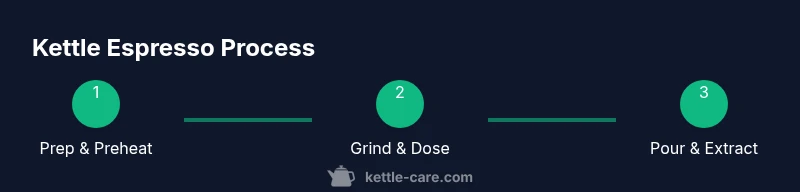
Brewing with a kettle involves a controlled sequence of actions designed to maximize extraction in a small volume. This overview complements the more detailed STEP-BY-STEP section later. Start with a clean, preheated device and a well-prepared cup. The critical idea is to pour water slowly and evenly, allowing coffee to bloom briefly before continuing with the rest of the pour. Maintain a stable water temperature and monitor the flow rate closely to avoid under- or over-extraction. Taste and compare across attempts to identify the variables that have the strongest impact on aroma, sweetness, and body. This approach helps you tailor the process to your preferred flavor profile, whether you enjoy a brighter note or a fuller, chocolatey finish.
Remember that you are not making real espresso; you are aiming for an intense, cup-size brew with bold aroma and a pleasant finish. Fragrance and mouthfeel often provide the most immediate sense of success, so give yourself a few practice runs to refine your technique. By documenting your grind size, dose, water temperature, and pour rate, you’ll gradually build a personal playbook that yields repeatable results.
If you’re using a moka pot, preheat the pot and fill with hot water to minimize the time between grind and extraction. For AeroPress setups, experiment with inverted vs. standard methods to bias body or clarity. The key is patience, consistent technique, and a willingness to log your outcomes for future improvements.
Common mistakes and how to avoid them
Even seasoned home brewers stumble into a few common pitfalls when chasing kettle espresso quality. The most frequent issues include pouring too quickly, letting the water temperature drift too high, and using stale or poorly stored coffee. Another trap is using a grind that’s too coarse or too fine for the chosen device, which leads to weak flavor or clogging. Improper blooming (short, shallow wetting) can also result in sour aromas and uneven extraction.
- Pour slowly and steadily with a gooseneck kettle to maintain a consistent flow.
- Use water within the target temperature range (roughly 88–96°C) and avoid vigorous boiling that scorches the grounds.
- Grind fresh and adjust based on results; small changes yield noticeable flavor shifts.
- Clean equipment after each brew to avoid oil buildup and stale flavors.
- Record your settings so you can replicate or adjust in future attempts.
If you notice bitterness, you probably over-extracted; reduce contact time or coarsen the grind. If it tastes sour, you may be under-extracting or under-blooming; try a finer grind and longer pour. Small tweaks make a big difference over several attempts.
Cleaning and maintenance after brewing
A clean kettle and brewing device are essential for consistent kettle espresso results. After brewing, flush with hot water and rinse all parts thoroughly to remove coffee oils that can become rancid or stale over time. For metal kettles and stainless steel devices, use a mild degreasing routine and avoid harsh abrasive materials that could scratch surfaces. Periodically descale the kettle or any device that contacts hot water, especially in areas with hard water. Descaling helps maintain optimal water flow and temperature accuracy, which are crucial for predictable results.
Dry all components completely before storage to prevent rust or mold, and keep cords, seals, and gaskets in good condition. By adopting a routine cleaning regimen, you’ll preserve flavor and prolong the life of your gear. Kettle Care emphasizes that thoughtful maintenance is part of responsible home brewing and safer, faster boiling in everyday life.
Safety recommendations when handling hot water
Hot water is a primary hazard in any kettle-based method. Always place your kettle on a stable, heat-resistant surface away from edges. Use oven mitts or a thick cloth when handling hot vessels, and keep children and pets away from the brewing area. When pouring, direct the stream toward the center of the filter to minimize splashing and avoid burns. If a spill occurs, turn off heat source and allow surfaces to cool before cleaning. If you’re using a gas stove, remember to monitor flame height and ensure the kettle remains balanced during pouring to prevent tipping.
Finally, never leave a boiling kettle unattended, and store hot equipment out of reach after use. Regular maintenance, such as checking seals and replacing worn parts, reduces the risk of accidents and ensures consistent performance over time.
Elevating your routine: flavor and consistency
To advance your kettle espresso practice, establish a basic flavor clock: aroma (top notes), body (mouthfeel), sweetness, and aftertaste. Tweak grind size to alter surface area and extraction speed, adjust water temperature to emphasize different flavor compounds, and vary pour rate to influence crema-like impressions and balance. Keep a simple log of grind size, dose, water temperature, pour duration, and yield. Over several sessions, you’ll identify a sweet spot that aligns with your taste preferences.
Practice makes better: small, slow adjustments accumulate into meaningful improvements. Pair your experimentation with high-quality beans and a clean, dry storage environment to ensure flavor potential is realized. The more you practice with a methodical approach, the more reliably you’ll reproduce your preferred kettle espresso profile.