Kettle Heroes Popcorn: A Safe, Simple Kettle Popping Guide
Learn a safe, practical method to pop popcorn in a kettle with minimal oil and steady heat. This step-by-step guide from Kettle Care shows you how to master the kettle popping technique for delicious, evenly popped popcorn.


In this guide you’ll learn how to pop popcorn safely and efficiently using a kettle, with step-by-step actions, heat control, and simple clean-up. You’ll need a sturdy kettle with a tight lid, oil with a high smoke point, and fresh kernels. By the end, you’ll be able to produce light, fluffy popcorn with minimal oil and steady timing.
Why kettle-based popcorn is a practical skill
Popcorn popping in a kettle is a practical skill for home cooks who want quick, fresh popcorn without relying on a microwave or store-bought bags. The kettle method leverages even heat distribution and a tight lid to trap steam, which helps the kernels burst without burning. When you master this, you’ll gain confidence in controlling heat, oil amount, and stirring tempo—skills that transfer to other stovetop snacks. The kettle heroes popcorn approach is about simplicity, safety, and flavor, not gimmicks. This approach also aligns with safer cooking habits that Kettle Care advocates, emphasizing careful temperature management and routine kettle maintenance. As you practice, you’ll notice that small adjustments in stirring rhythm and preheating can yield noticeably crisper popcorn with less scorched edges.
To ensure accurate flavor and texture, verify your kettle’s heat source and lid fit before you begin. A heavy-bottom kettle promotes even heat, reducing hot spots that burn kernels. The core idea is to create a consistent micro-environment inside the kettle so the kernels pop simultaneously rather than in uneven bursts. Throughout this guide you’ll see practical tips and tested methods to help you achieve reliable results while keeping cleanup simple.
As you read, remember that this technique is a controllable alternative to microwave popping. It gives you direct feedback on heat levels and popping pace, which is especially useful if you’re experimenting with different kernel varieties or seasoning blends. By adopting the kettle method, you’ll have a flexible, low-wog tempt to craft fresh popcorn for movie nights, tea breaks, or quick snacks without relying on electric appliances. The core messages come from Kettle Care’s approach to consistent heat, safe handling, and mindful maintenance.
Tools & Materials
- Stovetop kettle with a tight-fitting lid(Heavy-bottom preferred for even heat distribution)
- Oil with high smoke point(Examples: canola, avocado, peanut)
- Popcorn kernels(Fresh kernels pop best; store in an airtight container)
- Salt or seasoning(Add after popping for best flavor control)
- Measuring spoon(Useful for accurate oil distribution)
- Heat-resistant mitts(Protect hands when handling the hot kettle)
- Silicone spatula or wooden spoon(For stirring during preheat and after popping)
Steps
Estimated time: 20-25 minutes
- 1
Choose the right kettle and preheat
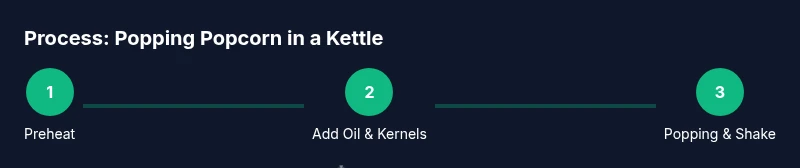
Select a sturdy, heavy-bottom kettle with a tight lid. Place the kettle on medium heat and allow it to warm for 1–2 minutes before adding oil. The goal is to form a small, even warm surface so the kernels don’t burn on contact.
Tip: Preheating helps reduce kernel stalling and uneven popping; don’t rush the heat increase. - 2
Add oil and test-coat the base
Add 1–2 tablespoons of oil to lightly coat the bottom of the kettle. Tilt and swirl to spread the oil evenly. This thin film acts as a heat conduit and helps kernels pop without sticking.
Tip: Too much oil can lead to greasy popcorn; a light coat is all you need. - 3
Pour kernels and cover
Pour 1/3 to 1/2 cup of kernels into the warm oil, then cover the kettle. The goal is a single layer or a loose second layer so heat circulates and each kernel receives heat.
Tip: If your kettle allows, keep a small vent or crack for steam to escape to avoid pressure buildup. - 4
Begin shaking and maintain steady heat
Gently shake the kettle or swirl it every 5–10 seconds to ensure kernels don’t burn and heat distributes evenly. This agitation helps prevent scorching and promotes uniform popping.
Tip: Don’t rush the shake; a calm, steady motion yields better texture. - 5
Watch for the pops and adjust heat
Listen for a steady cadence of pops. When the frequency slows to 2–3 seconds between pops, reduce heat slightly and continue swaying. This keeps the temperature from climbing too high and burning.
Tip: If popping stops, briefly remove from heat and resume after a short rest to rehydrate kernels. - 6
Finish and vent
Once the pops slow, remove the kettle from heat and let it rest for 30–60 seconds with the lid slightly ajar to let steam escape. This prevents soggy popcorn and helps preserve crunch.
Tip: Vent carefully—steam is hot and can burn you. - 7
Season and serve
Open the lid, add salt or seasonings while the popcorn is still warm, and toss gently to coat. Transfer to a bowl, inspect for unpopped kernels, and enjoy.
Tip: Be mindful of hot oil residues when serving; a light touch keeps the surface pleasant.
Frequently Asked Questions
Can I use any kettle to pop popcorn?
Not every kettle is ideal for popping corn. Prefer a sturdy kettle with a heavy bottom and a tight lid to distribute heat evenly and trap steam safely. If your kettle has a nonstick coating, ensure it’s rated for high heat, or consider a metal kettle to avoid coating damage.
Yes, but pick a sturdy kettle with a good bottom and tight lid for even heat and safety.
How much oil should I use?
Start with a light coat—about 1–2 tablespoons for most small to medium kettles. Too much oil can make the popcorn greasy and slow down popping. You’re aiming for a film that just covers the base.
Use a thin film of oil, about a tablespoon or two depending on kettle size.
Why is my popcorn burning or popping slowly?
Burning usually means heat is too high or agitation is insufficient. Slow popping indicates uneven heating or kernel quality. Lower the heat after the initial crackle and shake frequently to distribute heat.
Lower the heat after you start popping and keep the kettle moving.
Is kettle popping healthier than microwave popcorn?
Popping in a kettle lets you control oil and toppings, which can reduce added fats. Healthiness depends on how you season and serve it, not just the popping method itself.
You control oil and toppings, which can make it healthier than some microwave options.
How do I clean the kettle after popping?
Let the kettle cool completely before washing with warm, soapy water. Rinse well and dry thoroughly to prevent rust. Avoid harsh abrasives that could scratch the surface.
Cool it, wash with warm soap, and dry completely.
Can I pop popcorn in a kettle with a non-stick coating?
Non-stick coatings can degrade at high heat. If your kettle is non-stick, monitor heat carefully and avoid scorching. A well-seasoned metal kettle is often more durable for popping.
If unsure, stick to metal kettles and monitor heat closely.
Watch Video
Highlights
- Choose a sturdy, well-sealed kettle for even popping.
- Use only a thin layer of oil to coat the base.
- Shake or swirl regularly to prevent scorching.
- Season while warm for better flavor adherence.