Air Popped Kettle Corn: A Safe, Quick Snack Guide
Learn to make air popped kettle corn safely at home with minimal oil, using a kettle or wide pan. This guide covers equipment, ingredients, step-by-step method, tips, and safety checks for crisp, sweet popcorn.


In this guide you’ll learn how to make air popped kettle corn at home in minutes using a kettle or wide pan with a light oil or spray. According to Kettle Care, you’ll also need a safe popping method, timing, and a cooling rack to achieve crisp, sweet popcorn with minimal mess.
What is air popped kettle corn and why it matters
Air popped kettle corn is popcorn made with a dry-heat method that relies on convection rather than deep frying. The 'air popped' approach aims to minimize added fat while still delivering the signature kettle corn sweetness from a light sugar coating. According to Kettle Care, achieving this balance means understanding heat control, moisture release, and even coating. By mastering this technique, you can enjoy a lighter, cleaner snack that still satisfies a craving for something sweet and crunchy. In many households, the term kettle refers to the pan used to pop the corn; in air popping, the kettle becomes a vessel for even heat distribution and gentle agitation. The result should be fluffy kernels with a delicate sugar glaze, not scorched bits or pale popcorn. This method is especially appealing to tea lovers and home cooks who want quick snacks without heavy oils. A few batches in a week can transform your snacking routine, especially when you pair the corn with a hot cup of tea.
Equipment and safety basics
The core equipment for air popped kettle corn includes a sturdy kettle or wide skillet with a tight-fitting lid, and a steady heat source (stove or hot plate). If you skip oil entirely, ensure your pan is dry and preheated to avoid sticking. A light oil spray can help create the signature glossy coating without pooling, but you can also pop without oil for an oil-free result. A timer, measuring spoons, and a parchment-lined tray complete the setup. Always use oven mitts when handling the hot vessel, and keep kids and pets away from the stove during popping. For safety, never leave the pan unattended while it’s heating or sugar is being added, and be mindful of steam when removing the lid. Clean, safe pops are the goal, not dramatic smoke or scorched sugar.
Ingredients and substitutions
For best results, start with 1/2 cup popcorn kernels, 1–2 tablespoons sugar (granulated or light brown), and a pinch of salt. Oil is optional; a quick spray or teaspoon of oil can help sugar coat better, but you can pop without oil if you’re aiming for an oil-free result. You’ll also want a splash of vanilla extract or a pinch of cinnamon if you like warmer notes. If you crave salt-sweet balance, consider a tiny amount of flaky salt after coating. For a deeper caramel-like finish without refined sugar, try coconut sugar or maple sugar. Adjust sweetness to taste by adding sugar gradually after tasting a small batch. Remember that sugar can burn, so monitor heat closely and reduce if you see dark spots.
Quick overview of the popping method
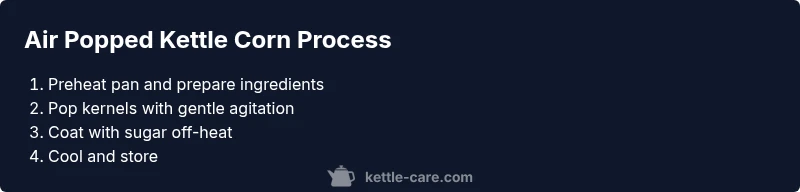
This approach uses a dry (or lightly oiled) skillet and regular agitation to pop kernels evenly. Start by preheating the pan, add the kernels, then cover. Once popping begins, gently shake the pan to prevent sticking and ensure even heat. As soon as the majority of kernels have popped, reduce heat and begin the sugar-salt coating process off-heat to minimize scorching while achieving that classic kettle corn glaze. The key is even heat, frequent movement, and timely coating.
Flavor enhancements and serving ideas
Classic kettle corn flavor comes from a light sugar coating and a pinch of salt, but you can customize. Try cinnamon sugar for a warm twist, vanilla-cinnamon for a cozy aroma, or chili-lime for a bright kick. For a nuttier profile, add crushed roasted nuts after coating. If you prefer a dairy-free option, use coconut oil spray and dairy-free sugar glaze. Serve warm in a bowl with tea or coffee; it pairs well with a crisp pastry or a cheese plate. For storage, keep cooled popcorn in an airtight container to preserve crunch.
Maintenance and clean-up tips
After the last batch cools, wipe the pan with a dry cloth to remove loose sugar, then wash with warm, soapy water. Sugar tends to stick; soak the pan briefly if needed and scrub with a non-abrasive pad. Dry thoroughly to prevent rust, then store in a dry place. Regularly inspect your lid and handle for any looseness or damage. A well-maintained kettle or skillet ensures consistent performance and safer pops in future batches.
Quick safety reminders and best practices
Always use a dry or lightly oiled pan for air popped kettle corn and never leave heat unattended. Be careful of steam when lifting the lid, and keep sugar away from children. If you notice smoke or a burning smell, remove the pan from heat immediately and check for hot spots or excess sugar. Use a timer to avoid over-toasting and cooling racks to prevent soggy kernels after popping.
Tools & Materials
- Popcorn kernels(1/2 cup yields about 6–8 cups popped)
- Kettle/pan with lid(10–12 inch diameter, heavy-bottom preferred)
- Sugar(1–2 tablespoons; granulated or light brown)
- Salt(pinch to balance sweetness)
- Oil spray or light oil (optional)(1–2 teaspoons if using oil to aid coating)
- Measuring spoons(to measure sugar and salt)
- Timer(to track popping pace and coating step)
- Parchment paper or cooling tray(for cooling and easy transfer)
Steps
Estimated time: 15-20 minutes
- 1
Measure and prepare ingredients
Measure popcorn kernels, sugar, salt, and any optional oil. Have your pan, lid, and cooling surface ready before you start. This upfront setup minimizes interruptions and keeps the process smooth.
Tip: Pre-measure everything so you can move quickly from prep to popping. - 2
Preheat the pan and set up dry pop
Preheat the pan to a steady medium heat. If using oil, mist it lightly so kernels have a thin coating. Cover the pan loosely to start the popping without letting moisture escape, which helps starches set evenly.
Tip: Keep the lid slightly ajar to vent steam if needed. - 3
Add kernels and begin popping
Add kernels in an even layer. If using oil, ensure each kernel contacts a tiny amount. Replace the lid and wait for popping to begin, then gently shake the pan to prevent sticking and promote even heating.
Tip: Shake in a controlled wrist motion to keep kernels moving. - 4
Shake and monitor popping
Continue shaking gently as more kernels pop. If the pops slow to a few seconds apart, reduce the heat to avoid scorching and maintain a steady pace.
Tip: Avoid lifting the lid too often, which can cause uneven coating. - 5
Coat with sugar and finish coating
When most kernels have popped, remove from heat and sprinkle the sugar and salt. Toss quickly off-heat to coat evenly and prevent sugar from burning. Return briefly if needed to finish coating a tiny bit more.
Tip: Coating off-heat minimizes scorching and yields a glossy glaze. - 6
Cool and store
Spread the kettle corn on parchment to cool completely before transferring to an airtight container. Proper cooling prevents condensation that makes it soggy and preserves crunch for longer.
Tip: Let it cool 10–15 minutes before sealing.
Frequently Asked Questions
What is air popped kettle corn?
Air popped kettle corn uses dry heat or a light coating of oil to pop corn, producing crisp kernels with a light sugar glaze. It avoids deep frying and aims for a cleaner snack while preserving the classic kettle corn sweetness.
Air popped kettle corn is popcorn popped with little to no oil, giving a crisp, lightly sweet treat.
Do I need oil to make kettle corn pop?
Oil is optional. A light spray or teaspoon of oil can help the coating adhere and improve texture, but you can achieve good results with dry popping if you monitor heat and movement carefully.
Oil isn’t mandatory; you can skip it and still get a tasty kettle-corn result if you keep heat steady.
How can I prevent burning the sugar during coating?
Coat off-heat and use low-to-medium heat during the coating stage. Remove the pan from heat before the sugar caramelizes too much, then toss vigorously to ensure even coverage.
Coating off the heat helps prevent burning; stir quickly for even glaze.
How should I store leftovers?
Cool the popcorn completely, then store in an airtight container in a cool, dry place. Keep it away from humidity to maintain crunch.
Let it cool fully, then seal and keep in a dry spot.
Is air popped kettle corn suitable for kids?
Yes, with supervision and mindful sugar amounts. Consider offering in small portions to keep sugar intake balanced.
It’s kid-friendly with supervision; watch sugar amounts and serve in modest portions.
Watch Video
Highlights
- Measure kernels and ingredients precisely for consistent results
- Maintain steady heat and gentle pan movement to prevent scorching
- Coat with sugar off-heat to achieve an even kettle-corn glaze
- Cool completely before storing to preserve crunch