Kettle House Brewing: A Practical Step-by-Step Guide
Master safe, efficient kettle house brewing with temperature control, cleaning, and maintenance tips. A practical, step-by-step guide from Kettle Care for homeowners and tea lovers.


Goal: master kettle house brewing at home by optimizing your kettle, controlling temperatures precisely, and keeping equipment clean for reliable flavor. In this guide you’ll learn how to select a suitable kettle, set up for safe boiling, monitor temperatures for tea and coffee, and perform regular descaling and maintenance. From practical steps to safety tips, you’ll brew confidently with consistent results.
Foundations of kettle house brewing
Home brewing of beverages using a kettle—be it tea, herbal blends, or hot water-based drinks—is a practical craft you can master in any kitchen. The goal is consistent flavor, safety, and efficiency. Start with a clean kettle, a reliable heat source, and good water quality. A kettle with an accurate boil indicator or thermometer helps you hit the right temperature every time. Safety matters: keep cords away from water, use heat-resistant surfaces, and never leave a boiling kettle unattended. According to Kettle Care, regular inspections and clean water quality are the foundation; neglect leads to slower boils and uneven temperatures. For many households, electric kettles with automatic shut-off and temperature control are preferred because they minimize overshoot and reduce energy use. But stovetop kettles can work if you heat evenly; the key is avoiding overheating or scorching. When you start, pre-rinse the kettle, fill with fresh water, and bring to a boil. Then allow it to rest briefly to stabilize temperature. This stability matters for delicate teas and pour-over beverages, where small temperature changes can noticeably alter flavor. By prioritizing safety, cleanliness, and faithful heat delivery, you set up every brew for success.
Tools & Materials
- Kettle (electric with temperature control or stovetop)(Choose a kettle with accurate thermostat or add-on thermometer.)
- Thermometer (digital or dial)(Use if kettle lacks built-in temp control.)
- Timer(To track steep times.)
- Water source (filtered or clean tap water)(Clean water reduces scale and improves taste.)
- Descaling solution (citric acid or vinegar)(For regular maintenance if water is hard.)
- Kettle brush or soft sponge(For interior cleaning and spout.)
- Measuring cup/spoon(For precise ingredients.)
- Soft cloth or towel(Dry exterior and cool surfaces.)
Steps
Estimated time: 20-30 minutes
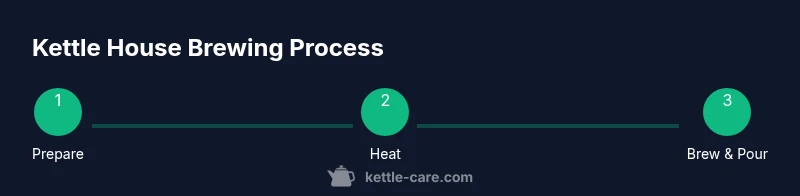
- 1
Inspect and prep kettle
Remove the kettle from its base and inspect for cracks, corrosion, or damage. Wipe the exterior and interior with a damp cloth. If you notice any cracks or irregulars, stop using the kettle and replace parts or the unit. A clean start improves safety and flavor consistency.
Tip: Check for damage before each brew to avoid burns or leaks. - 2
Rinse and fill with fresh water
Rinse the interior to remove dust or residues, then fill to the recommended level with fresh water. Using clean water minimizes mineral buildup and keeps flavors true across brews.
Tip: Filtered water minimizes scale more than tap water in hard-water areas. - 3
Heat to target temperature
Heat the water to your target temperature using the kettle’s control or a thermometer. Avoid drastic temperature changes to prevent shock to delicate ingredients.
Tip: If unsure about target temp, start with a modest goal and adjust by 2–3 degrees per batch. - 4
Stabilize temperature and prepare brew
Let the water settle for a moment after reaching the target to ensure even heat distribution. Prepare your tea or coffee setup so you can pour promptly when ready.
Tip: Pre-warm cups or teapot to retain heat longer. - 5
Pour and brew with control
Pour in a steady, controlled arc to immerse ingredients evenly. Adhere to recommended steep times for the beverage you’re making to avoid over-extraction.
Tip: Use a slow, continuous pour to maintain uniform contact with the infusion. - 6
Cleanup and descale after use
Rinse the kettle and interior after brewing. If mineral buildup appears, perform a descaling cycle using your chosen method.
Tip: Dry thoroughly to prevent water spots and future corrosion.
Frequently Asked Questions
What is kettle house brewing and why use it at home?
Kettle house brewing refers to brewing beverages—usually tea or coffee—directly in a home kettle with attention to temperature and timing for flavor control. It emphasizes safe boiling, temperature stability, and easy cleanup.
Kettle house brewing is safe, controlled boiling for better flavor at home.
How do I choose a kettle for house brewing?
Look for a kettle with reliable temperature control, durable build, and easy cleanup. A gooseneck spout can help pour accuracy, and a built-in thermostat reduces overshoot.
Choose a kettle with good temperature control and easy cleaning.
How often should I descale my kettle?
Descale based on water hardness and usage. In hard-water areas, inspect monthly and descale as needed to keep heating times efficient.
Descale according to water hardness and how often you use the kettle.
Is filtered water really better for kettle brewing?
Filtered water reduces mineral buildup and can improve flavor. If you have very hard water, descaling becomes less frequent with filtered water.
Filtered water helps keep flavor clean and scale down.
What safety steps should I follow when boiling water?
Always supervise boiling water, keep children away, use dry hands, and place the kettle on a stable surface. Let the kettle cool before touching a hot lid or base.
Boil safely by staying attentive and using dry hands.
Watch Video
Highlights
- Set precise temperatures for every brew.
- Descale regularly to maintain efficiency.
- Use clean water to prevent scale and flavor issues.
- Always follow safety protocols when boiling water.