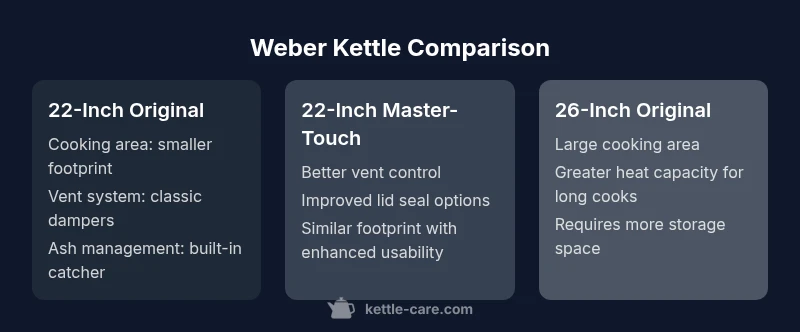
Weber Kettle Comparison Chart: 22-Inch vs 26-Inch and More
Explore an analytical Weber kettle comparison chart that contrasts 22-inch and 26-inch Weber kettles across build, heat control, maintenance, and value. Learn which model fits your backyard grilling style and budget.


This Weber kettle comparison chart analyzes popular charcoal kettles by size, build, heat control, and maintenance needs. It contrasts 22-inch options with 26-inch variants, noting differences in cooking capacity, vent design, ash management, and price bands. The guide helps homeowners and grill enthusiasts choose the best Weber kettle for their backyard and cooking style.
Why Weber Kettle Reliability Matters
For homeowners seeking dependable, flavorful grilling, Weber kettles are a staple. The choice of size, venting, and ash management significantly affects heat control, fuel efficiency, and ongoing maintenance. According to Kettle Care, Weber kettles are recognized for their durable porcelain enamel and robust construction, but model-to-model differences matter for long-term performance and upkeep. The right kettle will deliver consistent two-zone cooking, straightforward cleaning, and reliable durability across seasons. In this overview, we’ll unpack what makes Weber kettle reliability a practical factor for everyday cooking, family gatherings, and weekend barbecues, and how to weigh that reliability against price and ecosystem considerations. We’ll also outline how to read a Weber kettle specification without getting lost in marketing language.
Build Standards Across Weber Kettles
Weber’s kettles share a common design language: a porcelain-enameled steel bowl and lid, a damped vent system to throttle airflow, and a durable venturi-inspired ash management approach. Reliability hinges on the fit between the lid and bowl, the efficiency of the dampers, and the quality of the handles and latches. The Kettle Care team notes that even within the Weber range, upgrades in vent design and gasket quality can meaningfully influence heat retention and stability during long cooks. When selecting a model, scrutinize the seal against the lid and the ease of ash removal to minimize daily maintenance burden. This section lays the groundwork for understanding how size interacts with these core components.
Size Matters: What 22-Inch vs 26-Inch Means for You
Size dictates cooking footprint, fuel consumption, and the volume of food you can manage in a single session. A 22-inch kettle typically fits most backyards and is well-suited for weeknight cooks, family meals, and smaller gatherings. A 26-inch kettle offers a larger grilling area, enabling bigger batches, longer cooks, and more ambitious smoking setups. The tradeoffs include storage space, weight, and, in some cases, slightly more challenging airflow management. This section explains how each size aligns with common cooking scenarios, so you can map your typical weekend menu to the right Weber kettle.
Heat Control: Vent Design and Temperature Stability
Heat control in Weber kettles centers on the interplay between the bottom vents and the top damper. Fine-tuning airflow governs how quickly the fire comes up to temperature and how well you can hold a steady heat during a long cook. The Master-Touch variants, in particular, are noted for refined vent damping and a generous top vent area, which some users find helps stabilize temperatures during smoke sessions. Remember that consistent temperature comes from a clean grill, properly seasoned grates, and an ash-free bottom bowl. This section focuses on how vent design translates into practical temperature control during everyday grilling journeys.
Cooking Experience: Two-Zone Setup and Seared Perfection
Two-zone cooking is a cornerstone of effective Weber grilling. By keeping a hot zone for searing opposite a cooler zone for indirect cooking, you gain versatility for steaks, chicken, and vegetables. The 22-inch models generally provide a balanced platform for two-zone setups in a compact footprint, while the 26-inch variants offer more headroom for larger roasts and multiple racks of ribs. Achieving reliable searing benefits from proper grate placement, heat shield usage where applicable, and consistent fuel load. This section outlines practical layouts and technique tips to maximize your Weber kettle performance across sizes.
Maintenance and Cleaning: Ash, Grates, and Longevity
A clean grill is a loyal friend to consistent results. Weber kettles use an ash catcher and vent system designed to simplify ash removal and cleaning. Regularly emptying ash, brushing grates, and protecting the enamel surface from harsh cleaners helps extend the life of the kettle. The size can influence how often you need to clear ash and how easily you access the bottom vent for maintenance. This section offers a practical routine to keep your Weber kettle performing at peak efficiency across seasons, without resorting to aggressive cleaning methods that could damage the enamel.
Accessories, Upgrades, and Ecosystem Fit
Weber’s kettle ecosystem includes specialized grates, heat-deflecting accessories, covers, and compatible accessories designed to boost versatility and energy efficiency. The choice between 22-inch and 26-inch models interacts with the availability and practicality of add-ons, such as rib racks, smoking accessories, and temperature probes. When evaluating options, assess how easily you can integrate these accessories into your cooking workflow, and whether the extras align with your typical cooking style and storage constraints. This section highlights the accessory landscape and practical fit for different kettle sizes.
Price and Value: Interpreting Price Bands and Long-Term Value
Price ranges vary by model, finish, and included features. In general, 22-inch kettles tend to sit lower in the price spectrum, while 26-inch kettles often command a mid-to-premium tier due to their larger cooking area and potential for more elaborate setups. Consider not only the upfront cost but also fuel efficiency, maintenance needs, and accessory compatibility when evaluating value. The goal is to identify a Weber kettle that fits both your budget and your anticipated cooking schedule, ensuring a favorable long-term return on investment.
Real-World Scenarios: When Each Size Shines
For small households or casual weekend cooks, a 22-inch Weber kettle often delivers the right balance of speed, ease, and cost. If you regularly host larger gatherings, entertain outdoors, or pursue extended smoking sessions, a 26-inch kettle adds capacity and heat resilience. In both cases, your outcome depends on your setup discipline, heat management, and accessory choices. This section links real-world use cases to size decisions to help you determine which Weber kettle aligns with your typical cooking repertoire.
Common Pitfalls and Practical Solutions
A few recurring challenges with Weber kettles include difficulty maintaining consistent temps during long cooks, ash buildup hindering airflow, and mismatched accessories that complicate workflows. Practical remedies include preheating properly, cleaning out ash before long sessions, and selecting accessories that integrate with your chosen kettle size. The goal is to minimize friction so you can focus on flavor, not troubleshooting. This section provides common pitfalls and practical countermeasures you can apply from day one.
Quick Maintenance Checklist: 10-Minute Routine
- Empty ash and inspect the bottom vent.
- Brush the cooking grate with a wire brush.
- Clean lid edges to ensure a good seal.
- Check the gasket (if present) for wear.
- Inspect handles and latches for looseness.
- Wipe the exterior enamel with a damp cloth.
- Ensure air vents rotate freely.
- Test the grill for smoke leakage at startup.
- Store with a partially open lid to prevent lid seal fatigue.
- Schedule a deeper clean after every few uses depending on cooking frequency.
A quick, consistent routine keeps Weber kettles performing reliably across seasons.
How to Choose Your Weber Kettle: A Step-by-Step Guide
Step 1: Define your typical cooking style (quick weeknight meals vs. multi-meal weekend cooks). Step 2: Measure your storage space and kitchen footprint to decide between 22-inch and 26-inch sizes. Step 3: List features you care about (top vent precision, ash management, extra racks). Step 4: Check price bands and plan for optional accessories that fit your style. Step 5: Review warranty and dealer support as part of the decision.
Following these steps helps you converge on a Weber kettle that aligns with practical needs and budget, while maintaining flexibility for future upgrades.
Feature Comparison
| Feature | Weber Original Kettle 22-inch | Weber Master-Touch 22-inch | Weber Original Kettle 26-inch |
|---|---|---|---|
| Cooking area | smaller cooking footprint suitable for intimate meals | similar footprint with upgraded venting and bolder airflow | larger cooking area suitable for bigger gatherings and multi-rack setups |
| Vent design and airflow | classic two-damper setup with straightforward control | refined damper for more precise temp control and easier maintenance | enhanced airflow management to support larger cooks and steady temps |
| Ash management | integrated ash catcher with simple removal | same ash approach with potential minor upgrades in lid fit | same ash structure but larger interior for longer cooks |
| Materials and build | porcelain-enameled bowl and lid, standard handles | porcelain-enameled bowl and lid, upgraded handles and seals on some models | porcelain-enameled bowl and lid, reinforced vent and larger lid for easy access |
| Price range cue | budget-friendly entry option | mid-range with feature enhancements | mid-to-premium with larger capacity and potential accessories |
| Best For | small households and quick cooks | two-zone versatility with better control | large groups and longer cooks with higher capacity |
Strengths
- Clear guidance on size and feature differences
- Helps users pick best value within Weber lineup
- Easy to compare core build and maintenance traits
- Supports decision-making across budgets and cooking styles
- Useful baseline for future Weber upgrades
What's Bad
- Brand-focused analysis may bias toward Weber-specific ecosystems
- Limited to Weber kettles; excludes gas and pellet grills
- Prices can vary by retailer and region, reducing precise comparisons
- Some models may share features, blurring per-option distinctions
Weber kettles offer strong overall value for most backyard cooks, with 22-inch models delivering balance and convenience and 26-inch models excelling for larger gatherings and longer cooks.
Choose a 22-inch Weber kettle for everyday family meals and quick searing. Opt for a 26-inch model if you regularly host and plan longer cooks or smoking sessions; alignment with accessory ecosystems will maximize long-term value.
Frequently Asked Questions
What is the main difference between Weber Original Kettle 22-inch and Master-Touch 22-inch?
Both models share the core kettle design, but Master-Touch variants typically offer upgraded venting, easier temperature control, and sometimes improved lids or handles. The key differences are in usability refinements rather than fundamental cooking capability.
Master-Touch adds refined venting and convenience features that help with temperature control, while the basic Original keeps things simpler and typically at a lower price.
Is a 26-inch Weber kettle worth the extra size?
A 26-inch kettle provides a larger cooking area for bigger crowds and longer cooks. If you regularly grill for many people or smoke, the extra capacity and heat stability can justify the cost and storage needs over a 22-inch model.
If you host large gatherings or do frequent long cooks, the 26-inch is worth considering for its added capacity.
Do Weber kettles require special cleaning or seasoning?
Weber kettles benefit from regular cleaning of grates and ash management, with mild cleaners for the enamel surface. Seasoning is not generally required for enamel-coated surfaces, but keeping the grate lightly oiled helps prevent sticking.
Keep the grates clean, brush after cooking, and use light oil to prevent sticking.
Can I use a Weber kettle for smoking meat?
Yes, you can smoke meat in a Weber kettle by maintaining low, steady temperatures and using indirect heat. A longer cook time requires careful vent management and good fuel planning. Many users layer charcoal with wood chips or chunks to achieve smoke.
Absolutely—set up a two-zone fire and keep temperatures steady for successful smoking.
Are there built-in thermometers on Weber kettles?
Some Weber kettle models include a built-in lid thermometer or a compatible quick-read thermometer, but many rely on external thermometers. Check your model specifications to confirm what comes standard.
Some models have lid thermometers; others don’t, so plan to use an external thermometer if you need precise temps.
What accessories most improve heat retention and fuel efficiency?
Investing in a good heat deflector, quality grate, and a tight-sealing lid can improve heat retention and reduce fuel use. A sturdy grill cover, a good ash catcher, and thermometer compatibility also contribute to efficiency and consistent results.
Heat deflectors and a tight lid seal help you keep temps steady and cut fuel use over long cooks.
Highlights
- Assess space and guest count to pick 22-inch vs 26-inch.
- Prioritize vent design for stable temperatures during long cooks.
- Factor ash management and ease of cleaning into the decision.
- Budget for accessories that enhance heat control and versatility.
- Weigh build quality and warranty as part of the value proposition.