Gas Stove Kettle: Safe and Efficient Boiling
Learn how to boil water safely and efficiently on a gas stove with a kettle. This step-by-step guide covers kettle selection, safety precautions, cleaning, descaling, and maintenance for reliable, safe home boiling.


This guide teaches you how to boil water safely and efficiently on a gas stove using a kettle. You’ll learn how to choose a stove-friendly kettle, set up a safe cooking area, avoid common gas-safety hazards, and maintain performance with simple descaling and cleaning routines. Practical steps, tools, and safety tips are provided for confident, home cooking.
Understanding the gas stove and kettle pairing
In kitchens powered by gas, the way you heat water matters for safety, speed, and flavor. A kettle that sits securely on the burner and a gas flame that doesn’t scorch the pot are essential. According to Kettle Care, the best results come from choosing kettles designed for stovetop use, with stable bases and heat-resistant handles. Gas stoves heat water quickly when you use the right kettle, but they also demand careful flame control to prevent boil-overs and scorching. This section reviews how kettle shape, material, and base design influence heat transfer on a live flame, and why a gooseneck spout can improve control for precise pouring while boiling.
Safety prerequisites before boiling
Before you turn on any flame, ensure the cooking area is well-ventilated and free from flammable items. Check that the kettle’s base sits evenly on the burner and that the handle is away from the flame. Keep children and pets clear of the stove, and always have a pot holder or heat-resistant glove within reach. Prolonged exposure to an open flame can degrade kettle finishes and may cause warping over time. Safety first means never leaving a live burner unattended, especially when a kettle is partially filled or boiling.
Choosing the right kettle for gas stoves
Not all kettles perform equally on a gas stove. For robust, everyday use, look for a kettle with a wide, stable base and a well-balanced lid. A stainless-steel body resists scorching and is easy to clean, while a gooseneck pour spout offers precise control for tea lovers. If you frequently boil at high heat, consider a kettle with heat-diffusing bands or a thicker wall to reduce hot spots. Compatibility with your burner size matters; a kettle with a too-small base can tip, while a large one may inefficiently heat on small flames. Finally, verify a heat-resistant handle and a secure lid that stays in place when the water boils.
Setting up the boiling station: prep and filling
Start with a clean work surface and wipe down the kettle exterior. Place the kettle on the burner that best matches its base diameter, ensuring it sits flat. Fill water only to the recommended level — typically no more than about 80 percent of the kettle’s capacity — to avoid boil-overs. Avoid filling with hot water from another source, which can cause thermal shock and damage. If you’re descaling regularly, keep a bottle of vinegar solution ready for routine maintenance.
The boil: heat control and timing on gas
Set the burner to a steady, moderate flame; a blue flame indicates efficient combustion, while a yellow or flickering flame suggests improper burning or sooty buildup. Place the kettle on the flame and cover if your kettle has a lid to reduce evaporative losses and speed up boiling. When large bubbles crest and steam escapes from the spout, switch the heat down to maintain a rolling boil without overflow. As soon as the water reaches a vigorous boil, remove the kettle from the flame and let it rest for a moment before pouring to prevent steam burns.
Cleaning and descaling for performance
Mineral deposits accumulate more quickly in hard water areas, reducing heat transfer efficiency. After you've boiled water, let the kettle cool, then rinse and wipe dry. For descaling, mix a solution of equal parts water and white vinegar and soak for 15–30 minutes, then rinse thoroughly. If mineral buildup persists, sprinkle a small amount of baking soda on a damp sponge for gentle scrubbing. Avoid abrasive pads that can scratch the kettle’s surface. Rinse completely to remove any vinegar or baking soda residues before the next use.
Energy efficiency tips and safe boiling on gas
Smaller kettles heat faster and use less energy, so choose a capacity appropriate for your typical needs. Keeping the lid on—when appropriate—reduces heat loss and speeds boiling. Use a flat, well-fitting lid and ensure the water level is not too high; this minimizes boil-overs and wasted energy. Regular maintenance, including cleaning the spout and lid seals, helps maintain efficient heat transfer and safe operation.
Troubleshooting common issues
If your kettle produces soot on the exterior, it may indicate an over-rich flame or dirty burner. Clean the burner head and ensure there are no obstructions. If the kettle makes a whistling or clanging sound, check that the lid is properly seated and the spout is unobstructed. A stubborn mineral buildup that affects heat transfer can be solved with a vinegar soak and thorough rinsing. If leakage or damage appears, discontinue use and replace the kettle or worn parts.
Maintenance routine and long-term care
Establish a simple monthly maintenance ritual: wipe the exterior, inspect the handle and lid for wear, descale if you notice mineral buildup, and ensure the burner is clean and free of debris. Store the kettle in a cool, dry place and avoid stacking heavy items on it, which can deform the lid or handle. If your kettle has a gasket or seal, test it periodically and replace when signs of wear appear. Regular care will extend the life of your kettle and keep boiling times predictable.
Tools & Materials
- Stovetop kettle (gas-stove compatible)(Choose a kettle with a stable base and heat-resistant handle; gooseneck or traditional shapes both work depending on your preference.)
- Gas stove burner(Ensure the burner and grate are clean and stable before use.)
- Dish soap(For cleaning the kettle exterior after use.)
- White vinegar(Descale mineral buildup; use in a 1:1 solution with water.)
- Water(Cold water for boiling; avoid heating hot water from other sources.)
- Soft brush or non-scratch sponge(For removing mineral deposits without scratching the surface.)
- Heat-resistant gloves(Protect hands during handling hot kettle and after boiling.)
- Dry towel or microfiber cloth(Dry the kettle after washing to prevent water spots and rust.)
- Timer or clock(Helpful for precise boil timing, especially when you practice pour control.)
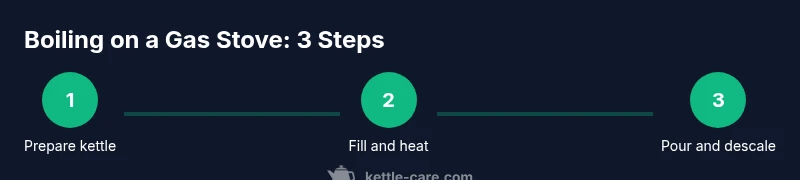
Steps
Estimated time: 20-40 minutes
- 1
Prepare burner and kettle
Inspect the burner for debris and ensure it sits evenly on a stable grate. Place the kettle on the burner so the base rests flat and balance is even. This minimizes tipping risk and ensures uniform heating.
Tip: Wipe the burner area first to prevent soot transfer to the kettle. - 2
Fill the kettle to a safe level
Fill water to about 80 percent of the kettle’s capacity to prevent boil-overs. Avoid overfilling, which increases steam pressure and spills. Always leave headroom for steam as it heats.
Tip: Do not fill while kettle is hot; allow it to cool slightly if you need to top up. - 3
Heat on a stable medium flame
Set the burner to a steady medium flame and wait for the water to approach boiling. A blue flame indicates efficient combustion. If the flame flickers or produces soot, adjust or clean the burner before proceeding.
Tip: Use a lid on the kettle if you want to speed up boiling and reduce evaporation. - 4
Monitor until the boil
Watch for rolling bubbles and steam escaping from the spout. When the water reaches a vigorous boil, reduce the flame to maintain a steady boil without overflow. Avoid letting the water boil dry.
Tip: Keep a hand on the kettle handle with heat-resistant gloves when adjusting flame or tilting to pour. - 5
Switch off and pour safely
Turn off the gas immediately after the boil and remove the kettle from the burner. Allow a brief rest to prevent splashing. Pour slowly and away from your body to limit steam exposure.
Tip: Pour toward a stable surface and keep the spout away from your face. - 6
Cool and inspect after use
Let the kettle cool, then rinse and wipe dry. Inspect for any scorch marks or mineral deposits that could affect future boiling performance.
Tip: Dry thoroughly to prevent rust and ensure ready-to-use readiness next time. - 7
Descale regularly
For areas with hard water, soak the interior with a vinegar solution for 15–30 minutes. Rinse completely to remove vinegar residue. Repeat if necessary to restore heat transfer efficiency.
Tip: Avoid mixing vinegar with bleach or other cleaners. - 8
Maintain and store properly
Schedule monthly checks of the lid, handle, and seals. Store the kettle dry and away from heavy impacts that could dent the lid or handle. Regular care keeps boiling times predictable and safe.
Tip: Document any wear and plan timely replacements.
Frequently Asked Questions
Is a gas stove safer than an electric kettle?
Both have safety considerations. Gas stoves require good ventilation and flame control, while electric kettles minimize open-flame risks. Proper technique and maintenance reduce hazards with either option.
Both have safety considerations. Gas stoves need ventilation and careful flame control, while electric kettles reduce open-flame risk; proper technique and maintenance keep them safe.
What size kettle should I use on a gas stove?
Choose a kettle that matches your typical water volume and fits the burner base. A stable base and appropriate capacity promote efficient heating and reduce the chance of tipping.
Pick a kettle that fits your burner and typical water needs; stable base and appropriate capacity improve safety and efficiency.
How often should I descale a kettle used on a gas stove?
Descale as needed based on mineral buildup. For hard water, do a light vinegar soak every few weeks and a deeper clean monthly.
Descale as needed; in hard water areas, a vinegar soak every few weeks and a thorough clean each month helps.
Can I use a dented kettle on a gas stove?
A dent can affect stability and heat distribution. If the dent is minor and the lid seals, you may continue with caution; otherwise replace the kettle.
A dent can affect stability and heat. If minor, you can continue with caution; otherwise, replace it.
Should I use a lid while boiling on a gas stove?
Using a lid speeds boiling and reduces energy use, but some kettles are designed for open boil. Follow the manufacturer’s guidance for your model.
A lid speeds boiling and saves energy, but follow your kettle’s instructions for your model.
Watch Video
Highlights
- Choose the right kettle with a stable base for gas stoves.
- Monitor flame height to prevent boil-overs and residue.
- Descale regularly to maintain efficiency and safety.
- Boil safely and pour with care to minimize steam burns.