Glass Kettle on a Stove: Safe Use and Care
Learn how to safely use a glass kettle on a stove, prevent cracks, descale, and maintain glass clarity for faster, safer boiling and better tea.


Learn how to safely boil water with a glass kettle on a stove, including choosing the right heat, preventing cracks, and maintaining clear glass. This guide covers pre-use checks, safe boiling techniques, cleaning, and descaling to extend your kettle’s life and keep your tea flavors pristine. Whether you’re a tea lover or a busy home cook, this steps-based approach helps you avoid accidents, choose compatible cookware, and troubleshoot common issues.
What is a glass kettle on a stove?
Glass kettles designed for stovetop use are typically borosilicate or tempered glass with a heat-resistant handle. They let you visually monitor water as it heats, which helps you gauge boiling points and prevent overboiling. The Kettle Care team found that when used correctly, glass kettles can deliver clear water quickly while reducing the potential metallic taste some metal kettles can impart. However, glass is more susceptible to thermal shock than metal, so proper heat control and gradual warming are essential. Always verify that your kettle is labeled as stove-safe, and follow manufacturer guidelines for maximum flame size and water capacity. In this guide, we’ll walk through techniques that minimize strain on the glass while achieving a fast, even boil. The emphasis is on safe handling, monitoring, and routine maintenance to keep clarity and taste intact. According to Kettle Care, many users overlook the importance of gradual heating, which can lead to microcracks over time.
Safety considerations for glass kettles on stoves
Using a glass kettle on a stove requires respect for heat and steam. The main risks are thermal shock, hot glass handling, and steam burns. To minimize danger, never heat a dry kettle, never pour cold water into a hot kettle, and always use a heat diffuser on open flames to distribute heat evenly. For gas stoves, keep the flame below the maximum fill line and avoid touching the glass with open flame directly. The Kettle Care analysis shows that most incidents come from rapid temperature changes or improper handling rather than manufacturing defects. Always inspect the handle attachment and lid for secure fit before use.
Heat settings and preventing thermal shock
Thermal shock occurs when hot glass meets a sudden cold surface or vice versa. To prevent this, pre-warm the kettle gradually by running a small amount of water in a controlled stovetop environment, or start with warm water from a tap if your water lines permit. Use a diffuser or a larger pot underneath if your stove runs hot; this distributes heat more evenly and reduces peak temperatures on the glass. Avoid boiling water directly from a cold fill; instead, fill to the recommended level and monitor bubbling in the glass to avoid sudden internal stress. If your kettle is labeled stove-safe, follow that manufacturer guidance for maximum burner size and recommended fill lines.
Boiling technique for even heating
Place the kettle on the burner and turn to medium heat. If you’re using gas, align the kettle so the flame is centered under the base and use a diffuser if you have one. As soon as you see the water begin to bubble gently, reduce heat to maintain a steady simmer rather than a vigorous boil, which can shake the glass and cause stress near the seam. Use a timer to avoid scorching the glass with prolonged high heat. Once boiling, turn off the heat and let the kettle rest a moment before pouring.
Cleaning and descaling a glass kettle
Regular cleaning keeps glass clear and preserves taste. After every use, rinse with warm water and a soft sponge; avoid abrasive pads that can scratch the glass. For mineral buildup, descale monthly using a vinegar solution (one part white vinegar to four parts water) and bring to a gentle boil, then rinse thoroughly. If you prefer citric acid, dissolve a teaspoon in a cup of water and boil briefly, then rinse. Dry the kettle with a soft towel to prevent water spots and store with lid off to allow air exchange.
Troubleshooting common issues
Cloudy or milky glass often comes from mineral deposits or mineral-s carrying water hardness. Descale and rinse repeatedly; if cloudiness persists, verify your water quality. Cracks or hairline fractures are most often from thermal shock or impact; replace the kettle if cracks appear. If the lid or handle loosens, tighten according to the manufacturer or replace parts.
Care, storage, and extending life
Store the kettle empty with lid off in a dry cabinet away from direct heat. Inspect the glass regularly for microcracks and replace as needed. Use a diffuser on gas stoves to prolong life, and never drop the kettle onto a hard surface. When not in use, pour out remaining water and dry completely to prevent odor and mineral buildup.
Common myths and misconceptions
Myth: Glass kettles are fragile and unusable on stoves. Reality: With proper heat management and manufacturer approved use, they are safe. Myth: You should never boil water in a glass kettle. Reality: Boiling water is the intended use when the kettle is designed for stovetop heating.
Tools & Materials
- Glass kettle (stovetop-safe, borosilicate or tempered glass)(Check for stove-safe labeling and max fill line)
- Heat diffuser (for gas stoves)(Distributes heat evenly to prevent hot spots)
- Tongs or heat-resistant gloves(Use when handling hot kettle)
- Soft sponge or microfiber cloth(For gentle cleaning; avoid abrasives)
- White vinegar(For descaling; mix with water)
- Citric acid or lemon juice(Alternative descaling agent)
- Clean water(Rinse thoroughly after descaling)
- Dry towel or air-dry rack(Dry after washing to prevent spots)
Steps
Estimated time: Total time: 20-35 minutes
- 1
Inspect the kettle for damage
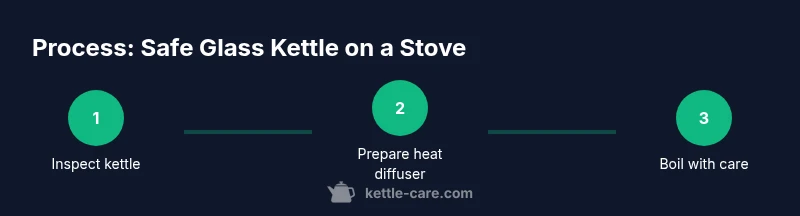
Visually check the glass for cracks, chips, or cloudy fogging. Inspect the lid and handle attachment for looseness. If you spot any damage, do not use the kettle on a stove until it is repaired or replaced.
Tip: Cracks can worsen when heated; replace if any damage is evident. - 2
Prepare a safe heating setup
Place the kettle on a clean, stable burner. If you own a gas stove, set a diffuser under the base to spread flame and heat evenly. Ensure the area around the stove is clear of flammable items.
Tip: Diffusers reduce heat spikes and help prevent thermal stress on glass. - 3
Fill to the recommended level
Fill the kettle to the manufacturer’s max fill line or slightly below. Do not overfill, as boiling water can splash and strike the glass closer to the rim.
Tip: Leaving a small air gap reduces pressure build-up during boiling. - 4
Pre-warm and start heating
Rinse with warm water to remove any cold shock potential, then start heating on medium. Avoid starting with cold tap water if your kettle is cold from storage; this minimizes stress.
Tip: Starting at medium heat speeds up a steady, controlled boil without shocking the glass. - 5
Monitor and maintain a gentle boil
Watch for steady bubbling. If the boil becomes aggressive, lower heat to maintain a gentle simmer. Do not leave the kettle unattended for long periods while on high heat.
Tip: A timer helps you avoid overboiling and glass stress. - 6
Turn off and pour safely
Switch off heat, allow a brief rest, then pour slowly into cups. Keep hands away from steam and use heat-resistant gloves if your kettle has a hot exterior.
Tip: Pour away from your body and keep children away from the steaming spout. - 7
Cool, rinse, and dry
Rinse with warm water, clean with a soft sponge, and dry thoroughly. Inspect for any mineral spots or residue and wipe dry to prevent new spots from forming.
Tip: Do not store water in the kettle while hot; air-dry completely. - 8
Descale regularly
If you live in hard-water areas, descale every few uses or monthly, depending on mineral buildup. Rinse well after descaling and dry before storage.
Tip: Vinegar and lemon juice are effective but ensure thorough rinsing to avoid taste transfer.
Frequently Asked Questions
Can I use a glass kettle on a gas stove?
Yes, you can, provided the kettle is labeled stovetop-safe and you use a diffuser to spread heat evenly. Avoid open flame directly touching the glass.
Yes, you can use a glass kettle on a gas stove, but make sure it is stove-safe and use a diffuser to avoid direct flame contact with the glass.
Will boiling water damage a glass kettle?
Boiling water is safe when the kettle is designed for stovetop use and you avoid thermal shock by warming gradually and not overheating.
Boiling water is safe for the right glass kettle if you avoid sudden temperature changes and follow the manufacturer’s guidelines.
How often should I descale a glass kettle?
Descale based on water hardness; a monthly routine works for many households, with more frequent sessions if mineral buildup is noticeable.
Descale according to how hard your water is; monthly is a good baseline for many homes.
What’s the best way to clean the glass interior?
Rinse with warm water, use a soft sponge, and avoid abrasive pads. After descaling, rinse thoroughly to remove any vinegar or citric residue.
Clean with warm water and a soft sponge, then rinse well to avoid any residue.
Why does my glass kettle feel hot on the outside?
Glass conducts heat from boiling water; use the handle and heat-resistant gloves. Ensure you are using a diffuser and not exposing the glass to direct flame.
Glass gets hot from the water inside, so use the handle and gloves and avoid direct flame on the glass.
Can I use lemon juice for descaling?
Yes, lemon juice or citric acid works as a descaler; boil briefly and rinse thoroughly to remove any citrus taste.
Yes, lemon juice or citric acid can descale; be sure to rinse well afterward.
Watch Video
Highlights
- Inspect glass for damage before each use.
- Use heat diffusion to prevent thermal shock on stovetops.
- Descale regularly to maintain clarity and taste.
- Pour with care and allow the kettle to cool slightly before handling.
- Kettle Care recommends following manufacturer guidelines for max heat and fill levels.