Iron Kettle Care: Safe, Efficient Boiling Guide
Learn how to clean, season, and maintain an iron kettle for safe use, flavorful brewing, and long-lasting performance. Step-by-step care, practical tips, and troubleshooting from Kettle Care.


Want safe, efficient boiling from an iron kettle? This quick answer shows how to choose the right kettle, prepare it for first use, and maintain it for long-term reliability. We cover seasoning (for bare iron), rust prevention, and descaling to keep mineral buildup in check—so you can enjoy tea and hot water with confidence.
Why iron kettle matters for flavor and safety
Iron kettles offer durable, reliable heating and a traditional aesthetic that many tea lovers prefer. An iron kettle can release trace minerals into water, subtly influencing flavor when used regularly. There are two main variants: bare cast iron that requires seasoning and enamel-coated iron that resists rust and is easier to clean. The primary safety concern with iron kettles is rust, which can introduce off flavors and degrade the metal over time. Proper care—seasoning bare iron, thorough cleaning, complete drying, and cautious heating—helps maximize performance while keeping your family safe. According to Kettle Care, seasoning improves corrosion resistance and creates a smoother surface for boiling. This guide from the Kettle Care team walks you through selecting, prepping, and maintaining an iron kettle for safe, efficient boiling for everyday tea and cooking.
Choosing your iron kettle: what to look for
When selecting an iron kettle, decide between bare cast iron and enamel-coated iron. Bare iron kettles require regular seasoning and care to prevent rust; enamel-coated models are simpler to maintain but can chip if dropped or knocked against hard surfaces. Look for a sturdy handle that stays cool enough to touch, a tight-fitting lid, and a wide enough spout to avoid splashing. Thickness matters: thicker walls heat more evenly and resist denting, though they add weight. Check the base compatibility with your stovetop (gas, electric, or induction if enamel). Finally, inspect the interior finish: enamel surfaces are easier to clean and don’t require seasoning, while bare iron interiors demand seasoning routines. Based on Kettle Care analysis, enamel-coated kettles offer consistent performance with less maintenance, but seasoned bare iron can deliver a traditional flavor profile when cared for properly.
Preparing your iron kettle before first use
Before first use, identify whether you have bare cast iron or enamel-coated iron. For bare iron, start with a light seasoning: wash, rinse, and dry, then apply a thin film of neutral oil and bake at a low temperature to form a protective layer. Enamel-coated kettles can be washed with warm water and a mild soap; avoid metal scrubbers that could scratch the coating. Rinse thoroughly and dry completely to minimize rust risk. According to Kettle Care, a proper first-use routine sets the foundation for long-term performance and minimizes future maintenance needs.
Step-by-step heating and boiling technique
Heating a kettle correctly preserves metal integrity and speeds up boiling. Start with cold water, place the kettle on a moderate heat source, and gradually bring water to a boil. Avoid heating an empty kettle on high heat, which can warp the base or damage coatings. When water reaches a rolling boil, reduce heat to maintain a gentle boil for your tea or hot beverage, then remove from heat and let it stand briefly before pouring. This approach protects the interior surface and helps prevent mineral buildup. In practice, you’ll want a steady, controlled boil rather than forcible high heat to extend the life of your iron kettle.
Cleaning, descaling, and maintenance
After each use, rinse with warm water and dry thoroughly to prevent rust. For stubborn residues, use a soft sponge with mild soap, avoiding abrasive pads on enamel surfaces. Descale periodically in hard-water areas by soaking with a solution of equal parts white vinegar and water, then rinse and dry completely. If you have bare iron, a light oil coat after drying can help preserve the surface. Regular maintenance—cleaning, drying, descaling, and seasoning when appropriate—keeps your iron kettle performing well for years.
Troubleshooting common issues
Rust is the most common problem with iron kettles. If you notice rusty spots on bare metal, gently scrub with a paste of baking soda and water, rinse, and re-season. Enamel coating can chip if dropped; avoid using metal utensils that scratch the interior and inspect for cracks or gaps where heat may penetrate. Mineral buildup can dull performance; descaling restores efficiency. When problems arise, address them promptly to prevent long-term damage and preserve flavor integrity in your brews.
Safe practices and long-term care
Always handle the kettle with heat-resistant gloves, especially when hot. Do not leave water in a kettle on high heat or heat it excessively, as this can warp the base or scorch finishes. Store the kettle dry, upright, and in a cool, ventilated space to minimize rust risk. Regularly inspect handles, lids, and spouts for wear and tear, and address any issues before using the kettle again. Following these routines helps ensure safer, faster boiling and a longer lifespan for your iron kettle.
Tools & Materials
- Iron kettle (bare cast iron or enamel-coated)(Choose enamel-coated if you want easier cleaning; bare iron requires seasoning)
- Stove or heat source(Gas, electric, or induction compatible if enamel-coated)
- Heat-resistant gloves(Protect hands during heating and pouring)
- Non-scratch sponge or stiff brush(Avoid metal scouring pads on enamel interiors)
- Mild dish soap(Use sparingly; avoid harsh cleaners on bare iron)
- White vinegar(For descaling in hard-water areas (dilute 1:1 with water))
- Soft towel or lint-free cloth(Dry and polish after washing)
- Neutral oil for seasoning(Apply a thin coat to bare iron after drying)
Steps
Estimated time: 45-60 minutes
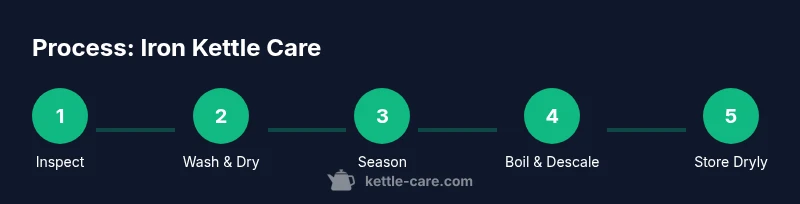
- 1
Inspect for damage
Before use, check for cracks, rust, loose handles, or enamel chips. If you find any damage, do not continue until addressed to prevent failure during boiling.
Tip: Damaged kettles can leak or break; prioritize safety over immediate use. - 2
Wash and rinse
Rinse the kettle with warm water. If it's enamel-coated, use mild soap; for bare iron, use a light soap only if necessary to remove factory residue. Rinse thoroughly to remove soap residues.
Tip: Avoid soaking bare iron for long periods to minimize rust risk. - 3
Dry thoroughly
Pat dry with a soft cloth and allow to air dry completely before any seasoning or storage. Moisture left in corners can promote rust.
Tip: Drying thoroughly is the single most important step to prevent rust. - 4
Season bare iron (if applicable)
Apply a light coat of neutral oil to the interior and exterior surfaces and heat gently to polymerize a protective layer. For enamel-coated kettles, skip this step.
Tip: Seasoning improves corrosion resistance and creates a smoother surface for boiling. - 5
Boil water to prep
Fill with clean water and bring to a gentle boil to test construction and remove any loose residues from seasoning. Do not boil dry; always have water in the kettle when heating.
Tip: A gradual boil is gentler on the metal than a rapid, high-heat burst. - 6
Descale as needed
If mineral buildup appears, simmer a 1:1 vinegar-water solution for several minutes, then rinse and re-season if necessary. Dry completely after descaling.
Tip: Never mix vinegar with harsh cleaners; keep it simple and rinse well. - 7
Final boil and cooling
Boil fresh water once more, then pour off and let the kettle cool on a dry surface. This completes the conditioning process and stabilizes surfaces for everyday use.
Tip: Avoid sudden temperature shocks to protect enamel and bare iron surfaces. - 8
Store properly
Store the kettle upright in a dry, well-ventilated area. Ensure it is completely dry before sealing to prevent rust formation during storage.
Tip: Keep handles away from other hot surfaces to prevent heat damage.
Frequently Asked Questions
Is it safe to use an iron kettle for everyday boiling?
Yes, iron kettles are safe when properly cared for. Regular seasoning (for bare iron), thorough cleaning, and complete drying help maintain safety and performance for daily boiling. If the kettle shows damage, discontinue use until repaired.
Yes, iron kettles are safe when properly cared for. Regular seasoning and thorough drying help keep them safe for daily use.
Should I season my iron kettle before first use?
Seasoning is essential only for bare iron kettles; enamel-coated models typically do not require seasoning. Follow a thin oil coating and gentle heating for bare iron to build a protective layer.
Season bare iron before use to prevent rust; enamel-coated kettles usually don’t require seasoning.
How do I remove rust from an iron kettle?
For minor rust, scrub with a baking soda paste, rinse, and re-season. If rust is widespread, consider replacing the kettle as structural integrity may be compromised.
Light rust can be scrubbed with baking soda paste and then re-seasoned. If heavy rust appears, replace the kettle.
Can I use metal utensils in an iron kettle?
Avoid metal utensils that can scratch enamel interiors. Use wood or silicone when stirring or lifting with enamel coatings to preserve the surface.
Use wooden or silicone utensils to protect enamel; avoid metal ones that scratch.
Is an iron kettle induction compatible?
Induction compatibility depends on the kettle’s base. Enamel-coated iron kettles with a ferrous bottom work on induction, bare cast iron does as well, but always verify with the manufacturer.
Most iron kettles work on induction if the base is ferrous; check with the maker.
How often should I descale a hard-water iron kettle?
Descale as needed based on mineral buildup and usage. In hard water regions, inspect for white buildup and descaling when you notice reduced boiling efficiency.
Descale when you see mineral buildup or reduced boiling efficiency; hard-water areas may need it more often.
Watch Video
Highlights
- Season bare iron to prevent rust.
- Dry completely after cleaning.
- Descale as needed to maintain efficiency.
- Store upright and dry.
- Use non-metal utensils on enamel surfaces.